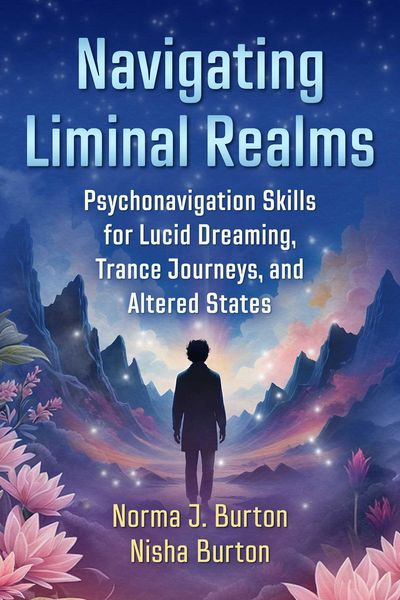
Navigating Liminal Realms Psychonavigation Skills for Lucid Dreaming, Trance Journeys, and Altered States
-
- Taschenbuch ausgewählt
- eBook
-
Sprache:Englisch
17,99 €
inkl. gesetzl. MwSt.,
Beschreibung
Produktdetails
Einband
Taschenbuch
Erscheinungsdatum
08.07.2025
Verlag
Inner Traditions/Bear & CompanySeitenzahl
272
Maße (L/B/H)
23,4/16/3,5 cm
Gewicht
522 g
Sprache
Englisch
EAN
9798888501658
Safely explore inner worlds through altered states of consciousness
• Investigates drumming-induced trance states through shamanic journeying
• Provides advanced lucid dreaming training, sharing techniques for inducing lucidity and skillfully navigating our inner cosmos
• Explores the mindful use of psychedelics, offering guidance on setting intention, navigating the experience, and integrating insights
OFFERING TECHNIQUES from psychonauts ancient and modern, this profound guide helps you navigate consciously into the depths of the human psyche. Psychonavigation is the art of mindfully exploring the liminal realms of consciousness. This requires a map, a guide, and a clear intent, so one does not emerge overwhelmed and struggling with unexpected shadow material.
Norma and Nisha Burton map the important connection between three gateways into the psyche’s depths: lucid dreaming, shamanic drumming trance journeys, and ceremonial plant medicine journeys. With drumming-induced trance journeys, they explore the scientific effect on brainwave frequencies alongside consciousness teachings from indigenous cultures like the Sami of Norway and Huichol of Mexico. Their masterful approach to lucid dreaming transcends basic instruction, offering sophisticated techniques to not only summon but sustain lucidity and integrate suppressed parts of oneself. They explain how a mindful engagement with entheogens can be profoundly enhanced through these precursory mystical practices, creating a safe container for integration and meaning-making that honors the gravity of such experiences.
With these skillful methodologies, ancient psycho-spiritual techniques meet ultra-current science to enable seekers to process and integrate profound encounters with expanded consciousness.
Ein neues Kapitel für Ihre Bücher
Ein neues Kapitel für Ihre Bücher
Schenken Sie Ihren alten Schätzen ein zweites Leben: Einfach Barcode scannen, Versandetikett ausdrucken, Bücher verschicken und Thalia Geschenkkarte erhalten.
Jetzt verkaufenNoch keine Bewertungen vorhanden
Verfassen Sie die erste Bewertung zu diesem Artikel
Helfen Sie anderen Kundinnen und Kunden durch Ihre Meinung.
Kurze Frage zu unserer Seite
Vielen Dank für Ihr Feedback
Wir nutzen Ihr Feedback, um unsere Produktseiten zu verbessern. Bitte haben Sie Verständnis, dass wir Ihnen keine Rückmeldung geben können. Falls Sie Kontakt mit uns aufnehmen möchten, können Sie sich aber gerne an unseren Kund*innenservice wenden.
zum Kundenservice