Beschreibung
Produktdetails
Format
ePUB
Kopierschutz
Nein
Family Sharing
Nein
Text-to-Speech
Ja
Erscheinungsdatum
02.12.2024
Herausgeber
Diego De Brasi + weitereVerlag
De Gruyter MoutonSeitenzahl
415 (Printausgabe)
Dateigröße
2465 KB
Auflage
1. Auflage
Sprache
Englisch
EAN
9783111394299
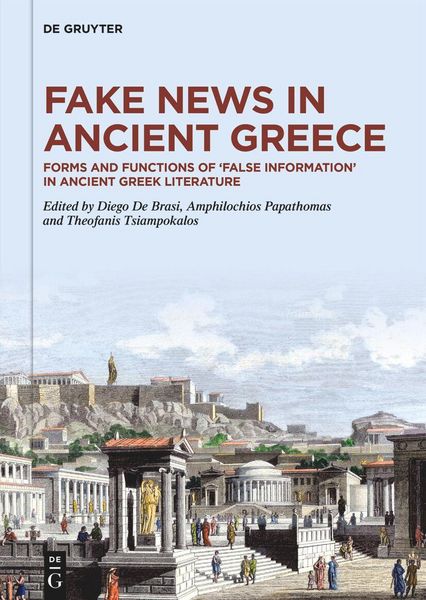
Scholars have recognized that fake news is not a phenomenon peculiar to the 21st century. While efforts for a more focused approach to fake news in the ancient world have been carried out in the field of Roman history, the phenomenon of fake news in ancient Greece has received limited attention. The contributions in this volume offer a selective approach to this phenomenon by applying media and cultural studies instruments to ancient texts. They pinpoint parallels and differences between ancient and modern fake news by employing methods of literary and cultural studies, as well as historical-documentary analysis of ancient sources. In particular, they explore questions such as: To what extent does reflection on the concepts of truth, lie, and opinion influence ancient Greek political-rhetorical discourse? What is the political or social function of embedding 'misleading information' in ancient Greek historiographical texts or pamphlets? Which intentions are pursued with the help of fake news in literary and documentary texts? Can parallels be drawn with modern approaches to fake news? Thus, the volume investigates the mechanisms that historically lay behind the creation, dissemination, and adaptation of 'misleading information'.
Noch keine Bewertungen vorhanden
Verfassen Sie die erste Bewertung zu diesem Artikel
Helfen Sie anderen Kundinnen und Kunden durch Ihre Meinung.
Kurze Frage zu unserer Seite
Vielen Dank für Ihr Feedback
Wir nutzen Ihr Feedback, um unsere Produktseiten zu verbessern. Bitte haben Sie Verständnis, dass wir Ihnen keine Rückmeldung geben können. Falls Sie Kontakt mit uns aufnehmen möchten, können Sie sich aber gerne an unseren Kund*innenservice wenden.
zum Kundenservice