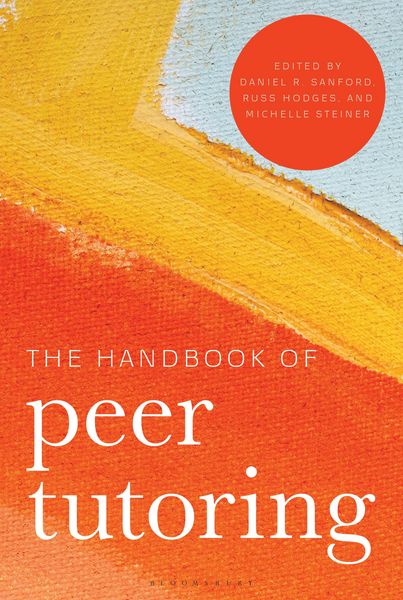
Produktbild: The Handbook of Peer Tutoring

The Handbook of Peer Tutoring

55,99 €

inkl. gesetzl. MwSt., Versandkostenfrei


Beschreibung

Produktdetails

Einband

Taschenbuch

Erscheinungsdatum

08.01.2026

Herausgeber

Daniel Sanford + weitere

Verlag

Bloomsbury Academic

Seitenzahl

472

Maße (L/B/H)

25,3/18,1/3,3 cm

Gewicht

454 g

Sprache

Englisch

ISBN

978-1-5381-9054-8

Beschreibung

Produktdetails

Einband

Taschenbuch

Erscheinungsdatum

08.01.2026

Herausgeber

Verlag

Bloomsbury Academic

Seitenzahl

472

Maße (L/B/H)

25,3/18,1/3,3 cm

Gewicht

454 g

Sprache

Englisch

ISBN

978-1-5381-9054-8

Herstelleradresse

Libri GmbH
Europaallee 1
36244 Bad Hersfeld
DE

Email: gpsr@libri.de

Ein neues Kapitel für Ihre Bücher

Ein neues Kapitel für Ihre Bücher

Schenken Sie Ihren alten Schätzen ein zweites Leben: Einfach Barcode scannen, Versandetikett ausdrucken, Bücher verschicken und Thalia Geschenkkarte erhalten.

Jetzt verkaufen
Jetzt verkaufen

Noch keine Bewertungen vorhanden

Verfassen Sie die erste Bewertung zu diesem Artikel

Helfen Sie anderen Kundinnen und Kunden durch Ihre Meinung.

Kundinnen und Kunden meinen

Bewertungen (0)

Die Leseprobe wird geladen.
  • Produktbild: The Handbook of Peer Tutoring
  • Foreword. Saundra McGuire, Louisiana State University.
    Introduction: The Emerging Interdisciplinary Scholarship of Peer Tutoring in Higher Education. Daniel R. Sanford, Boise State University.
    I. Peer Tutoring Essentials
    1. The History of Peer Tutoring in Higher Education. David R. Arendale, University of Minnesota.
    2. The Effectiveness of Peer Tutoring for Students in Higher Education. Mitchell Colver, American Public University System, & Heather Carroll, Medical College of Wisconsin.
    3. The Effectiveness of Peer Tutoring for Peer Tutors in Higher Education: Research, Theory, and Practice. Dallin George Young, University of Georgia, & Bryce D. Bunting, Brigham Young University.
    II. Topics in Theory
    4. Collaborative Interaction, Active Engagement and Socio-Emotional Learning. Keith J. Topping, University of Dundee Scotland and RUDN University Moscow.
    5. Social Dynamics in Peer Tutoring. Janet W. Colvin, Utah Valley University, & Marinda Ashman, Utah Valley University.
    6. Linguistic Behaviors in Peer Tutoring. John Nordlof, Eastern University.
    7. Question Asking in Peer Tutoring. Natalie K. Person, Rhodes College, Arthur C. Graesser, The University of Memphis, & Cailyn E. Jordan, Rhodes College.
    8. An Imperative to Respond: Leveraging the Scholarship of Teaching & Learning to Enhance the Scholarship of Peer Tutoring. Heidi Rivers Marshall, The Chicago School.
    9. Reflective Knowledge Building in Peer Tutoring. Rod D. Roscoe, Arizona State University, & Tracy Arner, Arizona State University.
    10. Cognitive, Affective, and Behavioural Factors in Peer Tutoring: Fostering Student Engagement. Jane Skalicky, University of Tasmania, & Kathryn French, University of Tasmania.
    11. Tutoring People, Not Subjects: Implications from Writing Center Theory for Peer Tutoring. Kem Roper, Athens State University.
    12. Paradigms for Understanding the Work of Peer Tutors. James D. Breslin, independent scholar, & Anna G. Sharpe, Berry College.
    13. Learning Centers as Cultural Spaces. Lygie Hinkle, Marymount University, & Stacey Blackwell, Rutgers University-New Brunswick.
    14. An Exploration of the Key Features of High-Quality Models of Peer-Led Learning. Bryce D. Bunting, Brigham Young University, & Dallin George Young, University of Georgia.
    III. Topics in Program Administration
    15. Tutor Training. Jennifer Haley, Ball State University.
    16. Racial & Cultural Diversity and Peer Tutoring. C. Inez Anders, University of California, Davis, & Kevin Sitz, University of California, Davis.
    17. Metacognition and Peer Tutoring. Jonathan Vontsteen, Texas State University, Saundra McGuire, Louisiana State University, Lahna Roche, Louisiana State University, & Melissa Brocato, Louisiana State University.
    18. Linguistic Diversity and Peer Tutoring: Fostering Linguistic Justice Through Peer Interactions in Postsecondary Institutions.Rachele Lawton, Community College of Baltimore County, & Christa De Kleine, Notre Dame of Maryland University.
    19. Peer Tutoring in Online Environments. Page Keller, Knack Technologies, Inc., & Zohreh Fathi, Texas State University.
    20. Neurodiversity and Peer Tutoring: A Social Justice Approach. Rene' LeBlanc, Texas State University, Lori Wischnewsky, Texas State University, Jonathan Vontsteen, Texas State University, & Russ Hodges, Texas State University.
    21. Assessment of Peer Tutoring Programs. Geoff Bailey, University of Louisville.