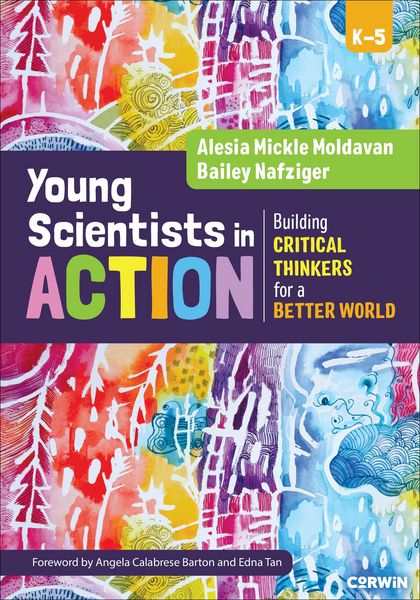
Young Scientists in Action Building Critical Thinkers for a Better World
-
- Englisch ausgewählt
36,99 €
inkl. gesetzl. MwSt.,
Beschreibung
Produktdetails
ISBN
978-1-07-197644-9
Erscheinungsdatum
18.03.2026
Einband
Taschenbuch
Verlag
Sage PublicationsSeitenzahl
264
Maße (L/B/H)
17,8/25,3/1,6 cm
Gewicht
552 g
Sprache
Englisch
Empower every student to make positive change through science
Elementary teachers face the immense challenge of lesson planning across multiple subjects, often under the weight of standardized testing that prioritizes reading and math. Too often, this leaves science overlooked even though it holds the power to enrich literacy, numeracy, and, more importantly, students understanding of the world. With the right support, science instruction can move beyond worksheets and standards checklists to become a subject where curiosity and critical thinking drive learning and students see connections to their own lives. This resource empowers educators to reclaim science as a space for relevance, meaning, and impact where it matters most in the classroom.
In Young Scientists in Action, authors Alesia Mickle Moldavan and Bailey Nafziger provide educators with the tools to transform elementary science classrooms into dynamic spaces where students critically engage with real-world issues. Using phenomena-based and community-focused approaches, this resource equips educators with practical strategies and ready-to-use lesson and unit plans that foster critical thinking and agency. By transforming science into both an academic pursuit and a catalyst for social change, the authors ignite purpose and engagement in the classroom.
With a focus on actionable solutions for today s most pressing challenges, this book helps educators leverage science to inspire empathy, critical thinking, and community change in young learners by providing
- An Elicit Investigate Interrogate Act Framework designed to guide educators through four key phases of instruction (Elicit, Investigate, Interrogate, and Act) that foster critical connections between science concepts and societal issues
- Lesson and Unit Plans that are interdisciplinary and ready to implement, and address real-world challenges such as environmental sustainability and accessibility for all learners
- Teacher Reflection Tools that include prompts, teaching manifestos, and strategies for small steps for big impact
- Connections with Standards like NGSS and enriched with practical advocacy strategies, providing a strong foundation for aligning instruction with authentic science practices that inspire students to envision and create a better future.
Offering real-life examples, practical strategies, and evidence-based insights, Young Scientists in Action paves the way for educators to create classrooms where all students see themselves as scientists and advocates for change.
Ein neues Kapitel für Ihre Bücher
Ein neues Kapitel für Ihre Bücher
Schenken Sie Ihren alten Schätzen ein zweites Leben und erhalten dafür eine Thalia Geschenkkarte.
Noch keine Bewertungen vorhanden
Verfassen Sie die erste Bewertung zu diesem Artikel
Helfen Sie anderen Kundinnen und Kunden durch Ihre Meinung.
Kurze Frage zu unserer Seite
Vielen Dank für Ihr Feedback
Wir nutzen Ihr Feedback, um unsere Produktseiten zu verbessern. Bitte haben Sie Verständnis, dass wir Ihnen keine Rückmeldung geben können. Falls Sie Kontakt mit uns aufnehmen möchten, können Sie sich aber gerne an unseren Kund*innenservice wenden.
zum Kundenservice