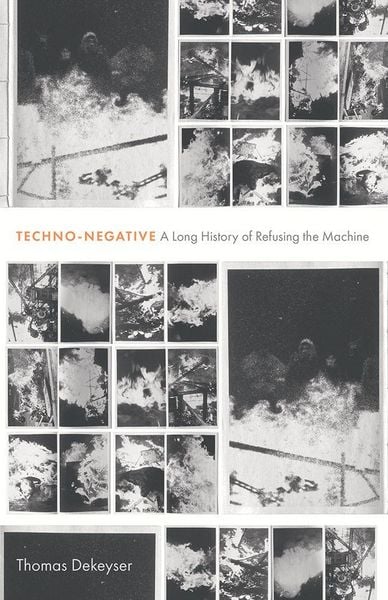
Techno-Negative A Long History of Refusing the Machine
-
- Englisch ausgewählt
26,99 €
inkl. gesetzl. MwSt.,
Beschreibung
Produktdetails
Verkaufsrang
23381
Einband
Taschenbuch
Erscheinungsdatum
24.03.2026
Verlag
University Of Minnesota PressSeitenzahl
240
Maße (L/B/H)
21,2/13,7/1,5 cm
Gewicht
312 g
Farbe
Anthrazit / Lichtgrau
Sprache
Englisch
ISBN
978-1-5179-1773-9
A radical history of technology told through acts of resistance, not progress
The history of technology is often told as a history of progress, moving optimistically and inevitably from one emancipatory invention to the next. Techno-Negative turns this story on its head, taking us on a journey to the critical junctures where people have pointedly rejected and tried to undo, rather than adopt, new technologies. Beginning with Archimedes's decision to destroy his own war machines, this book explores the will to negate technology as a deep - but persistently condemned - current in history.
As he presents a new theory of technological power, Thomas Dekeyser argues that technologies, never neutral, operate as "ontological policing," drawing the boundaries of humanness as they are unequally leveraged by select groups. Looking beyond the Luddites to medieval monks banning tools, seventeenth-century loom burners, revolutionary lantern smashers, and computer arsonists, Dekeyser shows how people have long recognized and resisted the machine as a violent, sometimes deadly force implicated in defining who counts as human and whose lives (and ways of life) are worth saving.
Against the ubiquitous demands to reform or accelerate technological "advancement" that have failed to disrupt our present, Dekeyser proposes a spirited alternative: abolition. He challenges us to rethink the terms of our technological present and future. In a time when Big Tech grows increasingly enmeshed with authoritarian control, Techno-Negative is a conceptual declaration, and source of inspiration, for those searching for a new paradigm of technological politics.
Retail e-book files for this title are screen-reader friendly.
Ein neues Kapitel für Ihre Bücher
Ein neues Kapitel für Ihre Bücher
Schenken Sie Ihren alten Schätzen ein zweites Leben: Einfach Barcode scannen, Versandetikett ausdrucken, Bücher verschicken und Thalia Geschenkkarte erhalten.
Jetzt verkaufenNoch keine Bewertungen vorhanden
Verfassen Sie die erste Bewertung zu diesem Artikel
Helfen Sie anderen Kundinnen und Kunden durch Ihre Meinung.
Kurze Frage zu unserer Seite
Vielen Dank für Ihr Feedback
Wir nutzen Ihr Feedback, um unsere Produktseiten zu verbessern. Bitte haben Sie Verständnis, dass wir Ihnen keine Rückmeldung geben können. Falls Sie Kontakt mit uns aufnehmen möchten, können Sie sich aber gerne an unseren Kund*innenservice wenden.
zum Kundenservice