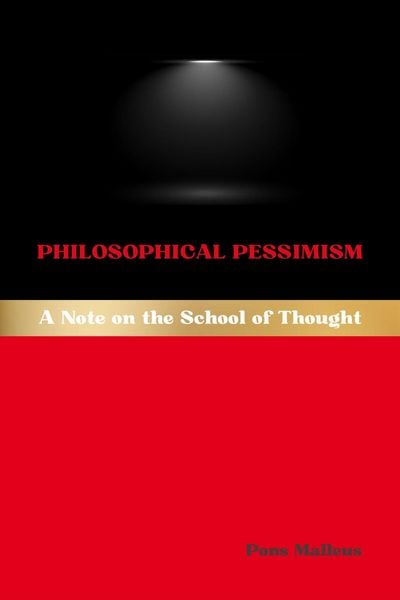
Philosophical Pessimism A Note on the School of Thought
-
- Taschenbuch
- eBook ausgewählt
-
Form:Einzelkauf Download
-
Sprache:Englisch
5,99 €
inkl. gesetzl. MwSt.Beschreibung
Produktdetails
Format
ePUB 3
Kopierschutz
Nein
Family Sharing
Ja
Text-to-Speech
Ja
Erscheinungsdatum
02.12.2025
Verlag
PublishdriveSeitenzahl
110 (Printausgabe)
Dateigröße
120 KB
Sprache
Englisch
EAN
6610001114206
This book emerges from a contemplation of a simple yet unsettling question: What if life, at its core, is not a gift, but a burden? The philosophical school of thought known as Philosophical Pessimism confronts this question not with despair, but with rigorous reflection, historical depth, and often, uncomfortable honesty. It stands in contrast to the dominant ideologies of progress, optimism, and human perfectibility that color much of Western thought. Rather than assuming that life tends toward improvement or fulfillment, Philosophical Pessimism interrogates the very structure of existence, desire, and consciousness, often arriving at conclusions that resist comfort.
Philosophical Pessimism is not merely a mood or psychological disposition, nor is it reducible to cynicism or nihilism. It is a well-developed intellectual tradition, spanning centuries and drawing from some of philosophy's most provocative minds-Arthur Schopenhauer, Philipp Mainländer, Eduard von Hartmann, and, in a more literary and psychological form, figures like Emil Cioran and Thomas Ligotti. Each offers a different vantage point on suffering, futility, and the tension between existence and non-existence. What unites them is the conviction that suffering is not accidental, but intrinsic to life itself; that desire, rather than being a path to satisfaction, is a source of perpetual unrest; and that the world may lack the metaphysical justifications human beings so ardently seek.
This book does not aim to proselytize despair, nor does it presume that pessimism must lead to inaction or resignation. Instead, it seeks to clarify and explore the insights of this challenging school of thought-its critiques of optimism, its ethical implications, its views on art, meaning, and death. By engaging with these ideas carefully, we can come to understand the structure of human experience more deeply, even if that understanding leads us away from conventional sources of hope.
Importantly, this book does not view pessimism as a dead end. If anything, it treats pessimism as a form of intellectual honesty-a refusal to look away from the difficult truths of existence. It may lead us not to despair, but to a different kind of lucidity: one that challenges the myths we tell ourselves, compels us to rethink ethical responsibility, and opens the possibility of a more radical compassion. For in recognizing the weight of suffering, the limitations of desire, and the illusions of progress, pessimism paradoxically clears a space for quiet clarity-and perhaps even peace.
In a time when optimism is increasingly tied to consumer culture, technological utopianism, and ideological denial, Philosophical Pessimism offers a needed corrective. Not to annihilate hope, but to refine it. Not to glorify despair, but to listen more closely to the conditions of our being. This book invites readers not to agree, but to consider-to think alongside those who have looked into the abyss and dared to describe what they saw.
Noch keine Bewertungen vorhanden
Verfassen Sie die erste Bewertung zu diesem Artikel
Helfen Sie anderen Kundinnen und Kunden durch Ihre Meinung.
Kurze Frage zu unserer Seite
Vielen Dank für Ihr Feedback
Wir nutzen Ihr Feedback, um unsere Produktseiten zu verbessern. Bitte haben Sie Verständnis, dass wir Ihnen keine Rückmeldung geben können. Falls Sie Kontakt mit uns aufnehmen möchten, können Sie sich aber gerne an unseren Kund*innenservice wenden.
zum Kundenservice