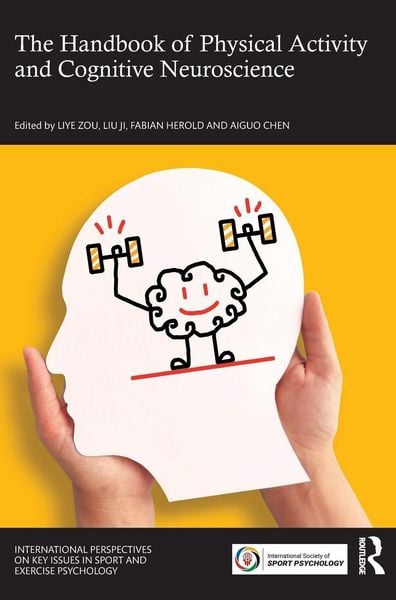
The Handbook of Physical Activity and Cognitive Neuroscience
383,99 €
inkl. gesetzl. MwSt.,
Beschreibung
Produktdetails
Einband
Gebundene Ausgabe
Erscheinungsdatum
16.06.2026
Abbildungen
schwarz-weiss Illustrationen, Raster,schwarz-weiss, Zeichnungen, schwarz-weiss, Tabellen, schwarz-weiss
Herausgeber
Liye Zou + weitereVerlag
Taylor & FrancisSeitenzahl
656
Maße (L/B/H)
24,4/17/3,5 cm
Gewicht
1236 g
Sprache
Englisch
ISBN
978-1-04-103116-1
This comprehensive handbook provides an authoritative collection of exercise-cognition research, exploring the historical development, current state, and future implications of the field. Written by international experts, this work unravels the intricate relationship between physical activity and brain function while establishing essential terminologies, definitions, and potential mediators of exercise-induced cognitive changes.
This handbook covers foundational background knowledge, research methodologies, and developmental perspectives across diverse populations. It addresses theoretical frameworks and practical considerations for designing, implementing, and analyzing interventions in exercise-cognition research. Coverage includes widely used neuroimaging techniques such as fNIRS, EEG, and fMRI, alongside emerging tools including TMS/TES, pupillometry, saccadic eye movements, PET, and transcranial Doppler ultrasound. This work also examines cutting-edge developments in digital applications, exergames, and the critical impact of sedentary behavior on brain health, providing readers with knowledge to design rigorous experiments and implement evidence-based exercise strategies.
This essential resource serves students across multiple disciplines, including health psychology, neuroscience, kinesiology, exercise science, public health, and rehabilitation. The accessible yet comprehensive approach makes it invaluable for researchers, practitioners, and anyone seeking to understand the scientific foundations of physical activity's cognitive benefits.
Ein neues Kapitel für Ihre Bücher
Ein neues Kapitel für Ihre Bücher
Schenken Sie Ihren alten Schätzen ein zweites Leben und erhalten dafür eine Thalia Geschenkkarte.
Noch keine Bewertungen vorhanden
Verfassen Sie die erste Bewertung zu diesem Artikel
Helfen Sie anderen Kundinnen und Kunden durch Ihre Meinung.
Kurze Frage zu unserer Seite
Vielen Dank für Ihr Feedback
Wir nutzen Ihr Feedback, um unsere Produktseiten zu verbessern. Bitte haben Sie Verständnis, dass wir Ihnen keine Rückmeldung geben können. Falls Sie Kontakt mit uns aufnehmen möchten, können Sie sich aber gerne an unseren Kund*innenservice wenden.
zum Kundenservice