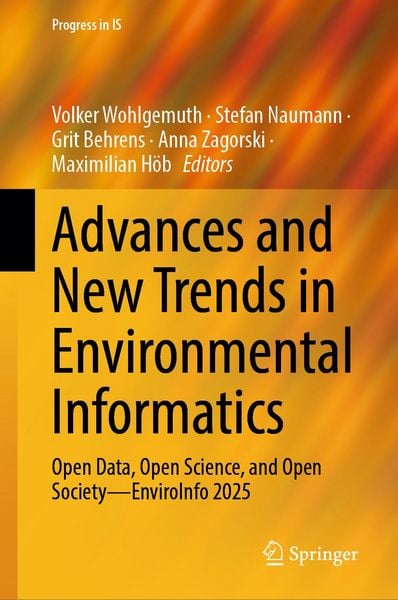
Advances and New Trends in Environmental Informatics Open Data, Open Science, and Open Society—EnviroInfo 2025
193,99 €
inkl. gesetzl. MwSt.,
Beschreibung
Produktdetails
Einband
Gebundene Ausgabe
Erscheinungsdatum
29.08.2026
Abbildungen
XII, 331 p. 86 illus., 63 illus. in color.
Herausgeber
Volker Wohlgemuth + weitereVerlag
SpringerSeitenzahl
331
Maße (B/H)
15,5/23,5 cm
Gewicht
625 g
Sprache
Englisch
ISBN
978-3-032-22725-6
This book presents selected papers from the 39th International Conference EnviroInfo 2025, held at the University of Potsdam, Germany, September 17th-19th, 2025. It explores the latest advancements in applied informatics, environmental informatics, and relevant sustainability practices with a special focus on the topic "Open Data, Open Science, and Open Society.” The conference’s goal is to promote collaboration, transparency, and inclusivity in addressing global challenges in the areas of green computing, sustainable software engineering, circular economy and business intelligence. As such, the papers presented here cover essential elements of shaping a greener future while also highlighting the transformative power of digital tools and data-driven strategies in addressing environmental problems that transcend geopolitical boundaries.
From climate change and biodiversity loss to water scarcity and pollution, the book examines how digital inclusion can empower communities, enhance decision-making, and promote sustainable development on a global scale. It also explores the societal aspects of environmental informatics, including environmental informatics, e.g. in developing countries. As an essential resource for researchers, professionals, and policymakers interested in leveraging ICT to address pressing environmental challenges and achieve sustainable development, it offers valuable insights, thought-provoking discussions, and innovative approaches to creating a sustainable and eco-friendly digital society in keeping the global sustainable development goals.
Ein neues Kapitel für Ihre Bücher
Ein neues Kapitel für Ihre Bücher
Schenken Sie Ihren alten Schätzen ein zweites Leben und erhalten dafür eine Thalia Geschenkkarte.
Noch keine Bewertungen vorhanden
Verfassen Sie die erste Bewertung zu diesem Artikel
Helfen Sie anderen Kundinnen und Kunden durch Ihre Meinung.
Kurze Frage zu unserer Seite
Vielen Dank für Ihr Feedback
Wir nutzen Ihr Feedback, um unsere Produktseiten zu verbessern. Bitte haben Sie Verständnis, dass wir Ihnen keine Rückmeldung geben können. Falls Sie Kontakt mit uns aufnehmen möchten, können Sie sich aber gerne an unseren Kund*innenservice wenden.
zum Kundenservice