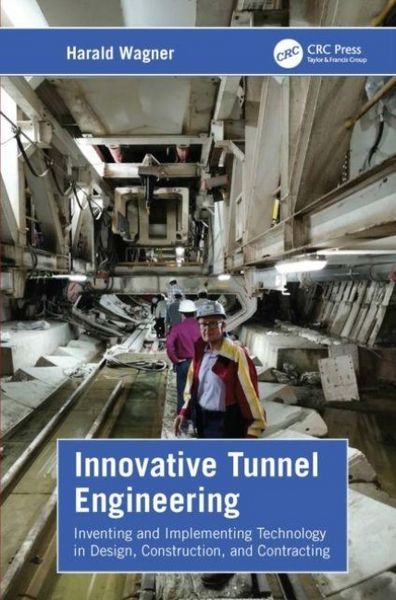
Innovative Tunnel Engineering Inventing and Implementing Technology in Design, Construction, and Contracting
-
- Englisch ausgewählt
75,99 €
inkl. gesetzl. MwSt.,
Beschreibung
Produktdetails
Einband
Taschenbuch
Erscheinungsdatum
19.10.2026
Abbildungen
schwarz-weiss Illustrationen, Raster,schwarz-weiss, Zeichnungen, schwarz-weiss
Verlag
Taylor and FrancisSeitenzahl
200
Maße (L/B)
23,4/15,6 cm
Sprache
Englisch
ISBN
978-1-03-265030-2
This book aims to help professionals in public and private organizations to easily understand recent technological and practical developments in advanced tunnelling technologies, by uniting technologies and geomechanics principles of 'conventional tunnelling' (also known as NATM - New Austrian Tunnelling Method) with principles of 'mechanized tunnelling' (TBM). It offers a cross section of innovative, dynamic underground infrastructure developments, documenting strategies, and case studies. The case studies cover all aspects of projects from technical procurement including value engineering, feasibility, tendering and detailed design, through contracting and all stages of innovation implementation, to construction.
Features:
¿ A lifetime of experience in tunnelling all over the world, on every continent, under many geotechnical challenges.
¿ A thorough analysis of every use case of tunnel, from flood diversion and transport infrastructure to advanced resilient mass transport systems.
¿ Geological and hydrological analysis of soil and rock types commonly encountered in tunnelling
¿ Review of the full range of modern tunnelling techniques, such as the New Austrian Tunnelling Method (NATM), and latest technology in Tunnel Boring Machines (TBM), advanced tunnel lining concepts and risk controlled contracting systems.
¿ Alignment with regulatory and legal frameworks for successful projects until completion.
¿ Endorsed by leading tunnelling experts and international organisations.
The book guides the readers through all types of innovative design and construction including Projects in transportation, Road and railways, Mass transit, Hydro tunnels, and Caverns and is aimed at young tunnelling engineers as well as public and private practitioners, decision makers and executives of the tunnelling industry.
Ein neues Kapitel für Ihre Bücher
Ein neues Kapitel für Ihre Bücher
Schenken Sie Ihren alten Schätzen ein zweites Leben und erhalten dafür eine Thalia Geschenkkarte.
Noch keine Bewertungen vorhanden
Verfassen Sie die erste Bewertung zu diesem Artikel
Helfen Sie anderen Kundinnen und Kunden durch Ihre Meinung.
Kurze Frage zu unserer Seite
Vielen Dank für Ihr Feedback
Wir nutzen Ihr Feedback, um unsere Produktseiten zu verbessern. Bitte haben Sie Verständnis, dass wir Ihnen keine Rückmeldung geben können. Falls Sie Kontakt mit uns aufnehmen möchten, können Sie sich aber gerne an unseren Kund*innenservice wenden.
zum Kundenservice