KI-Beratung Beta

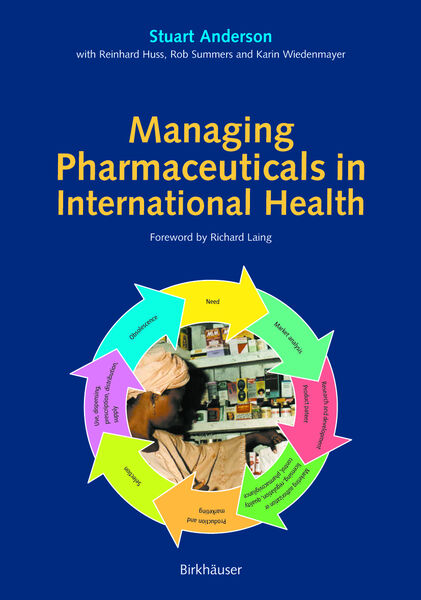
  • Produktbild: Managing Pharmaceuticals in International Health
  • Produktbild: Managing Pharmaceuticals in International Health

Managing Pharmaceuticals in International Health

49,99 €

inkl. gesetzl. MwSt., Versandkostenfrei


Beschreibung

Produktdetails

Einband

Taschenbuch

Erscheinungsdatum

25.06.2004

Abbildungen

XIV, 232 p. 103 illus.

Verlag

Springer Basel

Seitenzahl

232

Maße (L/B/H)

24,4/17/1,6 cm

Gewicht

488 g

Auflage

2004

Sprache

Englisch

ISBN

978-3-7643-6601-8

Beschreibung

Produktdetails

Einband

Taschenbuch

Erscheinungsdatum

25.06.2004

Abbildungen

XIV, 232 p. 103 illus.

Verlag

Springer Basel

Seitenzahl

232

Maße (L/B/H)

24,4/17/1,6 cm

Gewicht

488 g

Auflage

2004

Sprache

Englisch

ISBN

978-3-7643-6601-8

Herstelleradresse

Springer-Verlag GmbH
Tiergartenstr. 17
69121 Heidelberg
DE

Email: ProductSafety@springernature.com

Ein neues Kapitel für Ihre Bücher

Ein neues Kapitel für Ihre Bücher

Schenken Sie Ihren alten Schätzen ein zweites Leben und erhalten Sie dafür eine Thalia Geschenkkarte.

Jetzt verkaufen
Jetzt verkaufen

Noch keine Bewertungen vorhanden

Verfassen Sie die erste Bewertung zu diesem Artikel

Helfen Sie anderen Kundinnen und Kunden durch Ihre Meinung.

Kundinnen und Kunden meinen

Bewertungen (0)

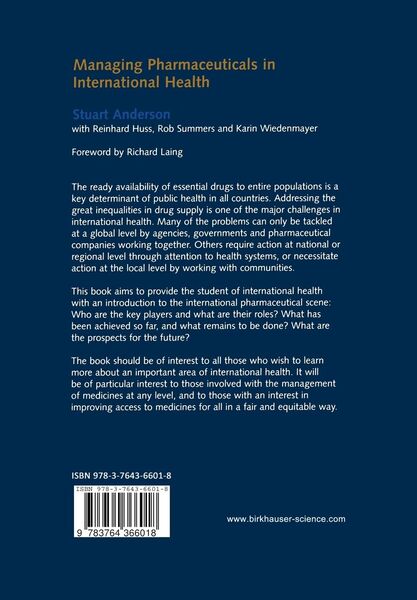
  • Produktbild: Managing Pharmaceuticals in International Health
  • Produktbild: Managing Pharmaceuticals in International Health
  • 1 Issues in the Management of Pharmaceuticals in International Health.- 1.1 Introduction.- 1.2 Pharmaceuticals, medicines and drugs.- 1.3 International health.- 1.4 The emergence of medicines.- 1.5 Global inequity and the medicines life cycle.- 1.6 The study of pharmaceuticals in international health.- 1.7 Approaches to managing pharmaceuticals.- 1.8 Layout of the book.- 1.9 Conclusion.- 2 Access and Availability of Pharmaceuticals in International Health.- 2.1 Introduction.- 2.2 Access to essential medicines.- 2.3 Neglected diseases.- 2.4 Strategies for developing medicines and ensuring access.- 2.5 Conclusion.- 3 Assessing the Pharmaceutical Needs of Patients and Populations.- 3.1 Introduction.- 3.2 Public health pharmacology.- 3.3 Incidence of disease.- 3.4 Needs and priorities for medicines.- 3.5 Culture and the use of medicines.- 3.6 Patients as consumers.- 3.7 Compliance, adherence and concordance.- 3.8 Empowerment.- 3.9 Conclusion.- 4 The Role of Health Professionals.- 4.1 Introduction.- 4.2 Classifying health professionals.- 4.3 Health professionals and medicine responsibilities.- 4.4 The role of the doctor.- 4.5 The role of the pharmacist.- 4.6 Traditional healers.- 4.7 Integrating traditional medicine and Western medicine.- 4.8 Conclusion.- 5 The Role of the Pharmaceutical Industry.- 5.1 Introduction.- 5.2 The origins and development of the pharmaceutical industry.- 5.3 Structure of the industry today.- 5.4 Pharmaceutical company partners.- 5.5 The activities of the industry.- 5.6 Pharmaceutical markets.- 5.7 The pharmaceutical industry and international health.- 5.8 Conclusion.- 6 The Role of Governments.- 6.1 Introduction.- 6.2 The development of national drug policies.- 6.3 The drug supply process.- 6.4 Health systems that support drug supply.- 6.5 Pharmaceutical legislation and regulation.- 6.6 Research, monitoring and evaluation.- 6.7 Conclusion.- 7 The Role of the European Union, National Assistance Agencies and NGOs.- 7.1 Introduction.- 7.2 The European Union.- 7.3 The national aid agencies.- 7.4 International and national NGOs.- 7.5 Some non-governmental organizations.- 7.6 Equitable pharmaceutical supply and distribution.- 7.7 Conclusion.- 8 The Role of International Organizations.- 8.1 Introduction.- 8.2 WHO and other UN organizations.- 8.3 Industry organizations.- 8.4 Other organizations.- 8.5 Essential drugs.- 8.6 Pharmaceutical procurement.- 8.7 International agreements and intellectual property rights.- 8.8 Case study-HIV/AIDS and antiretroviral treatment in South Africa.- 8.9 Conclusion.- 9 Rational Use of Medicines.- 9.1 Introduction.- 9.2 Consequences of non-rational medicine use.- 9.3 Medicine use behaviour.- 9.4 Investigating medicine use problems.- 9.5 Medicine use interventions.- 9.6 Effectiveness of interventions.- 9.7 Conclusion.- 10 Medicine Quality, Adverse Reactions and Antimicrobial Resistance.- 10.1 Introduction.- 10.2 Quality of medicines.- 10.3 Counterfeit medicines.- 10.4 Adverse drug reactions.- 10.5 Antimicrobial resistance.- 10.6 Conclusion.- 11 Managing Medicines Information.- 11.1 Introduction.- 11.2 The users of medicine information.- 11.3 Sources of information.- 11.4 The quality of medicines information.- 11.5 The assessment of information.- 11.6 Classification systems.- 11.7 Conclusion.- 12 Investigating the Use of Medicines.- 12.1 Introduction.- 12.2 Drug utilization studies.- 12.3 Pharmacoeconomics.- 12.4 Pharmacovigilance.- 12.5 Pharmacoepidemiology.- 12.6 Health systems and policy studies.- 12.7 Conclusion.- 13 Trends and Developments.- 13.1 Introduction.- 13.2 Trends in the use ofherbal remedies.- 13.3 The contribution of pharmacogenetics and pharmacogenomics.- 13.4 The changing role of the internet.- 13.5 Changes in the health care workforce.- 13.6 Conclusion.- 14 Policy Initiatives and their Implications.- 14.1 Introduction.- 14.2 The role of public-private partnerships.- 14.3 The Global Fund and other initiatives.- 14.4 Global procurement of medicines.- 14.5 AIDS drugs post Doha.- 14.6 Conclusion.- Selected Websites and Webportals.