
KI-Beratung Beta

Gutscheinbedingungen

Gültig bis 21.10.2026 | Gültig für nicht preisgebundene fremdsprachige Bücher | Einzelne Artikel können ausgeschlossen sein | Online auf thalia.de und in der Thalia App einlösbar | Click & Collect nur mit Online-Zahlung (Paypal/Kreditkarte) vorab | Nicht kombinierbar mit anderen Gutscheinen oder Preisaktionen | Nur einmal pro Einkauf einlösbar | Gutschein wird auf max. 500€ Bestellwert angerechnet | Keine Barauszahlung | Nicht gültig für Versandkosten und Services

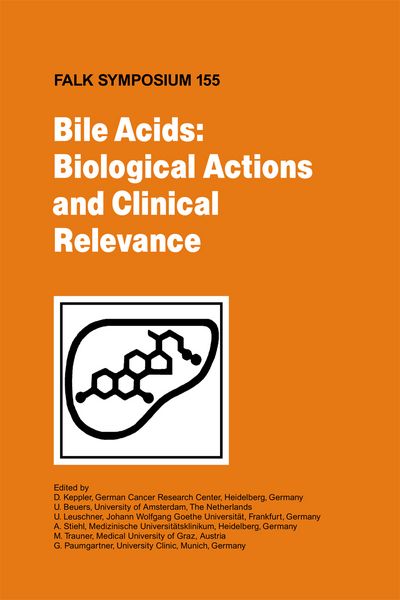
  • Produktbild: Bile Acids: Biological Actions and Clinical Relevance
  • Produktbild: Bile Acids: Biological Actions and Clinical Relevance
Band 155 - 12%

Bile Acids: Biological Actions and Clinical Relevance

Aus der Reihe Falk Symposium
12% sparen

187,99 € UVP 213,99 €

inkl. gesetzl. MwSt., Versandkostenfrei


Produktdetails

Einband

Gebundene Ausgabe

Erscheinungsdatum

22.06.2007

Abbildungen

XVII, 270 p.

Herausgeber

D. Keppler + weitere

Verlag

Springer Netherland

Seitenzahl

270

Maße (L/B/H)

24,1/16/2,1 cm

Gewicht

554 g

Sprache

Englisch

ISBN

978-1-4020-6251-3

Produktdetails

Einband

Gebundene Ausgabe

Erscheinungsdatum

22.06.2007

Abbildungen

XVII, 270 p.

Herausgeber

Verlag

Springer Netherland

Seitenzahl

270

Maße (L/B/H)

24,1/16/2,1 cm

Gewicht

554 g

Sprache

Englisch

ISBN

978-1-4020-6251-3

Herstelleradresse

Springer-Verlag KG
Sachsenplatz 4-6
1201 Wien
AT

Email: ProductSafety@springernature.com

Ein neues Kapitel für Ihre Bücher

Ein neues Kapitel für Ihre Bücher

Schenken Sie Ihren alten Schätzen ein zweites Leben und erhalten Sie dafür eine Thalia Geschenkkarte.

Jetzt verkaufen
Jetzt verkaufen

Noch keine Bewertungen vorhanden

Verfassen Sie die erste Bewertung zu diesem Artikel

Helfen Sie anderen Kundinnen und Kunden durch Ihre Meinung.

Kundinnen und Kunden meinen

Bewertungen (0)

  • Produktbild: Bile Acids: Biological Actions and Clinical Relevance
  • Produktbild: Bile Acids: Biological Actions and Clinical Relevance
  • Metabolism of bile acids.- Analysis of mice deficient in the bile acid biosynthetic enzyme 3?-hydroxy-?5-C27-steroid oxidoreductase (HSD3B7).- Role of oxysterols and cholestenoic acids in a crosstalk between the brain and the liver.- Activation of a G-protein coupled receptor by conjugated bile acids in primary hepatocytes and liver: effects on glucose metabolism.- Discovery of a novel oxysterol, 5-cholesten-3?, 25-diol 3-sulphate, in nuclei and mitochondria following over-expression of the gene encoding StarD1.- Hepatobiliary transport of bile acids.- Role of Ntcp phosphorylation in cAMP-mediated stimulation of hepatic bile acid uptake.- The concept of basolateral efflux pumps of the hepatocyte.- Insights into the regulation of expression of human OST?-OST?.- Regulation of hepatobiliary transport proteins in chronic cholestasis.- Assessment of inhibitory effect of many therapeutically important drugs on bile acid transport by NTCP, BSEP and other transporters.- Extrahepatocytic transport and actions of bile acids.- Extrahepatocytic transport of bile acids: the role of the cholangiocyte.- Molecular mechanisms of intestinal basolateral bile acid transport.- Regulation of intestinal bile acid transport in health and disease.- Evidence for a role of the FXR-driven intestinal regulatory factor FGF-19 upon cholestyramine and chenodeoxycholic acid treatment and during the diurnal regulation of bile acid synthesis in humans.- Nuclear receptor regulation.- Bile acid-like hormones function as ligands for the nematode orphan nuclear receptor DAF-12 and govern dauer formation, reproduction and lifespan.- Regulation of CYP7A1 by nuclear receptor signalling in human liver cells.- Regulation of hepatic and intestinal bile acid transport by FXR-controlled pathways.- Regulation ofbile acid homeostasis by the nuclear bile acid receptor FXR and fibroblast growth factor 15.- Bile salts activate endothelial no synthase in sinusoidal endothelial cells of the liver via the G-protein coupled receptor TGR5.- Bile acids, cellular injury, and disease mechanisms.- Bile salt-induced CD95 activation.- Role of Fas and caspase 8 in glycochenodeoxycholic acid-induced hepatocellular apoptosis in human liver cell lines.- Disulphated progesterone metabolites in urine relate to pruritus in intrahepatic cholestasis of pregnancy treated with ursodeoxycholic acid.- Adolf windaus prize lecture: primary biliary cirrhosis: from ursodeoxycholic acid towards targeting strategies for therapies.- Bile acids, cellular injury, and hepatic fibrosis.- Bile acids and liver fibrosis —Causative agent and therapeutic tool.- Mechanisms of bile acid-induced cell death in vivo and in vitro.- Bile acids enhance cellular motility of the hepatic myofibroblast-like cell through the regulation of p38/JNK signalling.- Bile acids as therapeutic agents: mechanisms and actions.- Side-chain-shortened bile acids for the treatment of cholestasis: lessons from nor-ursodeoxycholic acid.- Ursodeoxycholic acid-disulphate (SUDCA) — a potent chemopreventive agent against colon cancer.- Prevention of cholesterol gallstones by the potent cholesterol absorption inhibitor ezetimibe in gallstone-susceptible C57L/J mice.- Tauroursodeoxycholic acid antagonizes taurolithocholic acid-induced cholestasis via a cooperative protein kinase C-and protein kinase A-dependent signalling pathway in the perfused rat liver.- Bile acids in the treatment of cholestatic liver disease.- Ursodeoxycholic acid for the treatment of primary sclerosing cholangitis.- Role of polymorphisms in genes involved in bile aciddetoxification pathways in primary sclerosing cholangitis.- High-dose ursodeoxycholic acid in the treatment of primary sclerosing cholangitis.- Primary sclerosing cholangitis: bile duct and colonie carcinomas after long-term ursodeoxycholic acid.