KI-Beratung Beta

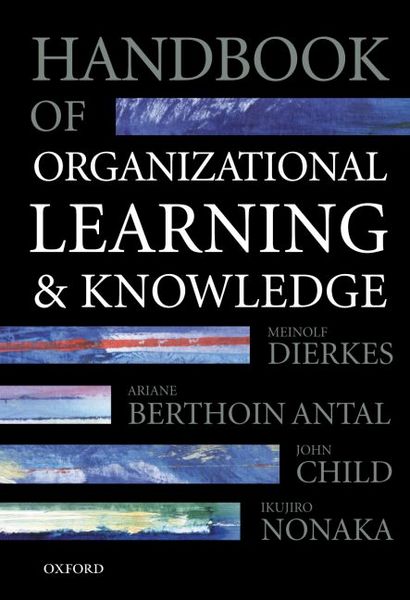
Produktbild: Handbook of Organizational Learning and Knowledge

Handbook of Organizational Learning and Knowledge

165,99 €

inkl. gesetzl. MwSt., Versandkostenfrei


Beschreibung

Produktdetails

Einband

Taschenbuch

Erscheinungsdatum

22.05.2003

Abbildungen

w. figs.

Herausgeber

Dierkes Meinolf + weitere

Verlag

Oxford University Press

Seitenzahl

1008

Maße (L/B/H)

24,9/17,2/6 cm

Gewicht

1696 g

Sprache

Englisch

ISBN

978-0-19-829582-2

Beschreibung

Rezension

Finalist for the 2002 Terry Book Award, Academy of Management." An excellent and monumental volume edited by a distinguished group of scholars" Professor Walter Nord, Chairman, Terry Book Award Committee

Produktdetails

Einband

Taschenbuch

Erscheinungsdatum

22.05.2003

Abbildungen

w. figs.

Herausgeber

Verlag

Oxford University Press

Seitenzahl

1008

Maße (L/B/H)

24,9/17,2/6 cm

Gewicht

1696 g

Sprache

Englisch

ISBN

978-0-19-829582-2

Herstelleradresse

Libri GmbH
Europaallee 1
36244 Bad Hersfeld
DE

Email: gpsr@libri.de

Ein neues Kapitel für Ihre Bücher

Ein neues Kapitel für Ihre Bücher

Schenken Sie Ihren alten Schätzen ein zweites Leben und erhalten Sie dafür eine Thalia Geschenkkarte.

Jetzt verkaufen
Jetzt verkaufen

Noch keine Bewertungen vorhanden

Verfassen Sie die erste Bewertung zu diesem Artikel

Helfen Sie anderen Kundinnen und Kunden durch Ihre Meinung.

Kundinnen und Kunden meinen

Bewertungen (0)

  • Produktbild: Handbook of Organizational Learning and Knowledge

    • Introduction: Finding Paths through the Handbook


    • Part I: Insights from Major Social Science Disciplines


    • 1: G. W. Maier, C. Prange, and L. von Rosenstiel: Psychological Perspectives of Organizational Learning


    • 2: S. Gherardi and D. Nicolini: The Sociological Foundations of Organizational Learning


    • 3: P. Pawlowsky: The Treatment of Organizational Learning in Management Science


    • 4: C. Boerner, J. T. Macher and D. J. Teece: A Review and Assessment of Organizational Learning in Economic Theories


    • 5: B. Czarniawska: Anthropology and Organizational Learning


    • 6: J. LaPalombara: The Underestimated Contributions of Political Science to Organizational Learning


    • 7: J. Fear: Thinking Historically about Organizational Learning


    • Part II: External Triggers for Learning


    • 8: L. von Rosenstiel and S. Koch: Change in Socioeconomic Values as a Trigger of Organizational Learning


    • 9: J. Kädtler: Social Movements and Interest Groups as Triggers for Organizational Learning


    • 10: H. Merkens, M. Geppert, and D. Antal: Triggers of Organizational Learning during the Transformation Process in Central European Countries


    • 11: J. Stopford: Organizational Learning as Guided Responses to Market Signals


    • 12: M. Dierkes, L. Marz, and C. Teele: Technological Visions, Technological Development, and Organizational Learning


    • Part III: Factors and Conditions Shaping Organizational Learning


    • 13: J. Child and S. Heavens: The Social Constitution of Organizations and its Implications for Organizational Learning


    • 14: W. Starbuck and B. Hedberg: How Organizations Learn from Success and Failure


    • 15: C. Weber and A. Berthoin Antal: The Role of Time in Organizational Learning


    • 16: K. Scherer and V. Tran: Effects of Emotions on the Process of Organizational Learning


    • Part IV: Agents of Organizational Learning


    • 17: V. Friedman: The Individual as Agent of Organizational Learning


    • 18: P. Sadler: Leadership and Organizational Learning


    • 19: R. Tainio, K. Lilja, and T. Santalainen: The Role of Boards in Facilitating or Limiting Learning in Organizations


    • 20: A. Drinkuth, C. Riegler, and R. Wolff: Labor Unions as Learning Organizations and Learning Facilitators


    • 21: A. Berthoin Antal and C. Krebsbach-Gnath: Consultants as Agents of Organizational Learning: The importance of marginality


    • Part V: Processes of Organizational Learning and Knowledge Creation


    • 22: I. Nonaka, R. Toyama, and P. Byosière: A Theory of Organizational Knowledge Creation: Understanding the dynamic process of creating knowledge


    • 23: B. Büchel and S. Raub: Media Choice and Organizational Learning


    • 24: B. Hedberg and R. Wolff: Organizing, Learning, and Strategizing: From construction to delivery


    • 25: J. LaPalombara: Power and Politics in Organizations: Public and private sector comparisons


    • 26: J. Rothman and V. Friedman: Identity, Conflict, and Organizational Learning


    • 27: A. Kieser, N. Beck, and R. Tainio: Rules and Organizational Learning: The behavioural theory approach


    • Part VI: Interorganizational Learning and Knowledge in a Global Context


    • 28: K. Macharzina, M. J. Oesterle, and D. Brodel: Learning in Multinationals


    • 29: J. Child: Learning Through Strategic Alliances


    • 30: M. Lyles: Organizational Learning in International Joint Ventures: The case of Hungary


    • 31: C. Lane: Organizational Learning in Supplier Networks


    • 32: L. S. Tsui-Auch: Learning in Global and Local Networks: Experience of Chinese firms in Hong Kong, Singapore, and Taiwan


    • 33: B. Hedberg and M. Holmqvist: Learning in Imaginary Organizations


    • Part VII: Developing Learning Practices


    • 34: V. Friedman, R. Lipshitz, and W. Overmeer: Creating Conditions for Organizational Learning


    • 35: P. Pawlowsky, J. Forslin, and R. Reinhardt: Practices and Tools of Organizational Learning


    • 36: R. Reinhardt, M. Bornemann, P. Pawlowsky, and U. Schneider: Intellectual Capital and Knowledge Management: Perspectives on measuring knowledge


    • Part VIII: Putting Learning into Practice


    • 37: I. Nonaka, P. Reinmöller, and R. Toyama: Integrated Information Technology Systems for Knowledge Creation


    • 38: G. Galer and K. van der Heijden: Scenarios and Their Contribution to Organizational Learning: From practice to theory


    • 39: A. Berthoin Antal, U. Lenhardt, and R. Rosenbrock: Barriers to Organizational Learning


    • 40: C. Krebsbach-Gnath: Applying Theory to Organizational Transformation


    • 41: C. de Haën, L. S. Tsui-Auch, and M. Alexis: Multimodal Organizational Learning: From misbehaviour to good laboratory practice in the pharmaceutical industry


    • Part IX: Conclusion


    • 42: A. Berthoin Antal, M. Dierkes, J. Child, and I. Nonaka: Organizational Learning and Knowledge: Reflections on the dynamics of the field and challenges for the future