KI-Beratung Beta

  • Produktbild: Intersubjective Communication and Emotion in Early Ontogeny
  • Produktbild: Intersubjective Communication and Emotion in Early Ontogeny

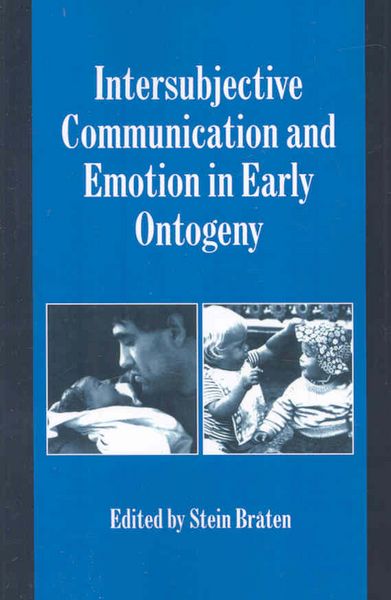
Intersubjective Communication and Emotion in Early Ontogeny

68,99 €

inkl. gesetzl. MwSt., Versandkostenfrei


Beschreibung

Produktdetails

Einband

Taschenbuch

Erscheinungsdatum

29.06.2006

Herausgeber

Stein Bråten + weitere

Verlag

Cambridge Academic

Seitenzahl

472

Maße (L/B/H)

22,9/15,2/2,8 cm

Gewicht

701 g

Sprache

Englisch

ISBN

978-0-521-02989-6

Beschreibung

Produktdetails

Einband

Taschenbuch

Erscheinungsdatum

29.06.2006

Herausgeber

Verlag

Cambridge Academic

Seitenzahl

472

Maße (L/B/H)

22,9/15,2/2,8 cm

Gewicht

701 g

Sprache

Englisch

ISBN

978-0-521-02989-6

Ein neues Kapitel für Ihre Bücher

Ein neues Kapitel für Ihre Bücher

Schenken Sie Ihren alten Schätzen ein zweites Leben und erhalten Sie dafür eine Thalia Geschenkkarte.

Jetzt verkaufen
Jetzt verkaufen

Noch keine Bewertungen vorhanden

Verfassen Sie die erste Bewertung zu diesem Artikel

Helfen Sie anderen Kundinnen und Kunden durch Ihre Meinung.

Kundinnen und Kunden meinen

Bewertungen (0)

  • Produktbild: Intersubjective Communication and Emotion in Early Ontogeny
  • Produktbild: Intersubjective Communication and Emotion in Early Ontogeny
  • List of figures; List of tables; List of contributors; Preface; Introduction; Part I. Intersubjective Attunement in Human Infancy and Impairment in Autism: 1. The concept and foundations of infant intersubjectivity Colwyn Trevarthen; 2. Infant intersubjectivity: broadening the dialogue to include imitation, identity and intention Andrew N. Meltzoff and M. Keith Moore; 3. Neonatal imitation in the intersubjective companion space Giannis Kugiumutzakis; 4. Imitation in neonates, in older infants and in children with autism: feedback to theory Mikael Heimann; 5. Infant learning by altercentric participation: the reverse of egocentric observation in autism Stein Bråten; Part II. Companionship and Emotional Responsiveness in Early Childhood: 6. Contributions of experimental and clinical perturbations of mother-infant communication to the understanding of infant intersubjectivity Lynne Murray; 7. Empathy and its origins in early development Ross A. Thompson; 8. Siblings, emotion and the development of understanding Judy Dunn; 9. The company children keep: suggestive evidence from cultural studies Carolyn Pope Edwards; Part III. Imitation, Emotion and Understanding in Primate Communication: 10. Ontogeny, communication and parent-offspring relationships Patrick Bateson; 11. Social-experiential contributions to imitation and emotion in chimpanzees Kim A. Bard; 12. Imitation: the contributions of priming and program-level copying Richard W. Byrne; 13. Do concepts of intersubjectivity apply to non-human primates? Juan Carlos Gomez; 14. Imitation and the reading of other minds: perspectives from the study of autism, normal children and non-human primates Andrew Whiten and Julie D. Brown; Part IV. Intersubjective Attunement and Emotion in Language Learning and Use: 15. The intersubjective foundations of thought R. Peter Hobson; 16. Language, culture and intersubjectivity: the creation of shared perception Patricia K. Kuhl; 17. Intersubjectivity in early language learning and use Nameera Akhtar and Michael Tomasello; 18. Fictional absorption: emotional response to make-believe Paul L. Harris; 19. Intersubjective attunement and linguistically mediated meaning in discourse Ragnar Rommetveit; 20. Intersubjective communion and understanding: development and perturbation Stein Bråten; References; Indexes.