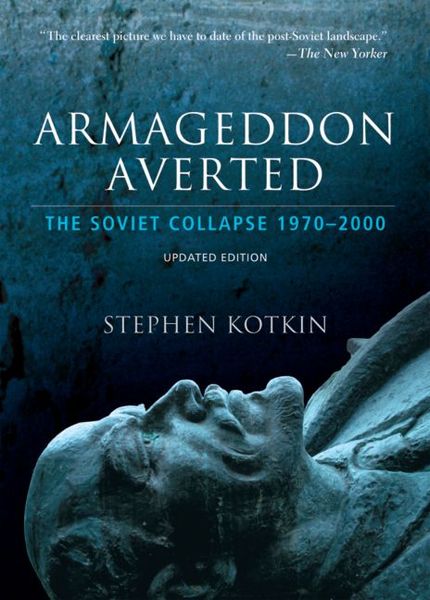
Armageddon Averted The Soviet Collapse, 1970-2000
-
- Hardcover
- Taschenbuch ausgewählt
- eBook
-
Sprache:Englisch
24,99 €
inkl. gesetzl. MwSt.,
Beschreibung
Produktdetails
Einband
Taschenbuch
Erscheinungsdatum
23.12.2008
Abbildungen
34 line illustrations
Verlag
Oxford University Press IncSeitenzahl
304
Maße (L/B/H)
19,1/13,9/2,2 cm
Gewicht
351 g
Farbe
Anthrazit
Auflage
2 Revised edition
Sprache
Englisch
ISBN
978-0-19-536863-5
Featuring extensive revisions as well as a new introduction and epilogue--bringing the book completely up to date on the politics of the previous decade and the long-term implications of the Soviet collapse--this compact, original, and engaging book offers the definitive account of one of the great historical events of the last fifty years. Combining historical and geopolitical analysis with an absorbing narrative, Kotkin draws upon extensive research, including memoirs by dozens of insiders and senior figures, to illuminate the factors that led to the demise of Communism and the USSR.
Ein neues Kapitel für Ihre Bücher
Ein neues Kapitel für Ihre Bücher
Schenken Sie Ihren alten Schätzen ein zweites Leben und erhalten dafür eine Thalia Geschenkkarte.
Noch keine Bewertungen vorhanden
Verfassen Sie die erste Bewertung zu diesem Artikel
Helfen Sie anderen Kundinnen und Kunden durch Ihre Meinung.
Kurze Frage zu unserer Seite
Vielen Dank für Ihr Feedback
Wir nutzen Ihr Feedback, um unsere Produktseiten zu verbessern. Bitte haben Sie Verständnis, dass wir Ihnen keine Rückmeldung geben können. Falls Sie Kontakt mit uns aufnehmen möchten, können Sie sich aber gerne an unseren Kund*innenservice wenden.
zum Kundenservice