Beschreibung
Produktdetails
Einband
Gebundene Ausgabe
Erscheinungsdatum
25.10.1994
Verlag
Duke University PressSeitenzahl
200
Maße (L/B/H)
23,1/14,9/2 cm
Gewicht
467 g
Sprache
Englisch
ISBN
978-0-8223-1476-9
In Horace’s
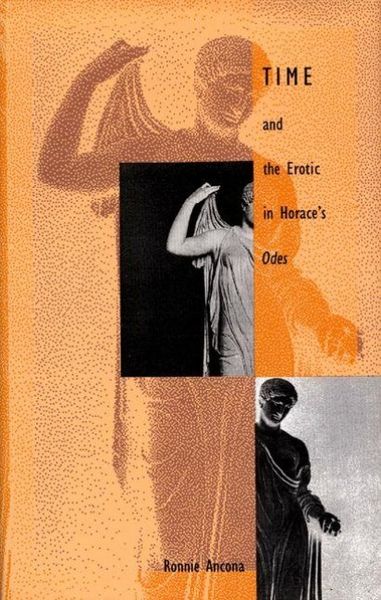
Odes love cannot last. Is the poet unromantic, as some critics claim? Is he merely realistic? Or is he, as Ronnie Ancona contends, relating the erotic to time in a more complex and interesting way than either of these positions allows? Rejecting both the notion that Horace fails as a love poet because he undermines the romantic ideal that love conquers time and the notion that he succeeds becauses he eschews illusions about love’s ability to endure, this book challenges the assumption that temporality must inevitably pose a threat to the erotic. The author argues that temporality, understood as the contingency the male poet/lover wants to but cannot control, explains why love "fails" in Horace’s
Odes.
Drawing on contemporary theory, including recent work in feminist criticism, Ancona provides close readings of fourteen odes, which are presented in English translation as well as in Latin. Through a discussion of the poet’s use of various temporal devices-the temporal adverb, seasonal imagery, and the lover or beloved’s own temporality-she shows how Horace makes time dominate the erotic context and, further, how the version of love that appears in his poems is characterized by the lover’s desire to control the beloved. The romantic ideal of a timeless love, apparently rejected by the poet, emerges here instead as an underlying element of the poet’s portrayal of the erotic. In a critique of the predominant modes of recent Horatian scholarship on the love odes, Ancona offers an alternative view that takes into account the male gender of the lover and its effect on the structure of desire in the poems. By doing so, she advances a broader project in recent classical studies that aims to include discussion of features of classical literature, such as sexuality and gender, which have previously escaped critical attention.
Addressing aspects of Horace as a love poet-especially the dynamics of gender relations-that critics have tended to ignore, this book articulates his version of love as something not to be championed or condemned but rather to be seen as challengingly problematic. Of primary interest to classicists, it will also engage the attention of scholars and teachers in the humanities with specializations in gender, sexuality, lyric poetry, or feminist theory.
Ein neues Kapitel für Ihre Bücher
Ein neues Kapitel für Ihre Bücher
Schenken Sie Ihren alten Schätzen ein zweites Leben und erhalten Sie dafür eine Thalia Geschenkkarte.
Noch keine Bewertungen vorhanden
Verfassen Sie die erste Bewertung zu diesem Artikel
Helfen Sie anderen Kundinnen und Kunden durch Ihre Meinung.
Kurze Frage zu unserer Seite
Vielen Dank für Ihr Feedback
Wir nutzen Ihr Feedback, um unsere Produktseiten zu verbessern. Bitte haben Sie Verständnis, dass wir Ihnen keine Rückmeldung geben können. Falls Sie Kontakt mit uns aufnehmen möchten, können Sie sich aber gerne an unseren Kund*innenservice wenden.
zum Kundenservice