KI-Beratung Beta

Produktbild: The Land Is Dying
Band 5

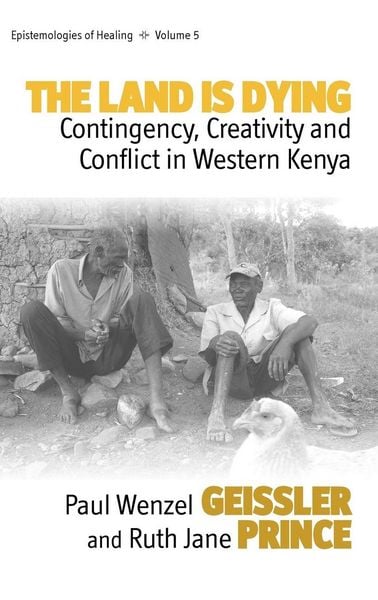
The Land Is Dying Contingency, Creativity and Conflict in Western Kenya

167,99 €

inkl. gesetzl. MwSt., Versandkostenfrei


Beschreibung

Produktdetails

Einband

Gebundene Ausgabe

Erscheinungsdatum

01.06.2010

Abbildungen

Illustrationen, nicht spezifiziert, Karten

Verlag

Ingram Publishers Services

Seitenzahl

444

Maße (L/B/H)

24/16,1/2,8 cm

Gewicht

828 g

Sprache

Englisch

ISBN

978-1-84545-481-4

Beschreibung

Produktdetails

Einband

Gebundene Ausgabe

Erscheinungsdatum

01.06.2010

Abbildungen

Illustrationen, nicht spezifiziert, Karten

Verlag

Ingram Publishers Services

Seitenzahl

444

Maße (L/B/H)

24/16,1/2,8 cm

Gewicht

828 g

Sprache

Englisch

ISBN

978-1-84545-481-4

Herstelleradresse

Libri GmbH
Europaallee 1
36244 Bad Hersfeld
DE

Email: gpsr@libri.de

Ein neues Kapitel für Ihre Bücher

Ein neues Kapitel für Ihre Bücher

Schenken Sie Ihren alten Schätzen ein zweites Leben und erhalten Sie dafür eine Thalia Geschenkkarte.

Jetzt verkaufen
Jetzt verkaufen

Noch keine Bewertungen vorhanden

Verfassen Sie die erste Bewertung zu diesem Artikel

Helfen Sie anderen Kundinnen und Kunden durch Ihre Meinung.

Kundinnen und Kunden meinen

Bewertungen (0)

Die Leseprobe wird geladen.
  • Produktbild: The Land Is Dying
  • Table of illustrations
    Acknowledgements

    Chapter 1. Introduction: "Are we still together here?"

    • A community at the end of the world
    • The death of today
    • Growing relations
    • Being together
    • Growth
    • Touch
    • Searching for another social practice
    • Engaging boundaries
    • Hygiene
    • Knowing boundaries
    • Changing perspectives?
    • Coming together
    • Visiting

    Chapter 2. Landscapes and histories

    • Returns
    • A road in time
    • Kisumu
    • Driving out Bondo District
    • The lake
    • Piny Luo - 'Luoland'
    • A 'tribe'
    • Luo sociality
    • The reserve
    • Return to Uhero Yimbo Muthurwa
    • Making Uhero village
    • (Re-)Settlement
    • Belonging and ownership
    • A modern Luo village
    • 'Down' into the village
    • 'Up' and 'down' KaOkoth
    • Alternative 'modernities': the beach and 'Jerusalem'
    • KaOgumba

    Chapter 3. Salvation and Tradition: heaven and earth?

    • Dichotomies in everyday life
    • Salvation
    • Strong Christians
    • Saved life
    • Saved and others
    • Faith in purity
    • Tradition
    • The Luo rules
    • 'Born-again'
    • Traditionalism
    • Traditionalism, Christianity and The West
    • Customary everyday life
    • Searching ways
    • Tradition in everyday life
    • Everyday ritual
    • The absence of ritual
    • The omnipresence of ritual

    PART ONE

    Chapter 4. 'Opening the way': being at home in Uhero

    • Introduction
    • "Our culture says that one must make a home"
    • Relational flows: embedding growth in the home
    • Tom's new home
    • Moving forward - directions
    • Openings and closures
    • Order and sequence
    • Complementarity and growth: coming together in the house
    • Making a house
    • Sharing the gendered house
    • The living house
    • Gender, generation and growth
    • Struggling against implication
    • The home in heaven
    • 'The rules of the home'
    • Powers of explication
    • Practicing rules
    • Cementing relations
    • Traditionalism and other kinds of ethnography

    5. Growing children: shared persons and permeable bodies

    • Introduction
    • Sharing
    • Sharing or exchange?
    • Sharing food
    • Food, blood and kinship
    • 'The child is of the mother'
    • Changed foods and relations
    • Sharing and dividing nurture
    • Shared bodies
    • Illnesses of infancy and their treatment
    • Evil eye and spirits
    • Medical pluralism?
    • Herbal medicines
    • Cleanness and dirt
    • Sharing names
    • Being named after
    • Being called
    • Sharing names and naming shares
    • Conclusion

    PART TWO

    Chapter 6. Order and decomposition: touch around sickness and death

    • Introduction
    • Otoyo's home
    • The sickness of a daughter
    • Return of a daughter
    • Kwer and chira
    • Continuity and contingency
    • Avoiding the rules
    • Treating chira
    • Caring
    • The death of a husband
    • Expected death
    • "She should remember her love!"
    • Death
    • The funeral
    • The dead body
    • Loving people
    • Conclusion

    Chapter 7. 'Life Seen': touch, vision and speech in the making of sex in Uhero

    • Introduction
    • Earthly ethics and Christian morality
    • Riwruok
    • Riwruok: outside intentionality
    • Chira: Growth and directionality
    • Chodo and luor: continuity and change
    • Cleanness: Sex and separation
    • The proliferation of 'Sex'
    • AIDS and chira
    • The fight against AIDS
    • Pornography - 'bad things'
    • Conclusion

    Chapter 8. "Our Luo culture is sick": identity and infection in the debate about widow inheritance

    • Introduction
    • Testing positive
    • Becoming a widow
    • Contentious practices
    • A tough head
    • Tero
    • Independence
    • Alone
    • Inheritance and infection
    • Past and present tero
    • Fighting tero
    • Deprivation and property
    • Inheriting HIV - fears about women's sexuality and social reproduction
    • Turning tero into a business
    • Ambiguous heritage: Tero as source of identity and infection
    • 'Our Luo culture is sick'
    • 'The most elaborate and solemn ritual': tero is our culture
    • Sanitising Luo culture?
    • Conclusion

    PART THREE

    Chapter 9. "How can we drink his tea without killing a bull?" - funerary ceremony and matters of remembrance

    • Introduction
    • Funerary ceremonies
    • Funerals in Uhero
    • Funeral commensality
    • Returning to the funeral
    • Osure's sawo
    • An Earthly feast
    • Rebekka
    • Eating the sawo
    • Traces of the past
    • 'Sides'
    • Baba Winston's memorial
    • A Christian funerary celebration
    • Debates
    • The service
    • Remembrance
    • Conclusion

    Chapter 10. "The land is dying" - Traces and monuments in the village landscape

    • Introduction
    • Cutting the land
    • Ownership
    • Land, paper and power
    • Living on the land
    • Gardens and farms
    • The bush
    • Fences
    • At home
    • Traces and inscriptions
    • Getting one's land - finding one's place
    • Conclusion

    Chapter 11. Contingency, creativity and difference in western Kenya

    • Creative difference
    • Old and new dealings with hybridity
    • "Are we still together here?"
    • Postscript
    • Ka-Ogumba 2007

    Bibliography
    Books and Articles
    Newspaper articles and electronic media
    Music
    Index