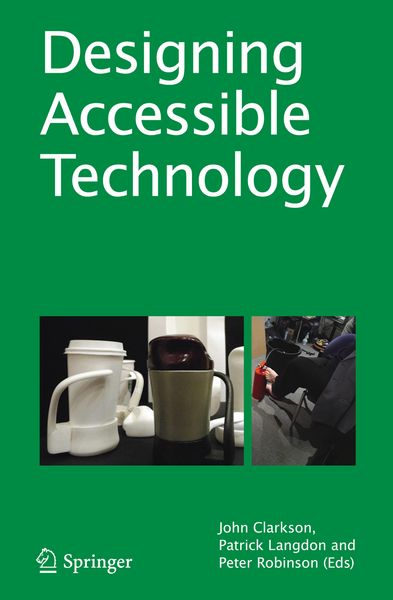
Designing Accessible Technology
-
- Hardcover
- Taschenbuch ausgewählt
- eBook
-
Sprache:Englisch
185,99 €
UVP
213,99 €
inkl. gesetzl. MwSt.,
Beschreibung
Produktdetails
Einband
Taschenbuch
Erscheinungsdatum
13.10.2010
Abbildungen
XIV, 250 p.
Herausgeber
P. John Clarkson + weitereVerlag
Springer LondonSeitenzahl
250
Maße (L/B/H)
23,5/15,5/1,5 cm
Gewicht
411 g
Sprache
Englisch
ISBN
978-1-84996-588-0
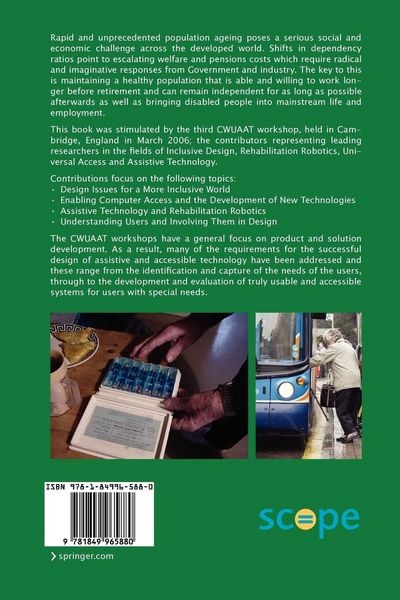
Rapid and unprecedented population ageing poses a serious social and economic challenge across the developed world. Shifts in dependency ratios point to escalating welfare and pensions costs which require radical and imaginative responses from Government and industry. Key to this is a healthy population able and willing to work longer before retirement and who can be independent for as long as possible afterwards as well as bringing disabled people into mainstream life and employment.
This book was stimulated by the 3rd CWUAAT workshop (the CWUAAT workshops have a general focus on product and solution development). It was held in Cambridge, UK in April 2006. Contributions from leading researchers focused on:
- design issues for a more inclusive world;
- enabling computer access and the development of new technologies;
- assistive technology and rehabilitation robotics; and,
- understanding users and involving them in design.
Ein neues Kapitel für Ihre Bücher
Ein neues Kapitel für Ihre Bücher
Schenken Sie Ihren alten Schätzen ein zweites Leben und erhalten Sie dafür eine Thalia Geschenkkarte.
Noch keine Bewertungen vorhanden
Verfassen Sie die erste Bewertung zu diesem Artikel
Helfen Sie anderen Kundinnen und Kunden durch Ihre Meinung.
Kurze Frage zu unserer Seite
Vielen Dank für Ihr Feedback
Wir nutzen Ihr Feedback, um unsere Produktseiten zu verbessern. Bitte haben Sie Verständnis, dass wir Ihnen keine Rückmeldung geben können. Falls Sie Kontakt mit uns aufnehmen möchten, können Sie sich aber gerne an unseren Kund*innenservice wenden.
zum Kundenservice