KI-Beratung Beta

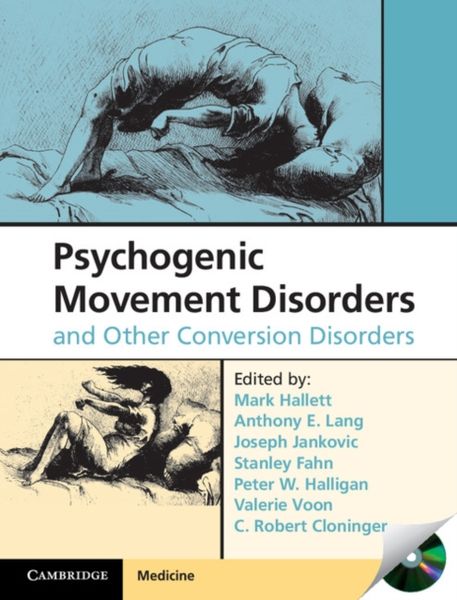
Produktbild: Psychogenic Movement Disorders and Other Conversion Disorders

Psychogenic Movement Disorders and Other Conversion Disorders

177,99 €

inkl. gesetzl. MwSt., Versandkostenfrei


Beschreibung

Produktdetails

Einband

Taschenbuch

Erscheinungsdatum

01.12.2011

Abbildungen

39 b/w illus. 12 colour illus.

Herausgeber

Mark Hallett + weitere

Verlag

Cambridge University Press

Seitenzahl

336

Maße (L/B/H)

26/20/2,3 cm

Gewicht

911 g

Sprache

Englisch

ISBN

978-1-107-00734-5

Beschreibung

Produktdetails

Einband

Taschenbuch

Erscheinungsdatum

01.12.2011

Abbildungen

39 b/w illus. 12 colour illus.

Herausgeber

Verlag

Cambridge University Press

Seitenzahl

336

Maße (L/B/H)

26/20/2,3 cm

Gewicht

911 g

Sprache

Englisch

ISBN

978-1-107-00734-5

Herstelleradresse

Libri GmbH
Europaallee 1
36244 Bad Hersfeld
DE

Email: gpsr@libri.de

Ein neues Kapitel für Ihre Bücher

Ein neues Kapitel für Ihre Bücher

Schenken Sie Ihren alten Schätzen ein zweites Leben und erhalten Sie dafür eine Thalia Geschenkkarte.

Jetzt verkaufen
Jetzt verkaufen

Noch keine Bewertungen vorhanden

Verfassen Sie die erste Bewertung zu diesem Artikel

Helfen Sie anderen Kundinnen und Kunden durch Ihre Meinung.

Kundinnen und Kunden meinen

Bewertungen (0)

  • Produktbild: Psychogenic Movement Disorders and Other Conversion Disorders
  • Preface; Part I. Clinical Issues: 1. Introduction to the psychiatry of conversion disorders; 2. Phenomenology of psychogenic movement disorders; 3. Psychogenic parkinsonism; 4. Epidemiology and clinical impact of psychogenic movement disorders; 5. The Scottish neurological symptoms study: diagnosis and prognosis in 1144 new neurology outpatients with symptoms unexplained by disease; 6. Predisposition and issues of mixed etiology in psychogenic movement disorders; 7. Psychogenic movement disorders in children; 8. Childhood disorders: another perspective; 9. Clinical features and treatment outcome of conversion disorders in children and adolescents; 10. Somatoform disorders and psychogenic movement disorders; 11. Psychogenic non-epileptic seizures; 12. Hypochondriasis and its relationship to somatization; 13. Movement disorders in complex regional pain syndrome - the pain field perspective; 14. Psychogenic dystonia in psychogenic complex regional pain syndrome; 15. Latah and related syndromes; 16. Trauma and dissociation: clinical manifestations epidemiology, pathogenesis and treatment; 17. Psychogenic movement disorders: illness in search of disease?; 18. Possible genetic approaches to conversion; Part II. Physiology: 19. Functional brain imaging of psychogenic paralysis during conversion and hypnosis; 20. Action control in conversion paralysis: evidence from motor imagery; 21. Imaging in psychogenic movement disorders; 22. Imaging: hysterical, hypnotically suggested and malingered limb paralysis; 23. Functional imaging of psychogenic and feigned weakness; 24. An fMRI study of recall of causal life-events in conversion disorder: preliminary evidence of increased orbito-frontal and parietal activation; 25. Cortisol, trauma and threat vigilance in patients with psychogenic non-epileptic seizures; 26. Components of voluntary action; 27. Action selection in psychogenic movement disorders; 28. Insights from physiology: tremor and myoclonus; 29. Physiology of psychogenic dystonia; 30. Evoked potentials in the assessment of patients with suspected psychogenic sensory symptoms; 31. Characterizing and assessing the spectrum of volition in psychogenic movement disorders; Part III. Assessment: 32. Rating scales for psychogenic movement disorders; 33. Quality of life in psychogenic movement disorders: the cause not the effect; 34. Psychiatric testing; 35. Diagnostic considerations for the assessment of malingering within the context of psychogenic movement disorders; Part IV. Treatment: 36. Prognosis in patients with psychogenic movement disorders; 37. Presenting the diagnosis; 38. Patterns of practice [MDS Questionnaire report]; 39. Psychotherapy for psychogenic movement disorders; 40. Pharmacotherapy; 41. Suggestion; 42. Treating psychogenic movement disorders with suggestion; 43. In-patient therapy: trying to transcend pathological dissociation, dependence and disability; 44. Appendix: psychogenic movement disorders, video legends; Index.