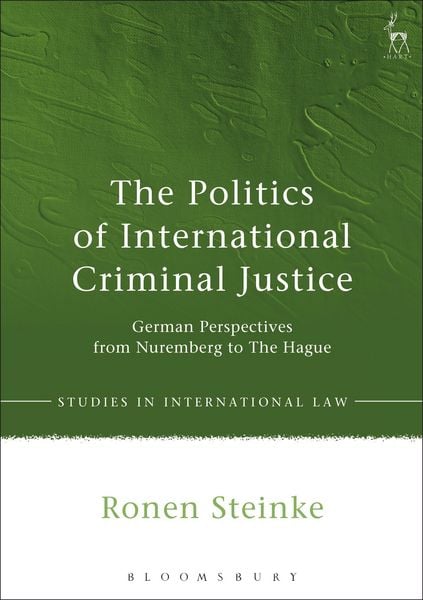
The Politics of International Criminal Justice
93,99 €
inkl. gesetzl. MwSt.,
Beschreibung
Produktdetails
Einband
Gebundene Ausgabe
Erscheinungsdatum
25.05.2012
Verlag
BloomsburySeitenzahl
162
Maße (L/B/H)
25/16,4/2 cm
Gewicht
405 g
Sprache
Englisch
ISBN
978-1-84946-313-3
To anyone setting out to explore the entanglement of international criminal justice with the interests of States, Germany is a particularly curious, exemplary case. Although a liberal democracy since 1949, its political position has altered radically in the last 60 years. Starting from a position of harsh scepticism in the years following the Nuremberg Trials, and opening up to the rationales of international criminal justice only slowly - and then mainly in the context of domestic trials against functionaries of the former East German regime after 1990 - Germany is today one of the most active supporters of the International Criminal Court. The climax of this is its campaigning to make the ICC independent of the UN Security Council - a debate in which Germany took a position in stark contrast to the United States. This book offers new insight into the debates leading up to such policy shifts. Drawing on government documents and interviews with policymakers, it enriches a broader debate on the politics of international criminal justice which has to date often been focused primarily on the United States.
Ein neues Kapitel für Ihre Bücher
Ein neues Kapitel für Ihre Bücher
Schenken Sie Ihren alten Schätzen ein zweites Leben und erhalten Sie dafür eine Thalia Geschenkkarte.
Noch keine Bewertungen vorhanden
Verfassen Sie die erste Bewertung zu diesem Artikel
Helfen Sie anderen Kundinnen und Kunden durch Ihre Meinung.
Kurze Frage zu unserer Seite
Vielen Dank für Ihr Feedback
Wir nutzen Ihr Feedback, um unsere Produktseiten zu verbessern. Bitte haben Sie Verständnis, dass wir Ihnen keine Rückmeldung geben können. Falls Sie Kontakt mit uns aufnehmen möchten, können Sie sich aber gerne an unseren Kund*innenservice wenden.
zum Kundenservice