KI-Beratung Beta

Gutscheinbedingungen

Gültig bis 21.10.2026 | Gültig für nicht preisgebundene fremdsprachige Bücher | Einzelne Artikel können ausgeschlossen sein | Online auf thalia.de und in der Thalia App einlösbar | Click & Collect nur mit Online-Zahlung (Paypal/Kreditkarte) vorab | Nicht kombinierbar mit anderen Gutscheinen oder Preisaktionen | Nur einmal pro Einkauf einlösbar | Gutschein wird auf max. 500€ Bestellwert angerechnet | Keine Barauszahlung | Nicht gültig für Versandkosten und Services

  • Produktbild: Medicinal and Aromatic Plants X
  • Produktbild: Medicinal and Aromatic Plants X
Band 41 - 10%

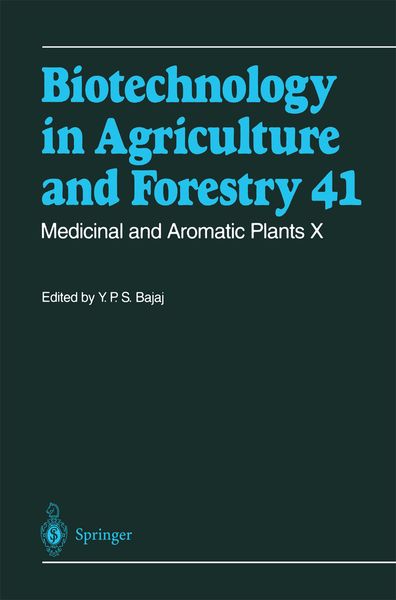
Medicinal and Aromatic Plants X

10% sparen

287,99 € UVP 320,99 €

inkl. gesetzl. MwSt., Versandkostenfrei


Beschreibung

Produktdetails

Einband

Taschenbuch

Erscheinungsdatum

13.10.2012

Abbildungen

XX, 460 p. 226 illus., 1 illus. in color.

Herausgeber

Y.P.S. Bajaj

Verlag

Springer Berlin

Seitenzahl

460

Maße (B/H)

15,5/23,5 cm

Gewicht

727 g

Auflage

1. Auflage

Sprache

Englisch

ISBN

978-3-642-63748-3

Herstelleradresse

Springer Heidelberg
Tiergartenstr. 17
69121 Heidelberg
DE
buchhandel-buch@springer.com

Ein neues Kapitel für Ihre Bücher

Ein neues Kapitel für Ihre Bücher

Schenken Sie Ihren alten Schätzen ein zweites Leben und erhalten Sie dafür eine Thalia Geschenkkarte.

Jetzt verkaufen
Jetzt verkaufen

Noch keine Bewertungen vorhanden

Verfassen Sie die erste Bewertung zu diesem Artikel

Helfen Sie anderen Kundinnen und Kunden durch Ihre Meinung.

Kundinnen und Kunden meinen

Bewertungen (0)

  • Produktbild: Medicinal and Aromatic Plants X
  • Produktbild: Medicinal and Aromatic Plants X
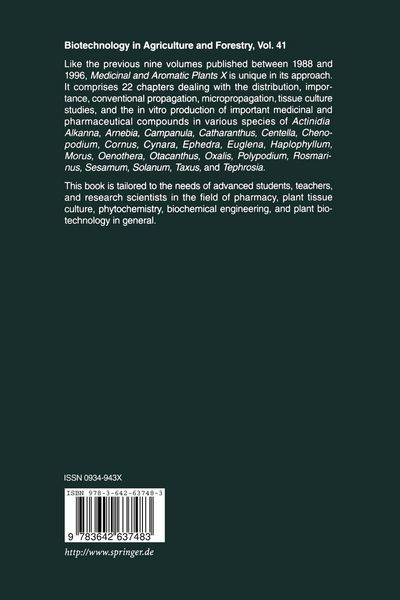
  • I Actinidia polygama (Japanese name Matatabi): In Vitro Culture, Micropropagation, and the Production of Monoterpenes and Triterpenoids.- II Alkanna tinctoria T. (Alkanets): In Vitro Culture and the Production of Alkannin and Other Secondary Metabolites.- III Arnebia euchroma: In Vitro Culture and the Production of Shikonin and Other Secondary Metabolites.- IV Campanula (Bellflower) Species: In Vitro Culture, Micropropagation, and the Production of Anthocyanins, Polyacetylenes, and Other Secondary Metabolites.- V Catharanthus roseus (Periwinkle): In Vitro Culture, and High-Level Production of Arbutin by Biotransformation.- VI Centella asiatica (L.) Urban. (Pennywort): Cell Culture, Production of Terpenoïds, and Biotransformation Capacity.- VII Chenopodium album L. (Fat Hen): In Vitro Cell Culture, and Production of Secondary Metabolites (Phytosterols and Ecdysteroids).- VIII Cornus kousa (Dogwood): In Vitro Culture, and the Production of Tannins and Other Phenolic Compounds.- IX Cynara cardunculus subsp. flavescens (Cardoon): In Vitro Culture, and the Production of Cyprosins — Milk Clotting Enzymes.- X Ephedra Species: In Vitro Culture, Micropropagation and the Production of Ephedrine and Other Alkaloids.- XI Euglena gracilis Z: Biotransformation of Terpenoids and Related Compounds.- XII Haplophyllum patavinum (L.) G. Don fil. (Paduan rue): In Vitro Regeneration, and the Production of Coumarin Compounds.- XIII Morus Species (Mulberry): In Vitro Culture, Micropropagation, and the Formation of Mulberrofuran, Kuwanol, and Other Secondary Metabolites.- XIV Oenothera Species (Evening Primrose): In Vitro Regeneration, Production of Flavonoids, Fatty Acids, and Other Secondary Metabolites.- XV Otacanthus Species: In Vitro Culture, Plant Propagation, and the Production ofEssential Oil.- XVI Oxalis Species: In Vitro Culture, Micropropagation, and the Formation of Anthocyanins.- XVII Polypodium vulgare L. (Wood Fern): In Vitro Cultures and the Production of Phytoecdysteroids.- XVIII Rosmarinus officinalis L. (Rosemary): In Vitro Culture, Regeneration of Plants, and the Level of Essential Oil and Monoterpenoid Constituents.- XIX Sesamum indicum L. (Sesame): In Vitro Culture, and the Production of Naphthoquinone and Other Secondary Metabolites.- XX Solanum mammosum L. (Terong Susu): In Vitro Culture and the Production of Steroidal Alkaloids and Other Secondary Metabolites.- XXI Taxus Species (Yew): In Vitro Culture, and the Production of Taxol and Other Secondary Metabolites.- XXII Tephrosia vogelii Hook f.: In Vitro Culture, and the Production of Rotenoids and Other Secondary Metabolites.