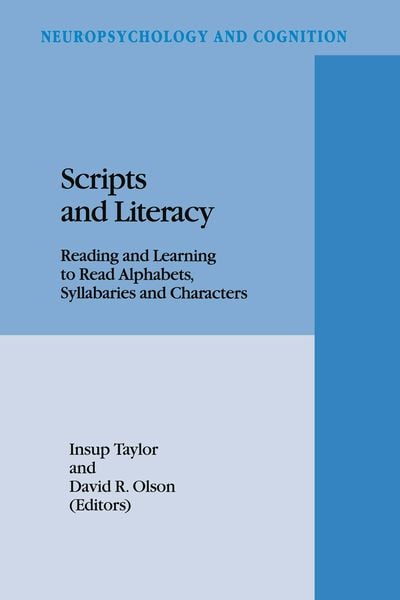
Scripts and Literacy Reading and Learning to Read Alphabets, Syllabaries and Characters
-
- Hardcover
- Taschenbuch ausgewählt
-
Sprache:Englisch
49,99 €
inkl. gesetzl. MwSt.,
Beschreibung
Produktdetails
Einband
Taschenbuch
Erscheinungsdatum
20.10.2012
Abbildungen
VII, 389 p.
Herausgeber
I. Taylor + weitereVerlag
Springer NetherlandSeitenzahl
389
Maße (L/B/H)
24/16/2,2 cm
Gewicht
637 g
Auflage
1995 edition
Sprache
Englisch
ISBN
978-94-010-4506-3
Literacy is a concern of all nations of the world, whether they be classified as developed or undeveloped. A person must be able to read and write in order to function adequately in society, and reading and writing require a script. But what kinds of scripts are in use today, and how do they influence the acquisition, use and spread of literacy?
Scripts and Literacy
is the first book to systematically explore how the nature of a script affects how it is read and how one learns to read and write it. It reveals the similarities underlying the world's scripts and the features that distinguish how they are read.
Scholars from different parts of the world describe several different scripts, e.g. Japanese, Chinese, Korean, Indian Amerindian -- and how they are learned. Research data and theories are presented.
This book should be of primary interest to educators and researchers in reading and writing around the world.
Ein neues Kapitel für Ihre Bücher
Ein neues Kapitel für Ihre Bücher
Schenken Sie Ihren alten Schätzen ein zweites Leben und erhalten Sie dafür eine Thalia Geschenkkarte.
Noch keine Bewertungen vorhanden
Verfassen Sie die erste Bewertung zu diesem Artikel
Helfen Sie anderen Kundinnen und Kunden durch Ihre Meinung.
Kurze Frage zu unserer Seite
Vielen Dank für Ihr Feedback
Wir nutzen Ihr Feedback, um unsere Produktseiten zu verbessern. Bitte haben Sie Verständnis, dass wir Ihnen keine Rückmeldung geben können. Falls Sie Kontakt mit uns aufnehmen möchten, können Sie sich aber gerne an unseren Kund*innenservice wenden.
zum Kundenservice