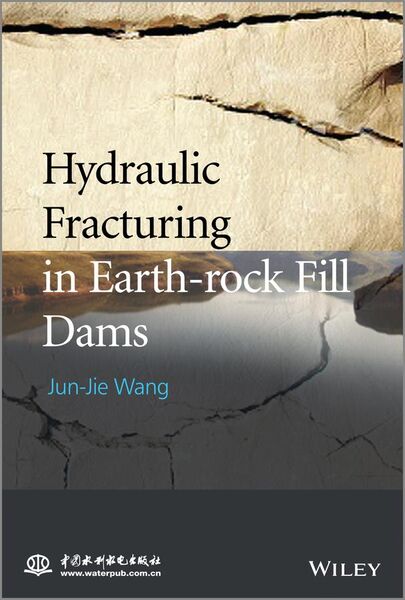
Hydraulic Fracturing in Earth-rock Fill Dams
219,99 €
inkl. gesetzl. MwSt.,
Beschreibung
Produktdetails
Einband
Gebundene Ausgabe
Erscheinungsdatum
11.08.2014
Verlag
John Wiley & Sons IncSeitenzahl
272
Maße (L/B/H)
24,9/17,2/2 cm
Gewicht
578 g
Auflage
1. Auflage
Sprache
Englisch
ISBN
978-1-118-72550-4
Presents a systematic and comprehensive study of hydraulic fracturing, original in its concentration of core soil problems
There have been a number of well-studied cases in which dams have failed or been damaged by concentrated leaks for no apparent cause. In some of these experiences, investigators concluded that differential settlement cracks were the probable causes, even though no cracks were seen on the surface. In these examples, it was not determined whether the crack was open before the reservoir filled or whether it might have opened afterward. In several unsolved problems on the safety of the earth-rock fill dam, the problem of hydraulic fracture in the soil core of the earth-rock fill dam is one that is widely paid attention by designers and researchers. Hydraulic fracturing is generally considered as a key cause which may induce the leakage of the dam during first filling.
In this extensive book, a new numerical simulate method is suggested. The method is based on the conventional two-dimensional finite element technique, and the theoretical formulations to calculate energy release rate using virtual crack extension method. The influence factors on convergence of calculated J integral are investigated. The accuracy of the calculated J integral is verified by analysing the three typical problems in Fracture Mechanics, in which propagation of crack may follow mode I, mode II and mixed mode I-II respectively. Using the new numerical method, the factors affecting the occurrence of hydraulic fracturing in the earth-rock fill dam are investigated. The investigating results indicate that increasing any of the Young's modulus, the Poisson's ratio and the density of the core soil is helpful to reduce the likelihood of the occurrence of hydraulic fracturing. The likelihood of the occurrence of hydraulic fracturing increases with increasing the water level or the crack depth. The lower part of the dam core is the zone in which the phenomenon of hydraulic fracturing may be induced easily. As an example to analyse the ability of earth-rock fill dam to resist hydraulic fracturing, the Nuozhadu Dam located in Western China is analysed.
- Presents a systematic and comprehensive study of hydraulic fracturing, original in its concentration of core soil problems
- Focuses on the problem of hydraulic fracturing in earth-rock fill dams from three aspects; conditions and mechanisms of hydraulic fracturing, criterion of hydraulic fracturing, and numerical method on hydraulic fracturing
- Examines advanced laboratory soil testing, application of numerical methods and field testing/monitoring, all needed for a better understanding of hydraulic fracturing in earth/rock fill dams
- Provides an essential reference in an area of scarce research in this field, and the need in high earth dam construction in developing countries is pressing
Ideal for researchers in Hydraulic and Geotechnical Engineering Fields; Students on Masters or PhD courses; as well as Designers and Constructors in Hydraulic and Geotechnical Engineering Fields.
Ein neues Kapitel für Ihre Bücher
Ein neues Kapitel für Ihre Bücher
Schenken Sie Ihren alten Schätzen ein zweites Leben und erhalten Sie dafür eine Thalia Geschenkkarte.
Noch keine Bewertungen vorhanden
Verfassen Sie die erste Bewertung zu diesem Artikel
Helfen Sie anderen Kundinnen und Kunden durch Ihre Meinung.
Kurze Frage zu unserer Seite
Vielen Dank für Ihr Feedback
Wir nutzen Ihr Feedback, um unsere Produktseiten zu verbessern. Bitte haben Sie Verständnis, dass wir Ihnen keine Rückmeldung geben können. Falls Sie Kontakt mit uns aufnehmen möchten, können Sie sich aber gerne an unseren Kund*innenservice wenden.
zum Kundenservice