KI-Beratung Beta

  • Produktbild: Fire and Plants
  • Produktbild: Fire and Plants
Band 14 - 12%

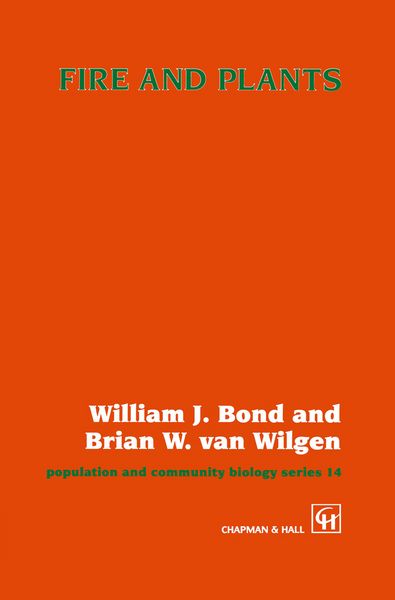
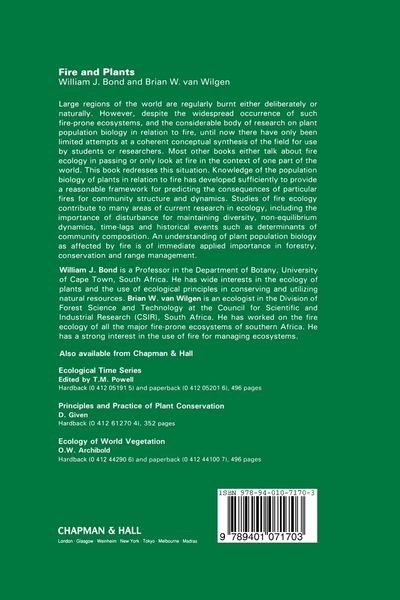
Fire and Plants

12% sparen

187,99 € UVP 213,99 €

inkl. gesetzl. MwSt., Versandkostenfrei


Beschreibung

Produktdetails

Einband

Taschenbuch

Erscheinungsdatum

28.09.2011

Abbildungen

VIII, 263 p.

Verlag

Springer Netherland

Seitenzahl

263

Maße (L/B/H)

23,5/15,5/1,6 cm

Gewicht

429 g

Auflage

Softcover reprint of the original 1st edition 1996

Sprache

Englisch

ISBN

978-94-010-7170-3

Herstelleradresse

Springer-Verlag KG
Sachsenplatz 4-6
1201 Wien
AT

Email: ProductSafety@springernature.com

Ein neues Kapitel für Ihre Bücher

Ein neues Kapitel für Ihre Bücher

Schenken Sie Ihren alten Schätzen ein zweites Leben und erhalten Sie dafür eine Thalia Geschenkkarte.

Jetzt verkaufen
Jetzt verkaufen

Noch keine Bewertungen vorhanden

Verfassen Sie die erste Bewertung zu diesem Artikel

Helfen Sie anderen Kundinnen und Kunden durch Ihre Meinung.

Kundinnen und Kunden meinen

Bewertungen (0)

  • Produktbild: Fire and Plants
  • Produktbild: Fire and Plants
  • 1 Introduction.- 1.1 The global importance of fire.- 1.2 Why we have written this book.- 1.3 What this book is about.- 1.4 Methods of fire ecology.- 1.5 Ecological concepts and fire ecology.- 1.6 Fire and the ecology of plants.- 2 Why and how do ecosystems burn?.- 2.1 The fire regime.- 2.2 Prerequisites for fire.- 2.3 Plants as ‘fuel’: what makes vegetation flammable?.- 2.4 Fire recurrence intervals and their measurement.- 2.5 Temperature of fires and survival of plant tissues.- 2.6 Conclusions.- 3 Surviving fires — vegetative and reproductive responses.- 3.1 Vegetative survival.- 3.2 The post-burn environment as reproductive stimulus.- 3.3 Reproduction and fire.- 3.4 Fire life-histories.- 3.5 Conclusions.- 4 Plant demography and fire I. Interval-dependent effects.- 4.1 Introduction.- 4.2 Types of population growth.- 4.3 Modelling populating growth.- 4.4 Demography and the fire-interval hypothesis.- 4.5 Density dependence and population regulation — the self-regulatory hypothesis.- 4.6 Event-dependent dynamics and population regulation.- 4.7 Conclusion.- 5 Plant demography and fire II. Event-dependent effects.- 5.1 Introduction.- 5.2 Effects of fire intensity and season on survival.- 5.3 Effects of fire intensity and season on recruitment.- 5.4 Effects of climate variation on recruitment.- 5.5 Effects of ground fires.- 5.6 Effects of fire area.- 5.7 The causes of event-dependent effects.- 5.8 Explaining survival patterns.- 5.9 Explaining recruitment patterns.- 5.10 Predicting event-dependent effects.- 5.11 Event-dependent effects in different biomes.- 5.12 Conclusions.- 6 Fire and the evolutionary ecology of plants.- 6.1 Fire and the evolution of plant traits.- 6.2 Sprouters versus non-sprouters.- 6.3 Life-history evolution.- 6.4 Timing of reproduction andrecruitment.- 6.5 Evolution of fire-survival traits.- 6.6 Evolution of flammability.- 6.7 Conclusions.- 7 Fire, competition and the organization of communities.- 7.1 Introduction.- 7.2 What determines changes in plant communities over time?.- 7.3 What determines spatial patterns in communities?.- 7.4 Which combinations of species occur together and why?.- 7.5 Determinants of species diversity.- 7.6 Which rules for which communities?.- 7.7 Conclusions.- 8 Fire and management.- 8.1 Introduction.- 8.2 Fire as a versatile management practice.- 8.3 Predicting the ecological effects of fire.- 8.4 Managing fires.- 8.5 Conclusions.- 9 Fire and the ecology of a changing world.- 9.1 Introduction.- 9.2 Climate, fire and biogeography.- 9.3 Changing patterns of fire in modern landscapes.- 9.4 Ecological consequences of changing fire regimes.- 9.5 Conclusions.- References.- Species Index.