KI-Beratung Beta

  • Produktbild: Ecology of Teleost Fishes
  • Produktbild: Ecology of Teleost Fishes
Band 24 - 11%

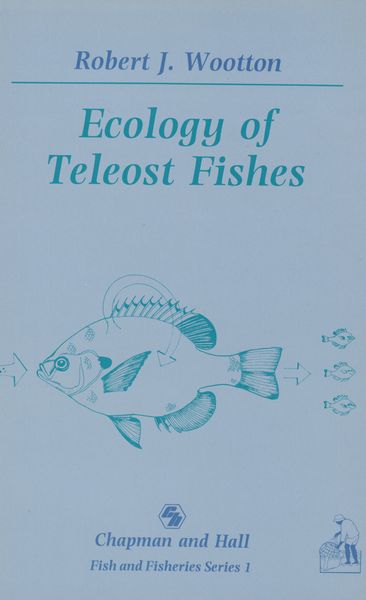
Ecology of Teleost Fishes

Aus der Reihe Fish & Fisheries Series
11% sparen

131,99 € UVP 149,79 €

inkl. gesetzl. MwSt., Versandkostenfrei


Beschreibung

Produktdetails

Einband

Taschenbuch

Erscheinungsdatum

26.09.2011

Verlag

Springer Netherland

Seitenzahl

404

Maße (L/B/H)

22,9/15,2/2,3 cm

Gewicht

606 g

Auflage

1990

Sprache

Englisch

ISBN

978-94-010-6859-8

Beschreibung

Produktdetails

Einband

Taschenbuch

Erscheinungsdatum

26.09.2011

Verlag

Springer Netherland

Seitenzahl

404

Maße (L/B/H)

22,9/15,2/2,3 cm

Gewicht

606 g

Auflage

1990

Sprache

Englisch

ISBN

978-94-010-6859-8

Herstelleradresse

Springer-Verlag GmbH
Tiergartenstr. 17
69121 Heidelberg
DE

Email: ProductSafety@springernature.com

Ein neues Kapitel für Ihre Bücher

Ein neues Kapitel für Ihre Bücher

Schenken Sie Ihren alten Schätzen ein zweites Leben und erhalten Sie dafür eine Thalia Geschenkkarte.

Jetzt verkaufen
Jetzt verkaufen

Noch keine Bewertungen vorhanden

Verfassen Sie die erste Bewertung zu diesem Artikel

Helfen Sie anderen Kundinnen und Kunden durch Ihre Meinung.

Kundinnen und Kunden meinen

Bewertungen (0)

  • Produktbild: Ecology of Teleost Fishes
  • Produktbild: Ecology of Teleost Fishes
  • 1 Introduction.- 1.1 The diversity of teleost fishes.- 1.2 Defining the problem.- 1.3 Organization of the text.- 1.4 Adaptive response to environmental change.- 1.5 Summary and conclusions.- 2 Environmental and organismic constraints.- 2.1 Introduction.- 2.2 Body form and locomotion.- 2.3 Respiration and gill structure.- 2.4 Sensory capacities.- 2.5 Summary and conclusions.- 3 Feeding.- 3.1 Introduction.- 3.2 Trophic categories in fishes.- 3.3 Morphological adaptations for feeding.- 3.4 Diet composition.- 3.5 Temporal changes in diet composition.- 3.6 Factors that determine the rate of food consumption.- 3.7 Flexibility in the feeding ecology of fishes.- 3.8 Summary and conclusions.- 4 Bioenergetics.- 4.1 Introduction.- 4.2 Structure of an energy budget.- 4.3 Effects of environmental factors on metabolism.- 4.4 Examples of energy budgets.- 4.5 Summary and conclusions.- 5 Use of time and space.- 5.1 Introducton.- 5.2 Methods of studying the use of time and space.- 5.3 Temporal patterns of fish movement.- 5.4 Patterns and movement and the use of space.- 5.5 Summary and conclusions.- 6 Growth.- 6.1 Introduction.- 6.2 Definition and measurement of growth.- 6.3 Patterns of growth.- 6.4 Factors affecting growth rates.- 6.5 Endogenous control of growth rates.- 6.6 Modelling the growth of fish.- 6.7 Summary and conclusions.- 7 Reproduction.- 7.1 Introduction.- 7.2 Timing of reproduction.- 7.3 The site of reproduction.- 7.4 Allocation of resources to reproduction.- 7.5 Allocation to individual progeny.- 7.6 Unusual reproductive strategies.- 7.7 Summary and conclusions.- 8 Biotic interactions: I. Predation and parasitism.- 8.1 Introduction.- 8.2 Predation.- 8.3 Pathogens.- 8.4 Summary and conclusions.- 9 Biotic interactions: II. Competition and mutualism.- 9.1 Introduction.- 9.2 Competition.- 9.3 Mutualism.- 9.4 Summary and conclusions.- 10 Dynamics of population abundance and production.- 10.1 Introduction.- 10.2 Defining the population.- 10.3 Estimation of fish abundance.- 10.4 Measures of the rate of population change.- 10.5 Measurement of mortality rates.- 10.6 Patterns of mortality in fish populations.- 10.7 Regulation of fish populations and the stock-recruitment relationship.- 10.8 Models of population growth.- 10.9 Concept of production.- 10.10 Measurement of production.- 10.11 Bioenergetic basis of production.- 10.12 Magnitude of population production.- 10.13 Summary and conclusions.- 11 Life-history strategies.- 11.1 Introduction.- 11.2 Evolution of life-history patterns.- 11.3 Cost of reproduction and the consequences.- 11.4 Bioenergetics of life-history patterns.- 11.5 Phenotypic plasticity of life-history traits.- 11.6 Life-history patterns and exploitation.- 11.7 Summary and conclusions.- 12 Fish assemblages.- 12.1 Introduction.- 12.2 General patterns of species diversity.- 12.3 Historical factors in species diversity.- 12.4 Contemporary determinants of species diversity.- 12.5 Examples of fish assemblages.- 12.6 Characteristics of fish assemblages.- 12.7 Community-wide properties.- 12.8 Summary and conclusions.- References.- Species Index.