
KI-Beratung Beta

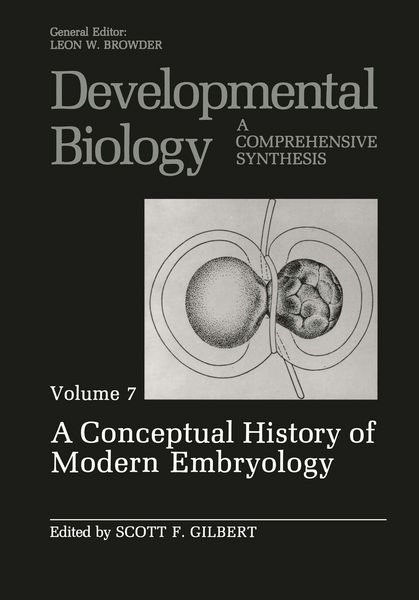
  • Produktbild: A Conceptual History of Modern Embryology
  • Produktbild: A Conceptual History of Modern Embryology
Band 7

A Conceptual History of Modern Embryology Volume 7: A Conceptual History of Modern Embryology

Aus der Reihe Developmental Biology

97,99 €

inkl. gesetzl. MwSt., Versandkostenfrei


Beschreibung

Produktdetails

Einband

Taschenbuch

Erscheinungsdatum

24.04.2012

Abbildungen

280 p.

Herausgeber

Scott F. Gilbert

Verlag

Springer Us

Seitenzahl

280

Maße (L/B/H)

25,4/17,8/1,6 cm

Gewicht

540 g

Auflage

Softcover reprint of the original 1st ed. 1991

Sprache

Englisch

ISBN

978-1-4615-6825-4

Herstelleradresse

Springer-Verlag KG
Sachsenplatz 4-6
1201 Wien
AT

Email: ProductSafety@springernature.com

Ein neues Kapitel für Ihre Bücher

Ein neues Kapitel für Ihre Bücher

Schenken Sie Ihren alten Schätzen ein zweites Leben und erhalten Sie dafür eine Thalia Geschenkkarte.

Jetzt verkaufen
Jetzt verkaufen

Noch keine Bewertungen vorhanden

Verfassen Sie die erste Bewertung zu diesem Artikel

Helfen Sie anderen Kundinnen und Kunden durch Ihre Meinung.

Kundinnen und Kunden meinen

Bewertungen (0)

  • Produktbild: A Conceptual History of Modern Embryology
  • Produktbild: A Conceptual History of Modern Embryology
  • 1 · The Rise of Classical Descriptive Embryology.- 1. Introduction.- 2. Descriptive Embryology in the Baltic Periphery.- 3. Christian Pander.- 4. Karl Ernst von Baer.- 5. Heinrich Rathke.- 6. A New Theoretical Framework at Mid-Century.- 7. Evolution and Development.- 8. Specificity of the Germ Layers.- 9. Conclusion.- Notes and References.- 2 · Laurent Chabry and the Beginnings of Experimental Embryology in France.- 1. Introduction.- 2. E. Geoffroy Saint-Hilaire.- 3. C. Dareste.- 4. Stanislas Warynski and Hermann Fol.- 5. Laurent Chabry.- 6. Edwin Grant Conklin, Albert Dalcq, and Oscar Hertwig.- 7. Conclusions.- Notes and References.- 3 · The Origins of Entwicklungsmechanik.- 1. Introduction.- 2. Foundations of Entwicklungsmechanik.- 3. Experimental Embryology.- 4. Responses.- Notes and References.- 4 · Curt Herbst’s Contributions to the Concept of Embryonic Induction.- 1. Introduction.- 2. Curriculum Vitae.- 3. Personalia.- 4. Opera Magna.- 5. Obiter Dicta.- 6. Ab Origine.- Notes and References.- 5 · Spemann Seen through a Lens.- 1. Introduction.- 2. Early Years: The Search for a Problem of General Interest.- 3. Lens Induction: A Paradigm for Vertebrate Cell Determination.- 4. Determination at Gastrula Stages: Application of the Lens-Induction Paradigm to the Organizer Experiments.- 5. Postscript: A Modern Perspective.- Notes and References.- 6 · Reminiscenses on the Life and Work of Johannes Holtfreter.- 1. Editor’s Note.- 2. Foreword.- 3. Reminiscence.- References.- 7 · The Conceptual and Experimental Foundations of Vertebrate Embryonic Cell Adhesion Research.- 1. Introduction.- 2. The Invertebrate Zoological Roots of Intercellular Cell Adhesion Studies.- 3. The Recognition of Differential Cell Adhesion as a Central Mechanism of Morphogenesis.- 4.Qualitative and Quantitative Quarrels over the Quintessence of Cell Adhesion.- 5. Immunological Approaches to the Analysis of Cell Adhesion.- 6. The Role of Calcium in Cell Adhesion.- 7. Epilogue: From the Embryo to the Gene and Back.- Notes and References.- 8 · The Philosophical Background of Joseph Needham’s Work in Chemical Embryology.- 1. Introduction.- 2. Joseph Henri Woodger and the Emancipation of Biology.- 3. Joseph Needham, 1925–1933: Mechanism, Organicism, and the Philosophical Status of Biochemistry.- 4. Process and Structure in the Woodger—Needham Rapprochement: From Philosophical Misunderstandings toward a Theoretical Integration of Biochemistry, Embryology, and “Logistics”.- 5. Conclusions: The Philosophical and Social Context of Biochemical Embryology in the 1930s.- Notes and References.- 9 · Induction and the Origins of Developmental Genetics.- 1. Introduction: The Problem of Synthesis.- 2. Salome Gluecksohn-Schoenheimer and the Path from Experimental Embryology to Developmental Genetics.- 3. The Concrescence of Genetics and Development: C. H. Waddington.- Notes and References.- 10 · Boris Ephrussi and the Synthesis of Genetics and Embryology.- 1. Introduction.- 2. Early Embryological Studies.- 3. Beadle and Ephrussi on Drosophila Hormones.- 4. Ephrussi and Slonimski on Cytoplasmic Inheritance of Respiratory Competence in Yeast.- 5. Somatic Cell Genetics and the Return to Tissue Culture.- 6. Coda and Conclusion.- Notes and References.- 11 · Concepts of Organization: The Leverage of Ciliate Protozoa.- 1. A Discourse on Exceptions.- 2. Deconstructing the Germ Plasm.- 3. Revolt from Morphological Theories: Protests and Demonstrations.- 4. Weismannism under a New Banner: Geneticists versus Embryologists.- 5. Plasmagene Theory.- 6.“Switching” Concepts and Metaphors.- 7. Supramolecular Structure and Morphogenetic Fields.- 8. Concluding Remarks.- Notes and References.