
KI-Beratung Beta

  • Produktbild: Respiratory Control
  • Produktbild: Respiratory Control
- 12%

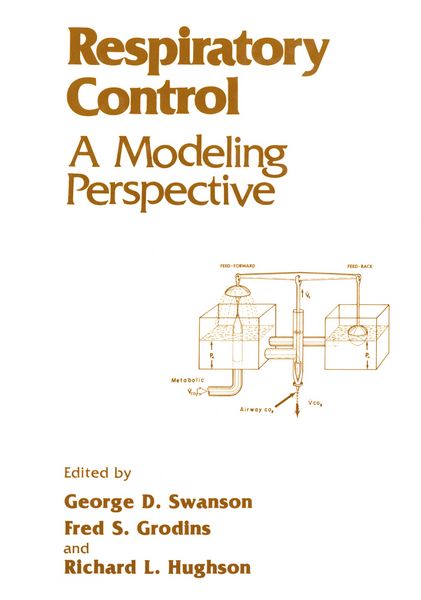
Respiratory Control A Modeling Perspective

12% sparen

93,99 € UVP 106,99 €

inkl. gesetzl. MwSt., Versandkostenfrei


Beschreibung

Produktdetails

Einband

Taschenbuch

Erscheinungsdatum

10.11.2011

Abbildungen

460 p.

Herausgeber

F.S. Grodins + weitere

Verlag

Springer Us

Seitenzahl

460

Maße (L/B/H)

24,4/17/2,7 cm

Gewicht

828 g

Auflage

1989

Sprache

Englisch

ISBN

978-1-4612-7851-1

Beschreibung

Produktdetails

Einband

Taschenbuch

Erscheinungsdatum

10.11.2011

Abbildungen

460 p.

Herausgeber

Verlag

Springer Us

Seitenzahl

460

Maße (L/B/H)

24,4/17/2,7 cm

Gewicht

828 g

Auflage

1989

Sprache

Englisch

ISBN

978-1-4612-7851-1

Herstelleradresse

Springer-Verlag GmbH
Europaplatz 3
69115 Heidelberg
DE

Email: ProductSafety@springernature.com

Ein neues Kapitel für Ihre Bücher

Ein neues Kapitel für Ihre Bücher

Schenken Sie Ihren alten Schätzen ein zweites Leben und erhalten Sie dafür eine Thalia Geschenkkarte.

Jetzt verkaufen
Jetzt verkaufen

Noch keine Bewertungen vorhanden

Verfassen Sie die erste Bewertung zu diesem Artikel

Helfen Sie anderen Kundinnen und Kunden durch Ihre Meinung.

Kundinnen und Kunden meinen

Bewertungen (0)

  • Produktbild: Respiratory Control
  • Produktbild: Respiratory Control
  • Introductory Address: Oxford and Yale Physiologists in Colorado in 1911.- Respiratory Control and Gas Exchange Kinetics During Exercise.- Does Arterial Plasma Potassium Contribute to Exercise Hyperpnoea?.- Regulation of Alveolar Ventilation and Arterial Blood Gases During Exercise.- Evidence for Possible “Cardiogenic” Respiratory Drives in Exercising Man.- The Validity of the Cardiodynamic Hypothesis for Exercise Hyperpnea in Man.- Neurogenic and Cardiodynamic Drives in the Early Phase of Exercise Hyperpnea in Man.- The Effect of Exercise on The Central and Peripheral Chemoreceptor Thresholds to Carbon Dioxide in Man.- Modelling the Ventilatory Response to Pulses of Inhaled Carbon Dioxide in Exercise.- Control of Ventilation During Heavy Exercise in Man.- Estimating Arterial PCO2 From Flow-Weighted and Time-Average Alveolar PCO2 During Exercise.- The Effect of Exercise Intensity on the Linearity of Ventilatory and Gas Exchange Responses to Exercise.- Interrelation of Respiratory Responses to VCO2 Pedal Rate and Loading Force During Cycle Exercise.- On Smoothing Gas Exchange Data and Estimation of the Ventilatory Threshold.- Kinetics of Oxygen Uptake Studied with Two Different Pseudorandom Binary Sequences.- Gas Exchange Inferences for the Proportionality of the Cardiopulmonary Responses During Phase I of Exercise.- On Modelling Alveolar Oxygen Uptake Kinetics.- A General-Purpose Model for Investigating Dynamic Cardiopulmonary Responses During Exercise.- Lactate Balance During Low Levels of Exercise.- Oxygen Kinetics in the Elderly.- Breath-by-breath Gas Exchange: Data Collection and Analysis.- Respiratory Control During Altered Gas Mixtures.- Increased Arterial Potassium Levels May Contribute to the Drive to Breathe at Very High Altitude.- Hypoxia > 25 Years AfterCarotid Body Resection Causes More Tachycardia Although Less Hyperventilation Than in Controls.- The Transients in Ventilation Arising from a Period of Hypoxia at Near Normal and Raised Levels of End-Tidal CO2 in Man.- Asymmetry in the Ventilatory Response to a Bout of Hypoxia in Human Beings.- Studies on Exercise Hyperpnea in Relation with Hypoxic Ventilatory Chemosensitivity Measured at Rest.- Dynamics of the Ventilatory Controller and Hypoxic Stimulation in Man.- Building Dynamic Models of the Control of Breathing During Hypoxia.- Evidence in Man to Suggest Interaction Between the Peripheral and Central Chemoreceptors.- Modelling the Dynamic Ventilatory Response to Carbon Dioxide in Healthy Human Subjects During Normoxia.- Dynamics of the Peripheral Chemoreflex Loop Following Acute Acid-Base Disturbances in Cats.- 3-D Theory of Respiration: The Steady-State Case.- Inhaled CO2 as a Constant Fraction in Inspired Air and as Early-Inspired Pulses.- Breathing Patterns and Neural Factors.- Adaptive Multivariate Autoregressive Modelling of Respiratory Cycle Variables.- Factors Inducing Periodic Breathing in Man During Acclimatization to Chronic Hypoxia.- A Model of Respiratory Variability During Non-Rem Sleep.- The Use of Deep Non-Rem Sleep to Study the Pattern of Breathing in the Absence of Any Forebrain Influences.- Modelling the Breath by Breath Variability in Respiratory Data.- Is the Respiratory Rhythm Multistable in Man?.- Ventilatory Responses to Short Carotid Sinus Pressure Stimuli: Interpretation Using a Model of Rhythm Generation.- Comparison of Unification Techniques for Inconstant Intervals of Breath-by-Breath Sequence.- Phase Resetting of Respiratory Rhythm Studied in a Model of a Limit-Cycle Oscillator: Influence of Stochastic Processes.- Intracycle Relationship Between Successive Phases of the Respiration: A New Modelling Assumption.- Is Respiratory Period Spectrum Characteristic of State, Individual, Sex and Species?.- Isopnoeic Analyses of Human Steady-State Flow Profiles.- In Favour of an “Holistic” Approach to the Analysis of the Pattern of Breathing.- Vagal Control on Exercise-Induced Hyperpnea in Conscious Dogs.- Expiratory Activity Recorded During Exercise from Human M. Biceps Brachii Reinnervated by Internal Intercostal Nerves.- Recruitment and Frequency Coding of Diaphragm Motor Units during Ventilatory and Non-Ventilatory Behaviors.- Supraspinal Descending Control of Propriospinal Respiratory Neurons in the Cat.