KI-Beratung Beta

Gutscheinbedingungen

Gültig bis 21.10.2026 | Gültig für nicht preisgebundene fremdsprachige Bücher | Einzelne Artikel können ausgeschlossen sein | Online auf thalia.de und in der Thalia App einlösbar | Click & Collect nur mit Online-Zahlung (Paypal/Kreditkarte) vorab | Nicht kombinierbar mit anderen Gutscheinen oder Preisaktionen | Nur einmal pro Einkauf einlösbar | Gutschein wird auf max. 500€ Bestellwert angerechnet | Keine Barauszahlung | Nicht gültig für Versandkosten und Services

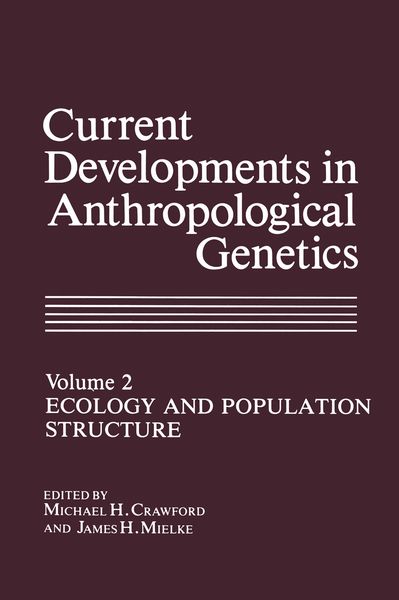
Produktbild: Current Developments in Anthropological Genetics
Band 2

Current Developments in Anthropological Genetics Ecology and Population Structure

49,99 €

inkl. gesetzl. MwSt., Versandkostenfrei


Beschreibung

Produktdetails

Einband

Taschenbuch

Erscheinungsdatum

04.06.2013

Abbildungen

XVII, 525 p. 27 illus.

Herausgeber

Michael H. Crawford + weitere

Verlag

Springer Us

Seitenzahl

525

Maße (L/B/H)

22,9/15,2/3 cm

Gewicht

778 g

Auflage

Softcover reprint of the original 1st edition 1982

Sprache

Englisch

ISBN

978-1-4615-6771-4

Beschreibung

Produktdetails

Einband

Taschenbuch

Erscheinungsdatum

04.06.2013

Abbildungen

XVII, 525 p. 27 illus.

Herausgeber

Verlag

Springer Us

Seitenzahl

525

Maße (L/B/H)

22,9/15,2/3 cm

Gewicht

778 g

Auflage

Softcover reprint of the original 1st edition 1982

Sprache

Englisch

ISBN

978-1-4615-6771-4

Herstelleradresse

Springer-Verlag GmbH
Tiergartenstr. 17
69121 Heidelberg
DE

Email: ProductSafety@springernature.com

Ein neues Kapitel für Ihre Bücher

Ein neues Kapitel für Ihre Bücher

Schenken Sie Ihren alten Schätzen ein zweites Leben und erhalten Sie dafür eine Thalia Geschenkkarte.

Jetzt verkaufen
Jetzt verkaufen

Noch keine Bewertungen vorhanden

Verfassen Sie die erste Bewertung zu diesem Artikel

Helfen Sie anderen Kundinnen und Kunden durch Ihre Meinung.

Kundinnen und Kunden meinen

Bewertungen (0)

  • Produktbild: Current Developments in Anthropological Genetics
  • 1. Primate Social Organization, Ecology, and Genetic Variation.- 1. Introduction.- 2. The Comparative Method: Fantasy and Fact.- 3. Models of Ecology and Behavior.- 4. Implications for Genetic Research.- 5. Population Structure of Cayo Santiago.- 6. Conclusion.- References.- 2. Population Structures of Ghanzi and Ngamiland !Kung.- 1. Introduction.- 2. Previous Research.- 3. Study Populations.- 4. Methods.- 5. Fertility.- 6. Social Patterns.- 7. Mortality.- 8. Conclusions.- References.- 3. Population Structure of Circumpolar Groups of Siberia, Alaska, Canada, and Greenland.- 1. Introduction.- 2. Methods.- 3. Results.- 4. Conclusions.- References.- 4. Ecology and Biological Structure of Pastoral Isseqqamaren Tuareg.- 1. Introduction.- 2. Pastoralists in an Hyperarid Area.- 3. Social and Geographic Structures.- 4. Other Aspects of Isseqqamaren Dynamics.- 5. A Field Example of Biological Studies in Tuareg Isseqqamaren: Marriages in Ideles.- 6. The Tuareg Isseqqamaren Gene Pool: Preliminary Results for Some Genetic Markers.- 7. Conclusion.- References.- 5. The Population Structure of the Romany Gypsies.- 1. Introduction.- 2. Historical Background.- 3. Demography.- 4. Genetic Structure.- 5. Discussion and Conclusion.- References.- 6. Genetic Architecture of Swidden Agricultural Tribes from the Lowland Rain Forests of South America.- 1. Introduction.- 2. Swidden Agriculture and its Social Concomitants.- 3. The Survival of New Mutations.- 4. Fission Effects in the Formation of New Villages.- 5. The Genetic Consequences of Fusion and Exogamy.- 6. The Production of Tribal Infrastructure and the Evolutionary Radiation of Tribes.- 7. A Prospectus for Future Work.- References.- 7. Genetic Structure of the Semai.- 1. Introduction.- 2. The Semai Senoi People.- 3. Semai Local Populations.- 4. Semai Marriage Patterns.- 5. Semai Demography.- 6. Fission-Fusion and Lineal/Kinship Effect.- 7. Kin-Structured Migration.- 8. Genetic Variation.- 9. Conclusions.- References.- 8. Spatial Autocorrelation Analysis of Biological Variation on Bougainville Island.- 1. Introduction.- 2. Materials.- 3. Spatial Autocorrelation Analysis.- 4. Results.- 5. Discussion.- References.- 9. Linguistic, Ecological, and Genetic Differentiation in New Guinea and the Western Pacific.- 1. Introduction.- 2. The North Solomons.- 3. New Guinea.- 4. The Gm Hypothesis.- 5. Kar Kar Island.- 6. Northern Populations in PNG.- 7. A Broader Picture.- References.- 10. Historical Population Structure of the Åland Islands, Finland.- 1. Introduction.- 2. Sources for Fenno-Scandian Historical Demography.- 3. Historical Background.- 4. Åland Population Structure: Parish Level.- 5. Åland Population Structure: Village Level.- 6. Household and Family in Åland.- 7. Summary and Conclusions.- 11. Genetic Microevolution in the Åland Islands, Finland.- 1. Introduction.- 2. Genetic Analysis.- 3. Migration Analysis.- 4. Migration—Genetics Interaction.- 5. Summary and Conclusions.- References.- 12. Population Structure of Farming Communities of Northern England.- 1. Introduction.- 2. Northumberland.- 3. The Coming of Industry.- 4. Cumbria.- 5. Conclusion.- References.- 13. Population Structure and Anthropometric Variation in Ireland during the 1930’s.- 1. Introduction.- 2. Anthropometric Traits in Population Studies.- 3. Materials, Hypotheses, and Methods.- 4. Results and Discussion.- 5. Conclusion.- References.- 14. Population Structure of a Religious Isolate: The Dariusleut Hutterites of Alberta.- 1. Introduction.- 2. Population Genetic Structure.- 3. Perspectives.- References.- 15. Kinship andInbreeding in Populations of Middle Eastern Origin and Controls.- 1. Introduction.- 2. Degrees of Inbreeding.- 3. Continuous Migration.- 4. Discontinuous Migration.- 5. Artas.- 6. Kallarwan.- 7. Discussion.- 8. Summary.- References.- 16. The Population Structure of an Urban Area in Britain.- 1. Introduction.- 2. Methods.- 3. Results and Discussion.- 4. Conclusions.- References.- 17. New Developments in Anthropological Genetics: Accomplishments and Challenges.