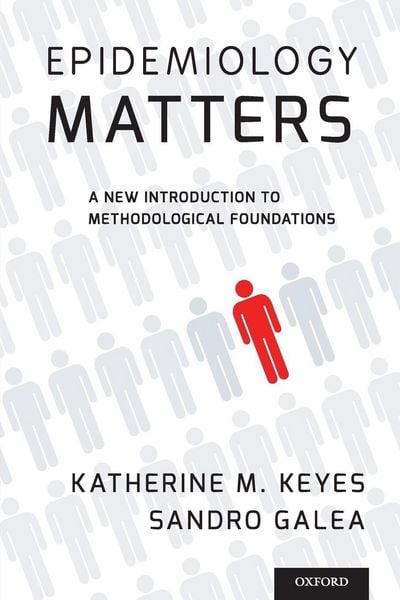
Epidemiology Matters A New Introduction to Methodological Foundations
-
- Englisch ausgewählt
136,89 €
inkl. gesetzl. MwSt.,
Beschreibung
Produktdetails
Einband
Taschenbuch
Erscheinungsdatum
16.07.2014
Verlag
KNV BesorgungSeitenzahl
256
Maße (L/B/H)
23,4/15,6/1,5 cm
Gewicht
395 g
Sprache
Englisch
ISBN
978-0-19-933124-6
Across fourteen chapters, Epidemiology Matters teaches the individual competencies that underlie the conduct of an epidemiologic study: identifying populations; measuring exposures and health indicators; taking a sample; estimating associations between exposures and health indicators; assessing evidence for causes working together; assessing internal and external validity of results.
With its consequentialist approach - designing epidemiologic studies that aim to inform our understanding, and therefore improve public health - Epidemiology Matters is an introductory text for the next generation of students in medicine and public health.
Ein neues Kapitel für Ihre Bücher
Ein neues Kapitel für Ihre Bücher
Schenken Sie Ihren alten Schätzen ein zweites Leben und erhalten Sie dafür eine Thalia Geschenkkarte.
Noch keine Bewertungen vorhanden
Verfassen Sie die erste Bewertung zu diesem Artikel
Helfen Sie anderen Kundinnen und Kunden durch Ihre Meinung.
Kurze Frage zu unserer Seite
Vielen Dank für Ihr Feedback
Wir nutzen Ihr Feedback, um unsere Produktseiten zu verbessern. Bitte haben Sie Verständnis, dass wir Ihnen keine Rückmeldung geben können. Falls Sie Kontakt mit uns aufnehmen möchten, können Sie sich aber gerne an unseren Kund*innenservice wenden.
zum Kundenservice