KI-Beratung Beta

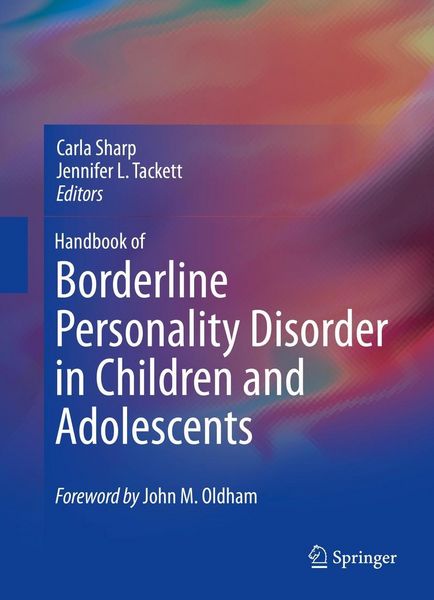
Produktbild: Handbook of Borderline Personality Disorder in Children and Adolescents

Handbook of Borderline Personality Disorder in Children and Adolescents

287,83 €

inkl. gesetzl. MwSt.

Beschreibung

Produktdetails

Format

PDF

Kopierschutz

Nein

Family Sharing

Nein

Text-to-Speech

Nein

Erscheinungsdatum

21.04.2014

Herausgeber

Carla Sharp + weitere

Verlag

Springer New York

Seitenzahl

480 (Printausgabe)

Dateigröße

6774 KB

Sprache

Englisch

EAN

9781493905911

Beschreibung

Rezension

“This book explores borderline personality disorder in children and adolescents, addressing assessment, etiology, developmental course, and treatment, while also incorporating DSM-5 criteria. … the book is easy to read, the numerous figures and tables help clarify the content, and clinical vignettes demonstrate the procedures. This excellent book explores theory, assessment, treatment, and developmental course of BPD, providing important insights into how it affects young people.” (Gary B. Kaniuk, Doody’s Book Reviews, March, 2016)

"This groundbreaking volume compiles the most comprehensive information on borderline personality disorder in childhood and adolescence. The topic has too long been seen as taboo, but now early-age detection, intervention, and prevention are taking center stage, all brilliantly served by these outstanding chapters from world-renowned experts. The breadth of knowledge provided makes it a necessary library addition for researchers, experienced and early-career practitioners, as well as the lay BPD community and those impacted by the disorder. "

Perry D. Hoffman, Ph.D.
President and co-founder
National Education Alliance for Borderline Personality Disorder

Portrait

Carla Sharp received her Ph.D. from the University of Cambridge (United Kingdom) in 2000 and is currently an Associate Professor at University of Houston where she directs the Developmental Psychopathology Lab. She is also Research Director for the Adolescent Treatment Program of the Menninger Clinic and holds an adjunct position in the Psychiatry Department of Baylor College of Medicine. Dr. Sharp's main research focus is on social cognition as it relates to disorders of interpersonal relatedness in children and adolescents, with a special interest in Borderline Personality Disorder. She has published widely on this topic in such journals as Science, Journal of the American Academy of Child and Adolescent Psychiatry and Journal of Personality Disorders. She has published two books and more than 80 peer-reviewed publications and chapters. Dr. Sharp is on the Editorial Board of several journals, including Journal of Personality Disorders. She is a recipient of a NARSAD Young Investigator Award and a Research and Scholarship Excellence Award from the University of Houston. Her research has been funded by the NIMH and the Child and Family Program of the Menninger Clinic.Jennifer L. Tackett received her Ph.D. from the University of Minnesota in 2006 and holds faculty appointments at the Universities of Houston and Toronto. She is an active researcher in the areas of child personality, personality disorder and externalizing psychopathology. Dr. Tackett served as a developmental consultant to the Personality and Personality Disorders Work Group for DSM-5. She has over 60 publications, co-edited Personality and Psychopathology (The Guilford Press, 2006) and received early career awards from the Society for Research in Psychopathology, the Society for Personality Assessment and the Ontario Ministry of Research and Innovation. Dr. Tackett has extensive editorial experience and currently serves as the Associate Editor at Assessment, Journal of Research in Personality, Journal of Personality Disorders and Journal of Psychopathology and Behavioral Assessment.

Produktdetails

Format

PDF

eBooks im PDF-Format haben eine festgelegte Seitengröße und eignen sich daher nur bedingt zum Lesen auf einem tolino eReader oder Smartphone. Für den vollen Lesegenuss empfehlen wir Ihnen bei PDF-eBooks die Verwendung eines Tablets oder Computers.

Kopierschutz

Nein

Dieses eBook können Sie uneingeschränkt auf allen Geräten der tolino Familie, allen sonstigen eReadern und am PC lesen. Das eBook ist nicht kopiergeschützt und kann ein personalisiertes Wasserzeichen enthalten. Weitere Hinweise zum Lesen von eBooks mit einem personalisierten Wasserzeichen finden Sie unter Hilfe/Downloads.

Family Sharing

Nein

Mit Family Sharing können Sie eBooks innerhalb Ihrer Familie (max. sechs Mitglieder im gleichen Haushalt) teilen. Sie entscheiden selbst, welches Buch Sie mit welchem Familienmitglied teilen möchten. Auch das parallele Lesen durch verschiedene Familienmitglieder ist durch Family Sharing möglich. Um eBooks zu teilen oder geteilt zu bekommen, muss jedes Familienmitglied ein Konto bei Thalia oder einem anderen tolino-Buchhändler haben. Weitere Informationen finden Sie unter Hilfe/Family-Sharing.

Text-to-Speech

Nein

Bedeutet Ihnen Stimme mehr als Text? Mit der Funktion Text-to-Speech können Sie sich im tolino webReader und in der aktuellen Thalia – Lesen & Hören App das eBook vorlesen lassen. Weitere Informationen finden Sie unter Hilfe/Text-to-Speech.

Barrierefreiheit

  • keine Information zur Barrierefreiheit bekannt

Erscheinungsdatum

21.04.2014

Herausgeber

Verlag

Springer New York

Seitenzahl

480 (Printausgabe)

Dateigröße

6774 KB

Sprache

Englisch

EAN

9781493905911

Noch keine Bewertungen vorhanden

Verfassen Sie die erste Bewertung zu diesem Artikel

Helfen Sie anderen Kundinnen und Kunden durch Ihre Meinung.

Kundinnen und Kunden meinen

Bewertungen (0)

Weitere Artikel finden Sie in

  • Produktbild: Handbook of Borderline Personality Disorder in Children and Adolescents
  • Foreword.- PART I. INTRODUCTION.- Chapter 1. Introduction: An idea whose time has come.- Chapter 2.  A History of Research on Borderline Personality Disorder in Childhood and Adolescence.- PART II. ISSUES IN CONCEPTUALIZATION AND ASSESSMENT.- Chapter 3. Borderline Personality Disorder in Adolescence: Phenomenology and Construct Validity.- Chapter 4. The Underlying Factor Structure of DSM criteria in Youth BPD.- Chapter 5. Conceptualizing Youth Borderline Personality Disorder Within A PAI Framework.- Chapter 6. Conceptualizing Youth BPD within an MMPI-A Framework.- Chapter 7. Conceptualizing youth BPD within a DIPSI framework.- Chapter 8. Conceptualizing youth borderline personality disorder within a normative child personality framework.- PART III. ETIOLOGY AND CORE COMPONENTS.- Chapter 9. The Neurobiology of Adolescent-Onset Borderline Personality Disorder.- Chapter 10. Behavior genetic approaches to BPD.- Chapter 11. A Biosocial Model of BPD: Theory and Empirical Evidence.- Chapter 12. The Development of Emotional Cascades in Borderline Personality Disorder.- Chapter 13. Emotion Dysregulation among Adolescents with Borderline Personality Disorder.- Chapter 14. Self-injurious Behaviors in Adolescents with Borderline Personality Disorder.- Chapter 15. The social-cognitive basis of BPD: A theory of hypermentalizing.- PART IV. DEVELOPMENTAL COURSE AND PSYCHOSOCIAL CORRELATES.- Chapter 16. The Longitudinal Course of Borderline Personality Disorder in Youth.- Chapter 17. The Externalizing Pathway to Borderline Personality Disorder in Youth.- Chapter 18. Childhood Adversity and the Development of Borderline Personality Disorder.- Chapter 19. Parenting and the Development of  Borderline Personality Disorder.- Chapter 20. A Contemporary Interpersonal Model of Borderline Personality Development.- PART V. TREATMENT.- Chapter 21. Mentalization-based treatment for adolescents with borderline traits.- Chapter 22. Transference-focused Psychotherapy for Personality Disorders in Adolescence.- Chapter 23. HYPE: A Cognitive Analytic Therapy based prevention and early intervention program for borderline personality disorder.- Chapter 24. Dialectical Behavior Therapy.- Chapter 25. Working with the Parents of Children and Adolescents with BPD.- Chapter 26. Systems Training for Emotional Predictability and Problem Solving (STEPPS).- CONCLUSIONS AND FUTURE DIRECTIONS.- Chapter 27.  Borderline Personality Disorder and DSM 5.0: New Directions and Hopes for the Future.- Chapter 28. The likely classification of borderline personality disorder in adolescents in ICD-11.- Chapter 29. Some Overview.