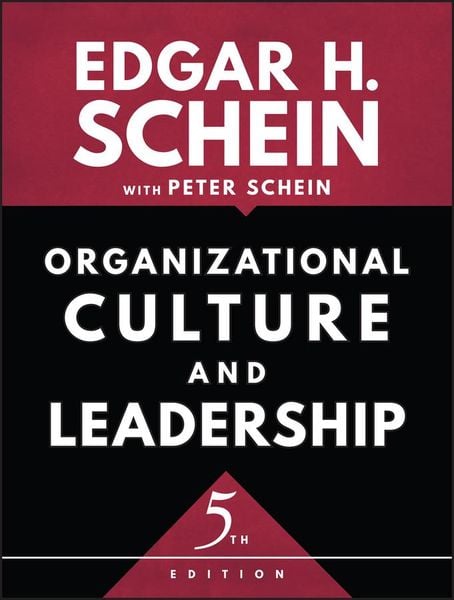
Organizational Culture and Leadership, 5th edition
-
- Taschenbuch ausgewählt
- eBook
-
Sprache:Englisch
59,99 €
inkl. gesetzl. MwSt.,
Beschreibung
Produktdetails
Einband
Taschenbuch
Erscheinungsdatum
27.12.2016
Verlag
John Wiley & SonsSeitenzahl
416
Maße (L/B/H)
23,2/17,7/2,5 cm
Gewicht
655 g
Farbe
Schwarz / Himbeer
Auflage
5. Auflage
Sprache
Englisch
ISBN
978-1-119-21204-1
Organizational Culture and Leadership is the classic reference for managers and students seeking a deeper understanding of the inter-relationship of organizational culture dynamics and leadership. Author Edgar Schein is the 'father' of organizational culture, world-renowned for his expertise and research in the field; in this book, he analyzes and illustrates through cases the abstract concept of culture and shows its importance to the management of organizational change. This new fifth edition shows how culture has become a popular concept leading to a wide variety of research and implementation by various organizations and expands the focus on the role of national cultures in influencing culture dynamics, including some practical concepts for how to deal with international differences.
Special emphasis is given to how the role of leadership varies with the age of the organization from founding, through mid-life to old age as the cultural issues vary at each stage. How culture change is managed at each stage and in different types of organizations is emphasized as a central concern of leader behavior..
This landmark book is considered the defining resource in the field. Drawing on a wide range of research, this fifth edition contains 25 percent new and revised material to provide the most relevant new concepts and perspectives alongside the basic culture model that has helped to define the field.
Dig into assumptions and typologies to decipher organizational culture
* Learn how culture begins, thrives, or dies with leadership
* Manage cultural change effectively and appropriately
* Understand the leader's role in managing disparate groups
The resurgence of interest in organizational culture has spurred an awakening in research, and new information is continuously coming to light. Outdated practices are being replaced by more effective methods, and the resulting shift affects organizations everywhere. Organizational Culture and Leadership is an essential resource for scholars, consultants and leaders seeking continuous improvement in the face of today's business realities.
Ein neues Kapitel für Ihre Bücher
Ein neues Kapitel für Ihre Bücher
Schenken Sie Ihren alten Schätzen ein zweites Leben und erhalten dafür eine Thalia Geschenkkarte.
Noch keine Bewertungen vorhanden
Verfassen Sie die erste Bewertung zu diesem Artikel
Helfen Sie anderen Kundinnen und Kunden durch Ihre Meinung.
Kurze Frage zu unserer Seite
Vielen Dank für Ihr Feedback
Wir nutzen Ihr Feedback, um unsere Produktseiten zu verbessern. Bitte haben Sie Verständnis, dass wir Ihnen keine Rückmeldung geben können. Falls Sie Kontakt mit uns aufnehmen möchten, können Sie sich aber gerne an unseren Kund*innenservice wenden.
zum Kundenservice