KI-Beratung Beta

  • Produktbild: New Therapeutics for Traumatic Brain Injury
  • Produktbild: New Therapeutics for Traumatic Brain Injury

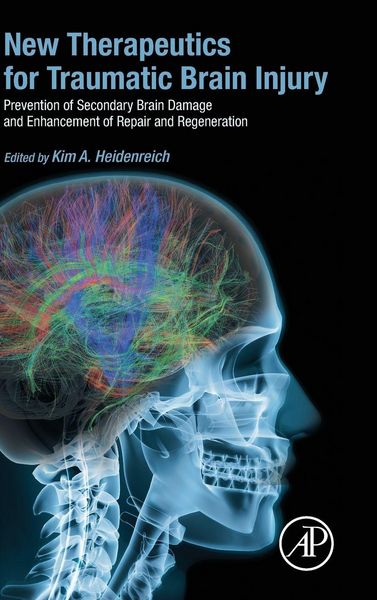
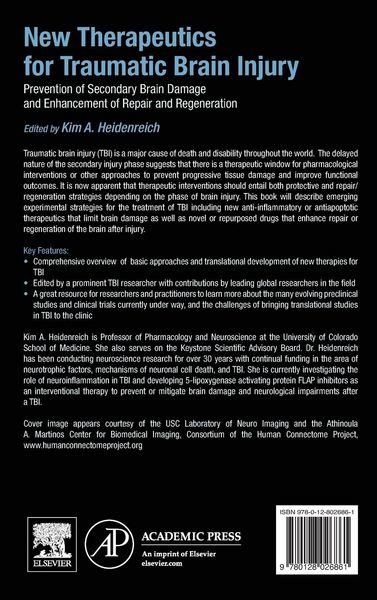
New Therapeutics for Traumatic Brain Injury Prevention of Secondary Brain Damage and Enhancement of Repair and Regeneration

146,99 €

inkl. gesetzl. MwSt., Versandkostenfrei


Beschreibung

Produktdetails

Einband

Gebundene Ausgabe

Erscheinungsdatum

25.10.2016

Herausgeber

Kim Heidenreich

Verlag

Academic Press

Seitenzahl

352

Maße (L/B/H)

23,6/15,6/2,5 cm

Gewicht

704 g

Sprache

Englisch

ISBN

978-0-12-802686-1

Beschreibung

Portrait

Kim A. Heidenreich is Professor of Pharmacology and Neuroscience at the University of Colorado School of Medicine. She also serves on the Keystone Scientific Advisory Board and is Chief Scientific Advisor for the American Traumatic Brain Injury Association. Dr. Heidenreich has been conducting neuroscience research for over 30 years with continual funding in the area of neurotrophic factors, mechanisms of neuronal cell death, and recently, traumatic brain injury (TBI). Her laboratory has identified a number of protein kinase signaling pathways that trigger or prevent neuronal cell death in response to neuronal insults and neurotrophic factors, respectively. She has examined the ways in which key proapoptotic and antiapoptotic protein kinases regulate cytoplasmic, mitochondrial, and nuclear targets to control neuronal apoptosis and autophagy. Her recent studies have focused on preventing secondary brain damage after a TBI. She has recently discovered that leukotrienes, potent inflammatory lipid mediators normally absent in brain, are produced by a transcellular mechanism involving infiltrating neutrophils after TBI. Blockade of leukotriene production using 5-lipoxgenase (FLAP) inhibitors prevents edema, cell death, and cognitive deficits after TBI. These findings have important implications for treating human TBI and suggest that development of FLAP inhibitors for use in TBI is feasible for both intervention and prevention. Toward this goal, Dr. Heidenreich is currently developing FLAP inhibitors with improved CNS properties and novel delivery methods for these drugs in TBI.

As a strong advocate of Neuroscience research, Dr. Heidenreich has previously served as chair of the membership committee of the UC Denver Neuroscience Program and as President of the Rocky Mountain Neuroscience Research Group, a Colorado chapter of the Society of Neuroscience. She has mentored many pre- and post-doctoral scientists, as well as junior physician scientists, in her laboratory. She also has served as mentor for the NIH Building Research Achievement in Neuroscience (BRAiN) Training Program and was the recipient of the 2006 Dean's Mentoring Award at her institution. Dr. Heidenreich has served on numerous study sections reviewing grants for the NIH, DOD, VA and small research granting agencies. Recently, she has been invited to speak at numerous national and international TBI conferences including the Annual Traumatic Brain Injury Conference in Washington, D.C. and the C4CT Concussion Awareness Summits, the last one held Pre-superbowl 2014 at the United Nations. She has been a recipient of research support from the State of Colorado Brain Injury Program for the past five years. Dr. Heidenreich received her undergraduate degree in Biology from Westminster College in 1974 and her Ph.D. in Physiology/Biophysics from the University of Vermont in 1979.

Produktdetails

Einband

Gebundene Ausgabe

Erscheinungsdatum

25.10.2016

Herausgeber

Kim Heidenreich

Verlag

Academic Press

Seitenzahl

352

Maße (L/B/H)

23,6/15,6/2,5 cm

Gewicht

704 g

Sprache

Englisch

ISBN

978-0-12-802686-1

EU-Ansprechpartner

Kolibri 360 GmbH
Ettore-Bugatti-Straße 6-14
51149 Köln
DE
produktsicherheit@kolibri360.de

Herstelleradresse

A&C Black Publishers Ltd.
36 Soho Square
W1D 3QY London
UK
enquiries@acblack.com

Ein neues Kapitel für Ihre Bücher

Ein neues Kapitel für Ihre Bücher

Schenken Sie Ihren alten Schätzen ein zweites Leben und erhalten Sie dafür eine Thalia Geschenkkarte.

Jetzt verkaufen
Jetzt verkaufen

Noch keine Bewertungen vorhanden

Verfassen Sie die erste Bewertung zu diesem Artikel

Helfen Sie anderen Kundinnen und Kunden durch Ihre Meinung.

Kundinnen und Kunden meinen

Bewertungen (0)

  • Produktbild: New Therapeutics for Traumatic Brain Injury
  • Produktbild: New Therapeutics for Traumatic Brain Injury
  • Part I. Interventional Therapies for TBI Previously or Currently in Phase 3 Clinical Trials
    1. Why Did the Phase III Clinical Trials for Progesterone in TBI Fail? An Analysis of Three Potentially Critical Factors
    2. Hypothermia for Traumatic Brain Injury: Current Evidence and Future Directions
    3. The Future of TBI: Hyperbaric Oxygen as a Primary Therapeutic Approach

    Part II. Repurposing FDA Approved Drugs for TBI Treatment
    4. Erythropoietin and Its Derivatives: Mechanisms of Neuroprotection and Challenges in Clinical Translation
    5. Atorvastatin in the Treatment of Traumatic Brain Injury
    6. The Application of Glibenclamide in Traumatic Brain Injury
    7. Perispinal Etanercept for Traumatic Brain Injury

    Part III. Interventional Drugs for TBI in Phase 1-2 Clinical Trials
    8. Nitric Oxide Synthase Inhibitors in Traumatic Brain Injury
    9. Management of Paroxysmal Sympathetic Hyperactivity After Traumatic Brain Injury

    Part IV. Interventional Drugs for TBI in Preclinical Development
    10. The Use of Estrogen for the Treatment of Traumatic Brain Injury
    11. Voltage-Gated Calcium Channel Blockers for the Treatment of Traumatic Brain Injury
    12. 5-Lipoxygenase-Activating Protein Inhibitors: Promising Drugs for Treating Acute and Chronic Neuroinflammation Following Brain Injury
    13. Carbonyl Scavenging as an Antioxidant Neuroprotective Strategy for Acute Traumatic Brain Injury
    14. TrkB Receptor Agonist 7,8-Dihydroxyflavone and Its Therapeutic Potential for Traumatic Brain Injury
    15. Ceftriaxone Treatment of TBI

    Part V. Drugs for TBI Rehabilitation
    16. Memantine: A Safe and Tolerable NMDA Antagonist with Potential Benefits in Traumatic Brain Injury
    17. Interventional Drugs for TBI Rehabilitation of Cognitive Impairment: The Cholinesterase Inhibitor Rivastigmine
    18. Docosahexaenoic Acid and Omega 3 Fatty Acids
    19. Treatment of Mood Disorders Following Traumatic Brain Injury