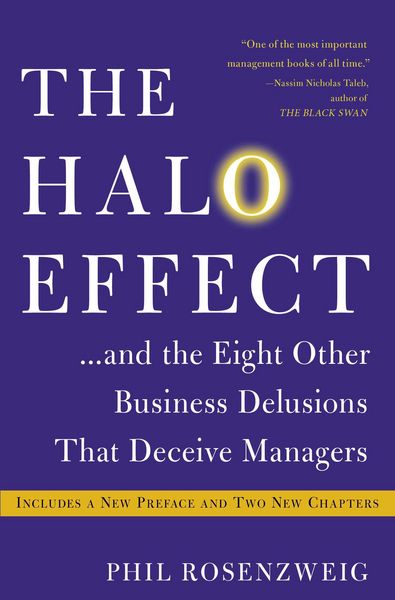
The Halo Effect ... and the Eight Other Business Delusions That Deceive Managers
-
- Taschenbuch
- eBook ausgewählt
-
Form:Einzelkauf Download
-
Sprache:Englisch
13,84 €
inkl. gesetzl. MwSt.Beschreibung
Produktdetails
Format
ePUB
Kopierschutz
Ja
Family Sharing
Ja
Text-to-Speech
Ja
Erscheinungsdatum
06.02.2007
Verlag
Free PressSeitenzahl
256 (Printausgabe)
Dateigröße
2152 KB
Sprache
Englisch
EAN
9781416538585
With two new chapters and a new preface, the award-winning book The Halo Effect continues to unmask the delusions found in the corporate world and provides a sharp understanding of what drives business success and failure.
Too many of today's most prominent management gurus make steel-clad guarantees based on claims of irrefutable research, promising to reveal the secrets of why one company fails and another succeeds, and how you can become the latter. Combining equal measures of solemn-faced hype and a wide range of popular business delusions, statistical and otherwise, these self-styled experts cloud our ability to think critically about the nature of success.
Central among these delusions is the Halo Effectthe tendency to focus on the high financial performance of a successful company and then spread its golden glow to all its attributesclear strategy, strong values, brilliant leadership, and outstanding execution. But should the same company's sales head south, the very same attributes are universally deridedsuddenly the strategy was wrong, the culture was complacent, and the leader became arrogant.
The Halo Effect not only identifies these delusions that keep us from understanding business performance, but also suggests a more accurate way to think about leading a company. This approachfocusing on strategic choice and execution, while recognizing the inherent riskiness of bothclarifies the priorities that managers face.
Brilliant and unconventional, irreverent and witty, The Halo Effect is essential reading for anyone wanting to separate fact from fiction in the world of business.
Too many of today's most prominent management gurus make steel-clad guarantees based on claims of irrefutable research, promising to reveal the secrets of why one company fails and another succeeds, and how you can become the latter. Combining equal measures of solemn-faced hype and a wide range of popular business delusions, statistical and otherwise, these self-styled experts cloud our ability to think critically about the nature of success.
Central among these delusions is the Halo Effectthe tendency to focus on the high financial performance of a successful company and then spread its golden glow to all its attributesclear strategy, strong values, brilliant leadership, and outstanding execution. But should the same company's sales head south, the very same attributes are universally deridedsuddenly the strategy was wrong, the culture was complacent, and the leader became arrogant.
The Halo Effect not only identifies these delusions that keep us from understanding business performance, but also suggests a more accurate way to think about leading a company. This approachfocusing on strategic choice and execution, while recognizing the inherent riskiness of bothclarifies the priorities that managers face.
Brilliant and unconventional, irreverent and witty, The Halo Effect is essential reading for anyone wanting to separate fact from fiction in the world of business.
Noch keine Bewertungen vorhanden
Verfassen Sie die erste Bewertung zu diesem Artikel
Helfen Sie anderen Kundinnen und Kunden durch Ihre Meinung.
Kurze Frage zu unserer Seite
Vielen Dank für Ihr Feedback
Wir nutzen Ihr Feedback, um unsere Produktseiten zu verbessern. Bitte haben Sie Verständnis, dass wir Ihnen keine Rückmeldung geben können. Falls Sie Kontakt mit uns aufnehmen möchten, können Sie sich aber gerne an unseren Kund*innenservice wenden.
zum Kundenservice