KI-Beratung Beta

  • Produktbild: The Oxford Handbook of Shakespearean Tragedy
  • Produktbild: The Oxford Handbook of Shakespearean Tragedy

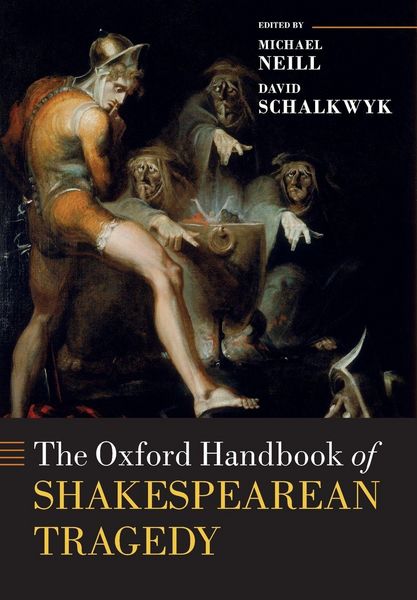
The Oxford Handbook of Shakespearean Tragedy

Aus der Reihe Oxford Handbooks

77,99 €

inkl. gesetzl. MwSt., Versandkostenfrei


Beschreibung

Produktdetails

Einband

Taschenbuch

Erscheinungsdatum

08.02.2018

Herausgeber

Michael Neill + weitere

Verlag

Oxford University Press

Seitenzahl

978

Maße (L/B/H)

24,4/17/5,2 cm

Gewicht

1649 g

Sprache

Englisch

ISBN

978-0-19-882039-0

Beschreibung

Rezension

A major collection of essays on Shakespearean tragedy Vanessa Lim, The English Association

Produktdetails

Einband

Taschenbuch

Erscheinungsdatum

08.02.2018

Herausgeber

Verlag

Oxford University Press

Seitenzahl

978

Maße (L/B/H)

24,4/17/5,2 cm

Gewicht

1649 g

Sprache

Englisch

ISBN

978-0-19-882039-0

EU-Ansprechpartner

Kolibri 360 GmbH
Ettore-Bugatti-Straße 6-14
51149 Köln
DE
produktsicherheit@kolibri360.de

Herstelleradresse

Oxford University Press
Great Clarendon Street
OX2 6DP Oxford
GB
EXPORTtradequeries@oup.com

Ein neues Kapitel für Ihre Bücher

Ein neues Kapitel für Ihre Bücher

Schenken Sie Ihren alten Schätzen ein zweites Leben und erhalten Sie dafür eine Thalia Geschenkkarte.

Jetzt verkaufen
Jetzt verkaufen

Noch keine Bewertungen vorhanden

Verfassen Sie die erste Bewertung zu diesem Artikel

Helfen Sie anderen Kundinnen und Kunden durch Ihre Meinung.

Kundinnen und Kunden meinen

Bewertungen (0)

Die Leseprobe wird geladen.
  • Produktbild: The Oxford Handbook of Shakespearean Tragedy
  • Produktbild: The Oxford Handbook of Shakespearean Tragedy
    • Part I: Genre
    • 1: Paul A. Kottman: What is Shakespearean Tragedy?
    • 2: Richard Halpern: The Classical Inheritance
    • 3: Rory Loughnane: The Medieval Inheritance
    • 4: Edward Pechter: The Romantic Inheritance
    • 5: Tzachi Zamir: Ethics and Shakespearean Tragedy
    • 6: Emma Smith: Character in Shakespearean Tragedy
    • 7: Philip Armstrong: Preposterous Nature in Shakespeare's Tragedies
    • 8: Lynne Magnusson: Shakespearean Tragedy and the Language of Lament
    • 9: David Hillman: The Pity of It: Shakespearean Tragedy and Affect
    • 10: Steven Mullaney: 'Do You See This?' The Politics of Attention in Shakespearean Tragedy
    • 11: Peter Lake: Tragedy and Religion: Religion and Revenge in Titus Andronicus and Hamlet
    • 12: Richard Sugg: Shakespeare's Anatomies of Death
    • 13: Gail Kern Paster: 'Minded Like the Weather': The Tragic Body and its Passions
    • 14: Andrew Hadfield: Shakespeare's Tragedy and English History
    • 15: Tom Bishop: Shakespeare's Tragedy and Roman History
    • 16: Hester Lees-Jeffries: Tragedy and the Satiric Voice
    • 17: Subha Mukherji: 'The action of my life': Tragedy, Tragicomedy, and Shakespeare's Mimetic Experiments
    • 18: Lee Edelman and Madhavi Menon: Queer Tragedy, or Two Meditations on Cause
    • Part II: Textual Issues
    • 19: Paul Werstine: Authorial Revision in the Tragedies
    • 20: Michael Witmore, Jonathan Hope and Michael Gleicher: Digital Approaches to the Language of Shakespearean Tragedy
    • Pert III: Reading the Tragedies
    • 21: Michael Neill: 'Romaine Tragedie': The Designs of Titus Andronicus
    • 22: Crystal Bartolovich: Romeo and Juliet as Event
    • 23: Emily C. Bartels: Julius Caesar: Making History
    • 24: Catherine Belsey: The Question of Hamlet
    • 25: Ian Smith: Seeing Blackness, Reading Race in Othello
    • 26: Leah S. Marcus: King Lear and the Death of the World
    • 27: Andrew J. Power: 'O horror! horror! horror!' Macbeth and Fear
    • 28: Bernhard Klein: Antony and Cleopatra
    • 29: David Schalkwyk: Coriolanus: A Tragedy of Language
    • Part IV: Stage and Screen
    • 30: Tiffany Stern: Early Modern Tragedy and Performance
    • 31: Peter Holland: Performing Shakespearean Tragedy, 1660-1780
    • 32: Russell Jackson: Staging Shakespearean Tragedy: The Nineteenth Century
    • 33: Bridget Escolme: Tragedy in Twentieth and Twenty-first Century Theatre Production: Hamlet, Lear, and the Politics of Intimacy
    • 34: Courtney Lehmann: Ontological Shivers: The Cinematic Afterlives of Shakespeare's Romeo and Juliet
    • 35: Douglas Lanier: Hamlet: Tragedy and Film Adaptation
    • 36: Sujata Iyengar: Intermediated Bodies and Bodies of Media: Screen Othellos
    • 37: Macdonald P. Jackson: Screening the Tragedies King Lear
    • 38: Katherine Rowe: Macbeth on Changing Screens
    • 39: Sarah Hatchuel and Nathalie Vienne-Guerrin: The Roman Plays on Screen: Autonomy, Serialization, Conflation
    • 40: Peter Byrne: 'The Bowe of Ulysses': Reworking the Tragedies of Shakespeare
    • 41: William Germano: Shakespeare's Tragedies on the Operatic Stage
    • Part V: The Tragedies Worldwide:
    • (I) European Responses
    • 42: Shaul Bassi: The Tragedies in Italy
    • 43: Andreas Höfele: The Tragedies in Germany
    • 44: Pascale Drouet and Nathalie Rivère de Carles: French Receptions of Shakespearean Tragedy: Between Liberty And Memory
    • 45: Pavel Drábek: Shakesperean Tragedy in Eastern Europe
    • 46: John Givens: Shakespearean Tragedy in Russia: In Equal Scale Weighing Delight and Dole
    • (II) The Wider World
    • 47: Gay Smith: Shakespearean Tragedy in the Nineteenth-Century United States: The Case of Julius Caesar
    • 48: Mark Houlahan: Unsettling the Bard: Australasia and the Pacific
    • 49: Colette Gordon, Daniel Roux and David Schalkwyk: Shakespeare's Tragedies in Southern Africa
    • 50: Araham Oz: In Blood Stepped in: Tragedy and the Modern Israelites
    • 51: Khalid Amine: Shakespeare's Tragedies in North Africa and the Arab World
    • 52: Alfredo Michel Modenessi and Margarida Gandara Rauen: Shakespearean Tragedy in Latin America and the Caribbean
    • 53: Poonam Trivedi: Shakespearean Tragedy in India: Politics of Genre - or How Newness Entered Indian Literary Culture
    • 54: Alexa Huang: 'It is the East': Shakespearean Tragedies in East Asia