KI-Beratung Beta

Gutscheinbedingungen

Gültig bis 21.10.2026 | Gültig für nicht preisgebundene fremdsprachige Bücher | Einzelne Artikel können ausgeschlossen sein | Online auf thalia.de und in der Thalia App einlösbar | Click & Collect nur mit Online-Zahlung (Paypal/Kreditkarte) vorab | Nicht kombinierbar mit anderen Gutscheinen oder Preisaktionen | Nur einmal pro Einkauf einlösbar | Gutschein wird auf max. 500€ Bestellwert angerechnet | Keine Barauszahlung | Nicht gültig für Versandkosten und Services

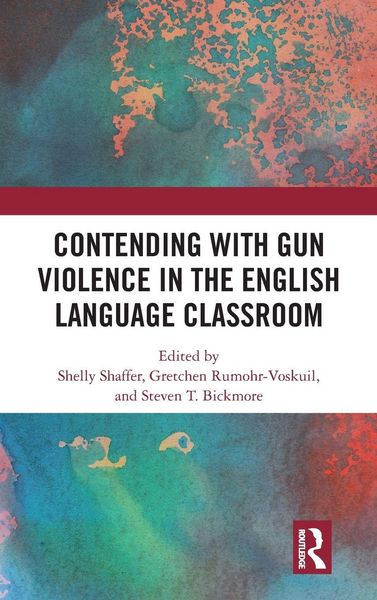
Produktbild: Contending with Gun Violence in the English Language Classroom

Contending with Gun Violence in the English Language Classroom

278,99 €

inkl. gesetzl. MwSt., Versandkostenfrei


Beschreibung

Produktdetails

Einband

Gebundene Ausgabe

Erscheinungsdatum

22.11.2018

Abbildungen

schwarz-weiss Illustrationen, Raster,schwarz-weiss, Zeichnungen, schwarz-weiss, Tabellen, schwarz-weiss

Herausgeber

Shelly Shaffer + weitere

Verlag

Taylor and Francis

Seitenzahl

156

Maße (L/B/H)

23,5/15,7/1,3 cm

Gewicht

387 g

Sprache

Englisch

ISBN

978-1-138-35451-7

Beschreibung

Produktdetails

Einband

Gebundene Ausgabe

Erscheinungsdatum

22.11.2018

Abbildungen

schwarz-weiss Illustrationen, Raster,schwarz-weiss, Zeichnungen, schwarz-weiss, Tabellen, schwarz-weiss

Herausgeber

Verlag

Taylor and Francis

Seitenzahl

156

Maße (L/B/H)

23,5/15,7/1,3 cm

Gewicht

387 g

Sprache

Englisch

ISBN

978-1-138-35451-7

Herstelleradresse

Libri GmbH
Europaallee 1
36244 Bad Hersfeld
DE

Email: gpsr@libri.de

Ein neues Kapitel für Ihre Bücher

Ein neues Kapitel für Ihre Bücher

Schenken Sie Ihren alten Schätzen ein zweites Leben und erhalten Sie dafür eine Thalia Geschenkkarte.

Jetzt verkaufen
Jetzt verkaufen

Noch keine Bewertungen vorhanden

Verfassen Sie die erste Bewertung zu diesem Artikel

Helfen Sie anderen Kundinnen und Kunden durch Ihre Meinung.

Kundinnen und Kunden meinen

Bewertungen (0)

Die Leseprobe wird geladen.
  • Produktbild: Contending with Gun Violence in the English Language Classroom
  • i. Preface by Ashley S. Boyd

    ii. Introduction by Steve Bickmore, Gretchen Rumohr-Voskuil, and Shelly Shaffer

    iii. Section 1: Gun Violence in Schools: What Does History Tell Us?

      1. Chapter 1. Exploring School Violence as a YA Author by Chris Crutcher
      2. Chapter 2. History of Violence: Guns, U.S. Education, and American Exceptionalism by Paul Thomas
      3. Chapter 3. Unreal: How the Rest of the World Views U.S. Gun Policy by David Belbin
      4. Chapter 4. #NeverAgain: Considering the Marjory Stoneman Douglas High School Student Activists' Media Representations through a Youth Lens by Chris Goering

      iv. Section 2: Reading About School Violence: Books that Explore School Shootings and Their Aftermath

        1. Chapter 5. What Do We Know? and What Can We Do?: Using Mercy Rule to Help Students Understand the Causes and Warning Signs of School Violence by Jim Blasingame
        2. Chapter 6. Looking for Hope--and Helpers--in Forgive Me, Leonard Peacock by Gretchen Rumohr-Voskuil
        3. Chapter 7. Adolescent Counter-Storytelling: Finding Youth Voice and Truth in That's Not What Happened by Shelly Shaffer.
        4. Chapter 8. Exploring the Blame Game Through the Lens of the Scout: Reading and Writing about Give a Boy a Gun by Melissa Williamson-Pulkkinen

        v. Section 3: Recovering from Trauma, Finding Allies, and Taking Action Towards Social Justice

          1. Chapter 9. Welcoming Ghosts into Our Classroom: Long Way Down by Jason Reynolds by Sarah Donovan
          2. Chapter 10. This is not a Drill: Exploring the After-Effects of Traumatic Events with Are you still there? by Sarah Lynn Scheerger by Maria Hernandez Goff
          3. Chapter 11. What He Knows and What He Will Say: Voicing for Justice in All American Boys by Jason Reynolds and Brendan Kiely by Alice Hays
          4. Chapter 12. Making Good Trouble: John Lewis, Andrew Aydin, and Nate Powell's March Trilogy and the Lessons of the Civil Rights Movement by Meghan Sweeney

          vi. Section 4: Writing Beyond Fear by Addressing the Issues

            1. Chapter 13. On Rhetorical Analysis, Teaching, and the American Culture of Guns by Jonathan Bush
            2. Chapter 14. Writing through Pain: How Teachers can Support Writing as Therapy for Students Processing Trauma by Jason Griffith
            3. Chapter 15. Writing in the Margins: Students' Voices in the Aftermath of Trauma by Jim Fredricksen and Joe Dillon

            vii. Section 5: Arming Teachers with Words, Stories, and Power

              1. Chapter 16. When the Gun isn't Metaphorical: Educating Teachers in the Age of School Shootings by Melanie Shoffner