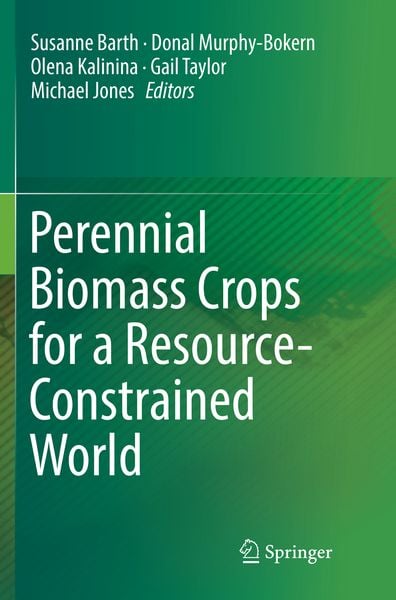
Perennial Biomass Crops for a Resource-Constrained World
-
- Hardcover
- Taschenbuch ausgewählt
- eBook
-
Sprache:Englisch
195,99 €
inkl. gesetzl. MwSt.,
Beschreibung
Produktdetails
Einband
Taschenbuch
Erscheinungsdatum
30.04.2018
Abbildungen
XVIII, 313 p. 74 illus., 54 illus. in color.
Herausgeber
Susanne Barth + weitereVerlag
SpringerSeitenzahl
313
Maße (L/B/H)
23,5/15,5/1,9 cm
Gewicht
511 g
Sprache
Englisch
ISBN
978-3-319-83073-5
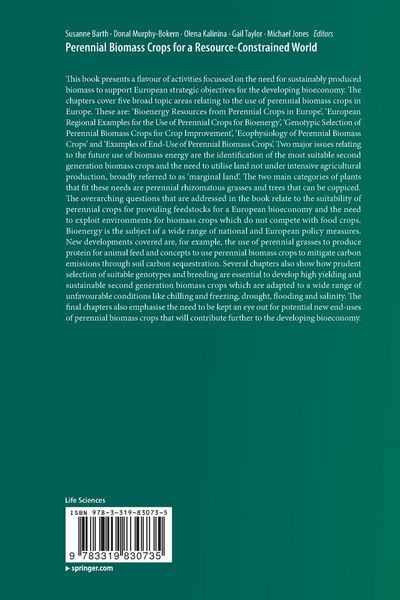
This book presents a flavour of activities focussed on the need for sustainably produced biomass to support European strategic objectives for the developing bioeconomy. The chapters cover five broad topic areas relating to the use of perennial biomass crops in Europe. These are: ‘Bioenergy Resources from Perennial Crops in Europe’, ‘European Regional Examples for the Use of Perennial Crops for Bioenergy’, ‘Genotypic Selection of Perennial Biomass Crops for Crop Improvement’, ‘Ecophysiology of Perennial Biomass Crops’ and ‘Examples of End-Use of Perennial Biomass Crops’. Two major issues relating to the future use of biomass energy are the identification of the most suitable second generation biomass crops and the need to utilise land not under intensive agricultural production, broadly referred to as ‘marginal land’. The two main categories of plants that fit these needs are perennial rhizomatous grasses and trees that can be coppiced. The overarching questions that are addressed inthe book relate to the suitability of perennial crops for providing feedstocks for a European bioeconomy and the need to exploit environments for biomass crops which do not compete with food crops. Bioenergy is the subject of a wide range of national and European policy measures. New developments covered are, for example, the use of perennial grasses to produce protein for animal feed and concepts to use perennial biomass crops to mitigate carbon emissions through soil carbon sequestration. Several chapters also show how prudent selection of suitable genotypes and breeding are essential to develop high yielding and sustainable second generation biomass crops which are adapted to a wide range of unfavourable conditions like chilling and freezing, drought, flooding and salinity. The final chapters also emphasise the need to be kept an eye out for potential new end-uses of perennial biomass crops that will contribute further to the developing bioeconomy.
Ein neues Kapitel für Ihre Bücher
Ein neues Kapitel für Ihre Bücher
Schenken Sie Ihren alten Schätzen ein zweites Leben und erhalten Sie dafür eine Thalia Geschenkkarte.
Noch keine Bewertungen vorhanden
Verfassen Sie die erste Bewertung zu diesem Artikel
Helfen Sie anderen Kundinnen und Kunden durch Ihre Meinung.
Kurze Frage zu unserer Seite
Vielen Dank für Ihr Feedback
Wir nutzen Ihr Feedback, um unsere Produktseiten zu verbessern. Bitte haben Sie Verständnis, dass wir Ihnen keine Rückmeldung geben können. Falls Sie Kontakt mit uns aufnehmen möchten, können Sie sich aber gerne an unseren Kund*innenservice wenden.
zum Kundenservice