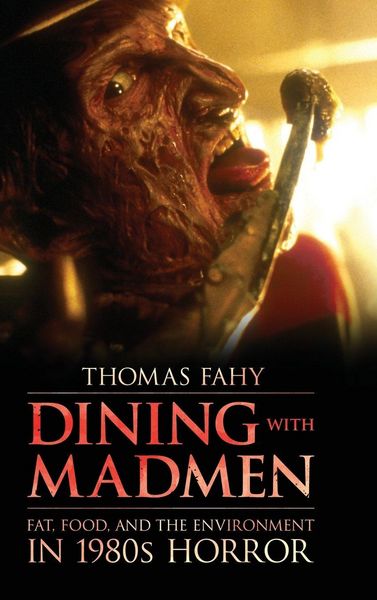
Dining with Madmen Fat, Food, and the Environment in 1980s Horror
-
- Hardcover ausgewählt
- Taschenbuch
- eBook
-
Sprache:Englisch
142,99 €
inkl. gesetzl. MwSt.,
Beschreibung
Produktdetails
Einband
Gebundene Ausgabe
Erscheinungsdatum
01.03.2019
Verlag
University Press Of MississippiSeitenzahl
250
Maße (L/B/H)
23,5/15,7/1,9 cm
Gewicht
562 g
Sprache
Englisch
ISBN
978-1-4968-2153-9
In Dining with Madmen: Fat, Food, and the Environment in 1980s Horror, author Thomas Fahy explores America's preoccupation with body weight, processed foods, and pollution through the lens of horror. Conspicuous consumption may have communicated success in the eighties, but only if it did not become visible on the body. American society had come to view fatness as a horrifying transformation--it exposed the potential harm of junk food, gave life to the promises of workout and diet culture, and represented the country's worst consumer impulses, inviting questions about the personal and environmental consequences of excess. While changing into a vampire or a zombie often represented widespread fears about addiction and overeating, it also played into concerns about pollution. Ozone depletion, acid rain, and toxic waste already demonstrated the irrevocable harm being done to the planet. The horror genre--from A Nightmare on Elm Street to American Psycho--responded by presenting this damage as an urgent problem, and, through the sudden violence of killers, vampires, and zombies, it depicted the consequences of inaction as terrifying. Whether through Hannibal Lecter's cannibalism, a vampire's thirst for blood in The Queen of the Damned and The Lost Boys, or an overwhelming number of zombies in George Romero's Day of the Dead, 1980s horror uses out-of-control hunger to capture deep-seated concerns about the physical and material consequences of unchecked consumption. Its presentation of American appetites resonated powerfully for audiences preoccupied with body size, food choices, and pollution. And its use of bodily change, alongside the bloodlust of killers and the desolate landscapes of apocalyptic fiction, demanded a recognition of the potentially horrifying impact of consumerism on nature, society, and the self.
Ein neues Kapitel für Ihre Bücher
Ein neues Kapitel für Ihre Bücher
Schenken Sie Ihren alten Schätzen ein zweites Leben und erhalten Sie dafür eine Thalia Geschenkkarte.
Noch keine Bewertungen vorhanden
Verfassen Sie die erste Bewertung zu diesem Artikel
Helfen Sie anderen Kundinnen und Kunden durch Ihre Meinung.
Kurze Frage zu unserer Seite
Vielen Dank für Ihr Feedback
Wir nutzen Ihr Feedback, um unsere Produktseiten zu verbessern. Bitte haben Sie Verständnis, dass wir Ihnen keine Rückmeldung geben können. Falls Sie Kontakt mit uns aufnehmen möchten, können Sie sich aber gerne an unseren Kund*innenservice wenden.
zum Kundenservice