KI-Beratung Beta

Gutscheinbedingungen

Gültig bis 21.10.2026 | Gültig für nicht preisgebundene fremdsprachige Bücher | Einzelne Artikel können ausgeschlossen sein | Online auf thalia.de und in der Thalia App einlösbar | Click & Collect nur mit Online-Zahlung (Paypal/Kreditkarte) vorab | Nicht kombinierbar mit anderen Gutscheinen oder Preisaktionen | Nur einmal pro Einkauf einlösbar | Gutschein wird auf max. 500€ Bestellwert angerechnet | Keine Barauszahlung | Nicht gültig für Versandkosten und Services

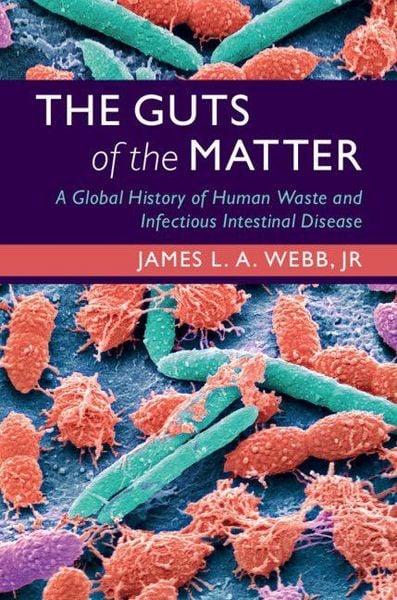
  • Produktbild: The Guts of the Matter
  • Produktbild: The Guts of the Matter

The Guts of the Matter A Global History of Human Waste and Infectious Intestinal Disease

101,99 €

inkl. gesetzl. MwSt., Versandkostenfrei


Beschreibung

Produktdetails

Einband

Gebundene Ausgabe

Erscheinungsdatum

12.12.2019

Abbildungen

21 b/w illus. 1 table, Zeichnungen, schwarz-weiss, Raster,schwarz-weiss, Tabellen, schwarz-weiss, Worked examples or Exercises

Verlag

Cambridge Academic

Seitenzahl

520

Maße (L/B/H)

23,1/15,2/1,5 cm

Gewicht

408 g

Sprache

Englisch

ISBN

978-1-108-49343-7

Herstelleradresse

Libri GmbH
Europaallee 1
36244 Bad Hersfeld
DE

Email: gpsr@libri.de

Ein neues Kapitel für Ihre Bücher

Ein neues Kapitel für Ihre Bücher

Schenken Sie Ihren alten Schätzen ein zweites Leben und erhalten Sie dafür eine Thalia Geschenkkarte.

Jetzt verkaufen
Jetzt verkaufen

Noch keine Bewertungen vorhanden

Verfassen Sie die erste Bewertung zu diesem Artikel

Helfen Sie anderen Kundinnen und Kunden durch Ihre Meinung.

Kundinnen und Kunden meinen

Bewertungen (0)

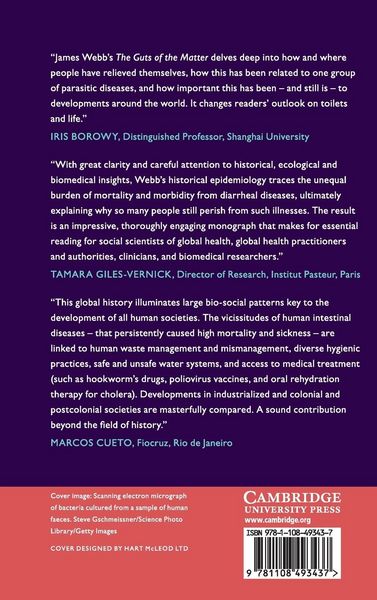
  • Produktbild: The Guts of the Matter
  • Produktbild: The Guts of the Matter
  • Introduction; 1. Pathogens and parasites; 1.1 Intestinal viruses, protozoa, and bacteria; 1.2 Intestinal worms; 1.3 Determinants of disease transmission; 1.4 Changing perspectives on childhood diarrheal diseases; 1.5 The microbiome; 1.6 Historical epidemiology and contemporary interventions; 2. Early change; 2.1 Rethinking the first epidemiological transition; 2.2 Patterns of vulnerability; 2.3 Zones of infectious intestinal disease; 2.4 Eurasian attitudes toward human waste; 2.5 Early urban sanitation; 3. Diffusion and amplification; 3.1 The early diffusion of infectious intestinal disease to the Americas; 3.2 The uses of human and animal wastes; 3.3 Preindustrial urban sanitation redux; 3.4 Urban crisis and the emergence of public health movements; 3.5 Global cholera; 4. Innovations; 4.1 The limited practical import of discoveries in epidemiology and bacteriology; 4.2 Early sewerage; 4.3 Death by sewage; 4.4 The 'dry earth' and 'tub-and-pail' systems; 4.5 Sewage farming and trenching; 4.6 Flies, household hygiene, and contaminated milk; 4.7 The typhoid fever vaccine; 4.8 Water filtration and disinfection; 5. Adoptions and adaptations; 5.1 Water and sanitation in Latin America; 5.2 European colonial military sanitation; 5.3 Water and sanitation in East Asia; 5.4 Water and sanitation in tropical Africa; 5.5 Water and sanitation in India; 5.6 Global sanitation at mid-twentieth century; 6. The struggle against hookworm disease; 6.1 Early control programs; 6.2 The Rockefeller Sanitary Commission for the Eradication of Hookworm Disease; 6.3 The Rockefeller Foundation's international programs; 6.4 International Health Board (1916-1927); 6.5 Anemia as a diagnostic conundrum; 6.6 The unmet challenges of human feces disposal; 6.7 Assessments of the hookworm campaigns; 7. An era of optimism; 7.1 Sanitary practices: soap, refrigeration, and screens; 7.2 Vaccines against poliomyelitis; 7.3 The revolution of oral rehydration therapy; 7.4 The World Health Organization and sanitation initiatives; 7.5 The first and second United Nations development decades (1960s-1970s); 7.6 The international drinking water and sanitation decade (1980s); 8. Global health and infectious intestinal disease; 8.1 The infant formula controversy; 8.2 The child survival revolution; 8.3 A new campaign to eradicate poliomyelitis; 8.4 Total community led sanitation; 8.5 Open defecation and the struggle for modernity; 8.6 Deworming the world; 8.7 Rotavirus vaccine; 8.8 The seventh cholera pandemic; 8.9 Infectious intestinal disease today; Conclusion; Bibliography.