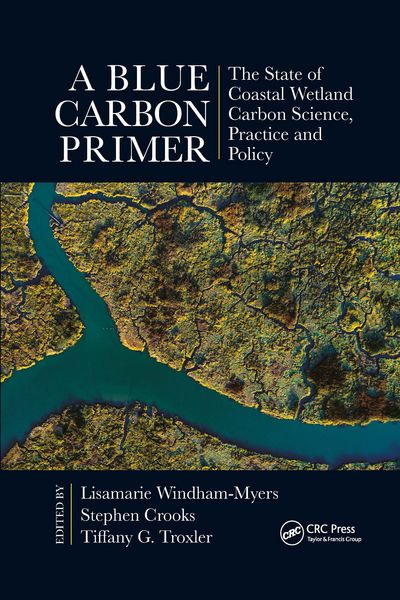
As the impacts of changing climate are becoming increasingly apparent, the ability of coastal wetlands to continue to absorb carbon dioxide has emerged as a topic of intense importance and interest. Scientists will find that this unique resource provides up-to-date information on the carbon cycle in coastal ecosystems, including their capacity for long-term carbon sequestration. Coastal resource managers and policy makers will benefit from the book's discussion on implications of that science for preserving the ecosystem services of coastal wetlands as seas rise and climate changes.
- Marcia K McNutt, President, National Academy of Sciences, Washington, DC, USA
Our planet's highly biodiverse Blue Carbon ecosystems play a key role determining the progression, mitigation and outcomes of global climate change. Alongside their essential role as carbon sinks these ecosystems are fundamental to the livelihoods and food security of tens of millions of coastal people, including some of the planet's most vulnerable populations throughout the tropics. Blue carbon habitats are bunkers of biodiversity, fisheries production, coastal protection and carbon sequestration. Decisive action to protect them is of paramount importance to the fate of both people and nature. Yet for too long we've known too little about the carbon dynamics of these habitats. This landmark publication brings together leading research from the world's pre-eminent coastal wetland scientists, and will help guide evidence-based action at a time of unprecedented threats to these ecosystems.
- Alasdair Harris, Executive Director of Blue Ventures
I was introduced as a plenary speaker at the 2016 Mangrove and Macrobenthos (MM4) meeting in St Augustine by my former student, Dr. Ken Krauss, as saying that 'Robert Twilley was studying carbon in mangroves before carbon was cool'. In support of that statement, a Web of Science search that includes 'mangroves and carbon' returns only 20 publications in the year I published my carbon export study of Rookery Bay mangroves in 1985; compared to over 200 papers published last year. It is great to see this global interest associated with the 'blue carbon' focus of wetlands as an ecosystem service. However, with that interest comes the challenge of having shared methods that help shape a community of practice that can generate valid comparative information on blue carbon dynamics. The collection of papers in this edited book 'A Blue Carbon Primer' sets the bar to achieve this goal. This series of chapters will certainly guide this community of practice for the next generation of blue carbon analyses of wetland ecosystems.
- Robert R. Twilley, University of Louisiana at Lafayette and Past President, Coastal & Estuarine Research Federation
In 2009, after 4 years of work, IUCN published the landmark report on the management of natural coastal carbon sinks. We wrote that report - the first of its kind and which led to the creation of the phrase 'blue carbon' - because of the fundamental need to change the world's views on the importance we should attach to such coastal habitats. The concept of blue carbon captured the attention of policy makers looking to include the biosphere and oceans in climate actions. It is for this reason that I am particularly delighted to see the publication of this book which will help policy makers, decision takers and practitioners on the coast to move forward with renewed determination to safeguard these most critical of Earth's ecosystems.
- Dan Laffoley, Marine Vice Chair, IUCN World Commission on Protected Areas
Blue carbon is rapidly becoming a major impetus for conservation of tidal marshes, mangrove swamps and seagrass meadows, ecosystems which are some of the world's most important sinks for organic carbon. With the recent flood of literature on the topic, A Blue Carbon Primer is a timely contribution. The breadth of topics covered, from drivers of storage to mapping and policy, as well as case studies from five different countries, should make this an important resource for both those new and those experienced in the blue carbon field.
- Gail Chmura, Professor, Department of Geography, McGill University
A Blue Carbon Primer is a comprehensive overview of the nearshore marine ecosystems capable of long-term carbon storage in their sediments - which provide climate mitigation benefits important for the ocean business community to understand and engage in. Managing, protecting and restoring coastal Blue Carbon ecosystems are a significant means for achieving carbon sequestration services, and other benefits to the environment, society, business and the economy. This timely volume creates a framework for Blue Carbon research, policy, and project implementation and sets out common Blue Carbon terminology and concepts for science, policy, and practice necessary for this young field. The book provide examples of Blue Carbon accounting approaches, management, and projects that should be of interest to the global ocean business community.
- Paul Holthus, Founding President and CEO, World Ocean Council
Coastal Blue Carbon Ecosystems, mangroves, tidal salt marshes and seagrasses are found on every continent of the world, besides Antarctica. They are a source for food and help to protect our coasts. However, a function which might be easily overlooked is that they can be a natural based solution for climate change, mitigating CO2 emissions.. The Intergovernmental Oceanographic Commission of UNESCO supports scientists and urges policy makers to recognize that when protected or restored, coastal blue carbon ecosystems sequester and store carbon - acting as carbon sinks. However, when degraded or destroyed, these ecosystems emit the carbon they have stored for centuries into the ocean and atmosphere and become sources of greenhouse gases. This book provides a concrete tool to connect the science with action to foster local, national, regional and finally global activities on coastal blue carbon conservation and restoration.
- Kirsten Isensee, Programme Specialist - Ocean Carbon Sources and Sinks, Intergovernmental Oceanographic Commission of UNESCO - Ocean Science Section