KI-Beratung Beta

  • Produktbild: Bioremediation of Pollutants
  • Produktbild: Bioremediation of Pollutants

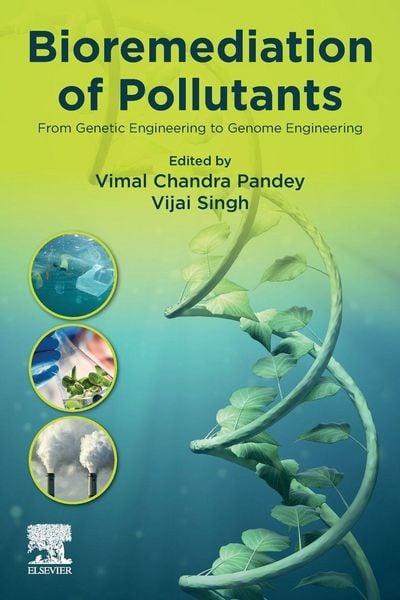
Bioremediation of Pollutants From Genetic Engineering to Genome Engineering

128,99 €

inkl. gesetzl. MwSt., Versandkostenfrei


Beschreibung

Produktdetails

Einband

Taschenbuch

Erscheinungsdatum

12.06.2020

Herausgeber

Vimal Chandra Pandey + weitere

Verlag

Elsevier Science & Technology

Seitenzahl

490

Maße (L/B/H)

22,9/15,2/2,5 cm

Gewicht

651 g

Sprache

Englisch

ISBN

978-0-12-819025-8

Beschreibung

Portrait

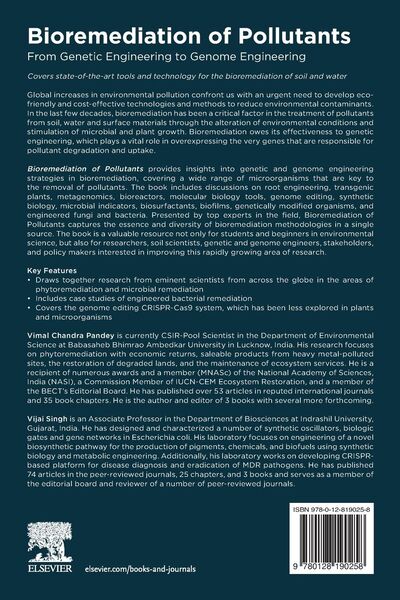
Prof. Vijai Singh is currently serving as Head of the Department of Biosciences, School of Science and Dean (Research & Innovation) at Indrashil University, Rajpur, Mehsana, India. Prior to this, he held the position of Associate Professor in the same department at Indrashil University. He has also served as Assistant Professor in the Department of Biological Sciences and Biotechnology at the Institute of Advanced Research, Gandhinagar, and in the Department of Biotechnology at the Invertis University, Bareilly, India. Earlier of his career, Prof. Singh worked as a Postdoctoral Fellow in the Synthetic Biology Group at the Institute of Systems and Synthetic Biology, Paris, France and at the School of Energy & Chemical Engineering at the Ulsan National Institute of Science and Technology, Ulsan, South Korea. He earned his Ph.D. in Biotechnology in 2009 from the ICAR-National Bureau of Fish Genetic Resources, Uttar Pradesh Technical University, Lucknow, India. His doctoral research focused on the development of molecular and immunoassays for the diagnosis of Aeromonas hydrophila. Prof. Singh's research interests lies in the design and construction of novel biosynthetic pathways for production of medically and industrially important biomolecules. His laboratory is also actively engaged in developing CRISPR-Cas systems for gene knock out, knock in, gene regulation and diagnostic. With over 15 years of research and teaching experience, his areas of expertise include synthetic biology, metabolic engineering, bioinformatics, microbiology, and industrial microbiology. He has an extensive academic record, with over 110 articles, 89 book chapters, 26 books and 3 patents to his credits. Prof. Singh has received number of prestigious awards, including the Bioclues Innovation, Research and Development Award (2023) from the BIOCLUES Society, the Vice Chancellor's Best Research Award (2023) from Indrashil University, and the Agathiyar Chemical Biology Award (2023) from the Society of Chemical and Synthetic Biology. At Indrashil University, he currently serves as chairman of the Board of Study, and is a member of the Academic Council of Indrashil University. He also holds the position of the Member Secretary of the Institutional Biosafety Committee (IBSC) at the university. Dr. Singh is actively involved in national and international scientific advisory roles.

Dr. Vimal Chandra Pandey is an applied research scientist of phyto- and phycoremediation at Chandigarh University, India. He obtained his PhD from Dr. RML Avadh University and conducted post-doctoral research at Babasaheb Bhimrao Ambedkar University, India. Dr. Pandey's research focuses on the remediation and management of polluted sites using ecologically and socio-economically valuable plants and algae. His work focuses strongly on restoring ecosystem services and developing a bio-based economy in support of the UN SDGs. Dr. Pandey is a member of the IUCN commission on Ecosystem Management and the National Academy of Sciences, India. He is the author and editor of several books, including Elsevier's Algae and Aquatic Macrophytes in Cities, Bioremediation of Pollutants, and more.

Produktdetails

Einband

Taschenbuch

Erscheinungsdatum

12.06.2020

Herausgeber

Verlag

Elsevier Science & Technology

Seitenzahl

490

Maße (L/B/H)

22,9/15,2/2,5 cm

Gewicht

651 g

Sprache

Englisch

ISBN

978-0-12-819025-8

EU-Ansprechpartner

Elsevier B.V.
Radarweg 29
1043 NX Amsterdam
NL
productsafety@elsevier.com

Herstelleradresse

Elsevier Science & Technology
London Wall 125
EC2Y 5AS London
GB
tradeorders@elsevier.com

Ein neues Kapitel für Ihre Bücher

Ein neues Kapitel für Ihre Bücher

Schenken Sie Ihren alten Schätzen ein zweites Leben und erhalten Sie dafür eine Thalia Geschenkkarte.

Jetzt verkaufen
Jetzt verkaufen

Noch keine Bewertungen vorhanden

Verfassen Sie die erste Bewertung zu diesem Artikel

Helfen Sie anderen Kundinnen und Kunden durch Ihre Meinung.

Kundinnen und Kunden meinen

Bewertungen (0)

Die Leseprobe wird geladen.
  • Produktbild: Bioremediation of Pollutants
  • Produktbild: Bioremediation of Pollutants
  • Part I Phytoremediation

    1 Phytoremediation-a holistic approach for remediation of

    heavy metals and metalloids

    2 Role of potential native weeds and grasses for phytoremediation

    of endocrine-disrupting pollutants discharged from pulp paper

    industry waste

    3 Transgenic plants in phytoremediation of organic pollutants

    4 Progress, prospects, and challenges of genetic engineering in

    Phytoremediation

    5 Recent advances in phytoremediation using genome engineering

    CRISPR-Cas9 technology

    Part II Microbial Remediation

    6 Endophytes-the hidden world for agriculture, ecosystem, and

    environmental sustainability

    7 Engineering bacterial aromatic dioxygenase genes to improve

    Bioremediation

    8 Microbial remediation progress and future prospects

    9 Development of biologically-based activated carbon for advanced

    water and wastewater treatment process

    10 The role of microorganism bioremediation for sustainable

    environment management

    11 Bioreactor and bioprocess technology for bioremediation of

    domestic and municipal wastewater

    12 Metagenomics approach for bioremediation: challenges and

    Perspectives

    13 Microbial bioremediation of industrial effluents and pesticides

    14 Synthetic biology approaches for bioremediation

    15 Microbial indicators and biosensors for bioremediation

    16 Biosurfactant-based bioremediation

    17 Engineered bacteria for bioremediation

    18 Biofilm in bioremediation

    19 Genetic engineering approaches for detecting environmental

    Pollutants

    20 Current status, challenges, and future of bioremediation

    21 Engineered microbes and evolving plastic bioremediation

    technology