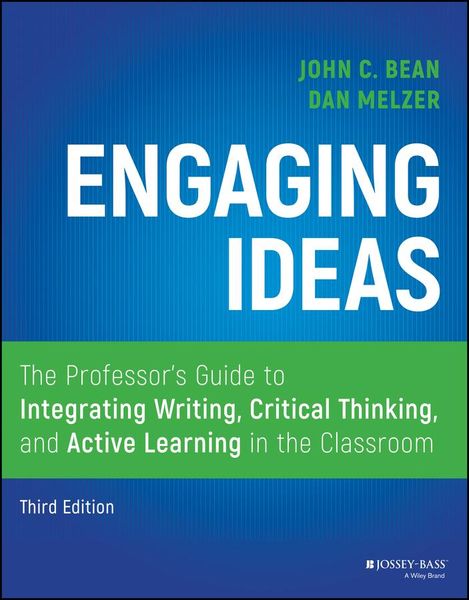
Engaging Ideas The Professor's Guide to Integrating Writing, Critical Thinking, and Active Learning in the Classroom
-
- Taschenbuch ausgewählt
- eBook
-
Sprache:Englisch
39,99 €
inkl. gesetzl. MwSt.,
Beschreibung
Produktdetails
Einband
Taschenbuch
Erscheinungsdatum
09.06.2021
Verlag
John Wiley & SonsSeitenzahl
400
Maße (L/B/H)
27,3/21,5/2,2 cm
Gewicht
902 g
Auflage
3rd edition
Sprache
Englisch
ISBN
978-1-119-70540-6
The newly revised third edition of Engaging Ideas delivers a step-by-step guide for designing writing assignments and critical thinking activities that engage students with important subject-matter questions. This new edition of the celebrated book (now written by the co-author team of Bean and Melzer) uses leading and current research and theory to help you link active learning pedagogy to your courses' subject matter. You'll learn how to:
* Design formal and informal writing assignments that guide students toward thinking like experts in your discipline
* Use time-saving strategies for coaching the writing process and handling the paper load including alternatives to traditional grading such as portfolio assessment and contract grading
* Help students use self-assessment and peer response to improve their work
* Develop better ways than the traditional research paper to teach undergraduate reading and research
* Integrate social media, multimodal genres, and digital technology into the classroom to promote active learning
This book demonstrates how writing can easily be integrated with other critical thinking activities such as inquiry discussions, simulation games, classroom debates, and interactive lectures. The reward of this book is watching students come to class better prepared, more vested in the questions your course investigates, more apt to study purposefully, and more likely to submit high-quality work. Perfect for higher education faculty and curriculum designers across all disciplines, Engaging Ideas will also earn a place in the libraries of graduate students in higher education.
Ein neues Kapitel für Ihre Bücher
Ein neues Kapitel für Ihre Bücher
Schenken Sie Ihren alten Schätzen ein zweites Leben und erhalten dafür eine Thalia Geschenkkarte.
Noch keine Bewertungen vorhanden
Verfassen Sie die erste Bewertung zu diesem Artikel
Helfen Sie anderen Kundinnen und Kunden durch Ihre Meinung.
Kurze Frage zu unserer Seite
Vielen Dank für Ihr Feedback
Wir nutzen Ihr Feedback, um unsere Produktseiten zu verbessern. Bitte haben Sie Verständnis, dass wir Ihnen keine Rückmeldung geben können. Falls Sie Kontakt mit uns aufnehmen möchten, können Sie sich aber gerne an unseren Kund*innenservice wenden.
zum Kundenservice