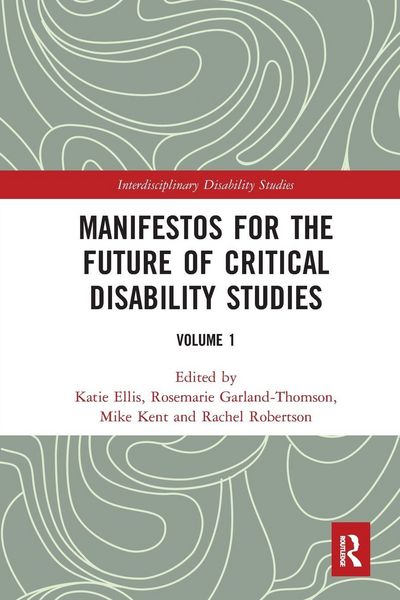

Manifestos for the Future of Critical Disability Studies Volume 1
-
- Hardcover
- Taschenbuch ausgewählt
- eBook
-
Sprache:Englisch
68,99 €
inkl. gesetzl. MwSt.,
Beschreibung
Produktdetails
Einband
Taschenbuch
Erscheinungsdatum
30.06.2020
Herausgeber
Katie Ellis + weitereVerlag
Taylor & FrancisSeitenzahl
282
Maße (L/B/H)
23,4/15,6/1,5 cm
Gewicht
433 g
Sprache
Englisch
ISBN
978-0-367-58460-3
This collection identifies the key tensions and conflicts being debated within the field of critical disability studies and provides both an outline of the field in its current form and offers manifestos for its future direction. Traversing a number of disciplines from science and technology studies to maternal studies, the collection offers a transdisciplinary vision for the future of critical disability studies.
Some common thematic concerns emerge across the book such as digital futures, the usefulness of anger, creativity, family as disability allies, intersectionality, ethics, eugenics, accessibility and interdisciplinarity. However, the contributors who write as either disabled people or allies do not proceed from a singular approach to disability, often reflecting different or even opposing positions on these issues.
Containing contributions from established and new voices in disability studies outlining their own manifesto for the future of the field, this book will be of interest to all scholars and students working within the fields of disability studies, cultural studies, sociology, law, history and education.
The concerns introduced here are further explored in its sister volume Interdisciplinary approaches to disability: looking towards the future.
Ein neues Kapitel für Ihre Bücher
Ein neues Kapitel für Ihre Bücher
Schenken Sie Ihren alten Schätzen ein zweites Leben und erhalten Sie dafür eine Thalia Geschenkkarte.
Noch keine Bewertungen vorhanden
Verfassen Sie die erste Bewertung zu diesem Artikel
Helfen Sie anderen Kundinnen und Kunden durch Ihre Meinung.
Kurze Frage zu unserer Seite
Vielen Dank für Ihr Feedback
Wir nutzen Ihr Feedback, um unsere Produktseiten zu verbessern. Bitte haben Sie Verständnis, dass wir Ihnen keine Rückmeldung geben können. Falls Sie Kontakt mit uns aufnehmen möchten, können Sie sich aber gerne an unseren Kund*innenservice wenden.
zum Kundenservice