KI-Beratung Beta

Produktbild: The Protagonist's Journey
- 13%

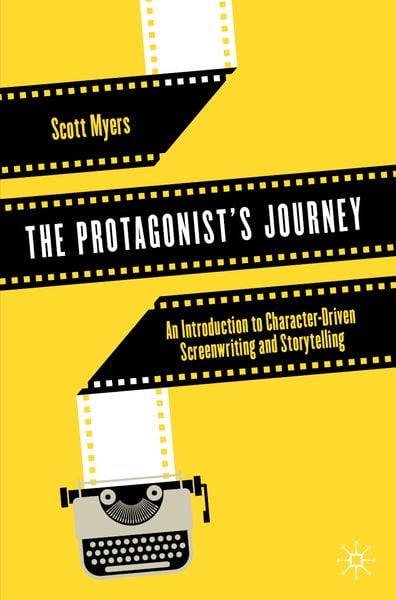
The Protagonist's Journey An Introduction to Character-Driven Screenwriting and Storytelling

13% sparen

25,99 € UVP 29,95 €

inkl. gesetzl. MwSt., Versandkostenfrei


Beschreibung

Produktdetails

Einband

Taschenbuch

Erscheinungsdatum

29.03.2022

Abbildungen

XXXVI, 339 p. 198 illus., 81 illus. in color.

Verlag

Springer

Seitenzahl

339

Maße (L/B/H)

23,5/15,5/2,1 cm

Gewicht

569 g

Auflage

1st edition 2022

Sprache

Englisch

ISBN

978-3-030-79681-5

Beschreibung

Produktdetails

Einband

Taschenbuch

Erscheinungsdatum

29.03.2022

Abbildungen

XXXVI, 339 p. 198 illus., 81 illus. in color.

Verlag

Springer

Seitenzahl

339

Maße (L/B/H)

23,5/15,5/2,1 cm

Gewicht

569 g

Auflage

1st edition 2022

Sprache

Englisch

ISBN

978-3-030-79681-5

Herstelleradresse

Springer-Verlag GmbH
Tiergartenstr. 17
69121 Heidelberg
DE

Email: ProductSafety@springernature.com

Ein neues Kapitel für Ihre Bücher

Ein neues Kapitel für Ihre Bücher

Schenken Sie Ihren alten Schätzen ein zweites Leben und erhalten Sie dafür eine Thalia Geschenkkarte.

Jetzt verkaufen
Jetzt verkaufen

Noch keine Bewertungen vorhanden

Verfassen Sie die erste Bewertung zu diesem Artikel

Helfen Sie anderen Kundinnen und Kunden durch Ihre Meinung.

Kundinnen und Kunden meinen

Bewertungen (0)

  • Produktbild: The Protagonist's Journey
  • Part I: The Protagonist’s Journey as Narrative Imperative.- Chapter One: The Protagonist’s Journey – Due to their central role, engaging the Protagonist is the most important aspect of the story-crafting process.- Chapter Two: Character Arc – In movies, there exists a recurring variety of character arcs including the most popular: positive transformation.- Chapter Three: Disunity – The Protagonist needs to change as reflected in their initial state of disunity.- Chapter Four: Deconstruction – Entering the New World, a series of challenges and trials deconstructs the Protagonist’s old ways of being.- Chapter Five: Reconstruction – Freed from their old ways of being, the Protagonist is reconstructed by embracing heretofore untapped inner potential.-Chapter Six: Unity – The Protagonist brings together all they have learned in the story’s final struggle and in doing so achieves unity.- Chapter Seven: The Protagonist’s Place Within the Screenplay Universe – The Protagonist’s journey interweaves between the External World and the Internal World.- Part II: The Protagonist’s Journey as Family of Characters.- Chapter Eight: Primary Character Archetypes – Five narrative dynamics common to movies represented by these archetypes: Protagonist, Nemesis, Attractor, Mentor, Trickster.- Chapter Nine: Nemesis – By providing opposition to the Protagonist, the Nemesis generates sustained conflict which creates the central drama of the story.- Chapter Ten: Attractor – During their journey, the Protagonist intersects with Attractor characters who connect with the Protagonist’s emotional development.- Chapter Eleven: Mentor – The Protagonist meets another type of ally, the Mentor who provides wisdom and contributes to the Protagonist’s intellectual growth.- Chapter Twelve: Trickster – A shapeshifter tests the will of the Protagonist by switching from ally to enemy, enemy to ally, and generating complications.- Chapter Thirteen: Subplots – Each Protagonist relationship with key characters is a mini-story with its own arc, theme, and contribution to the overall narrative.- Chapter Fourteen: Character Map – There is a structure to the Protagonist’s relationships with the story’s major characters.- Part III: The Protagonist’s Journey as Screenplay.- Chapter Fifteen: Breaking the Story I – Begin the story-crafting process by engaging the story’s central character with a Protagonist Character Treatment.- Chapter Sixteen: Breaking the Story II – Use a series of brainstorming exercises to explore the story universe and develop its characters.- Chapter Seventeen: Breaking the Story III – A first pass at wrangling the plot by working with Four Primary Plotline Points.- Chapter Eighteen: Breaking the Story IV – Track the Protagonist’s transformation arc through Four Themeline Movements.- Chapter Nineteen: Breaking the Story V – Expand the framework of the plot by identifying Ten Major Plotline Points.- Chapter Twenty: Breaking the Story VI – Construct the final story structure, both Plotline and Themeline into a Narrative Throughline.- Chapter Twenty-One: Writing the First Draft – Break down the writing process into sets of scenes from one Plotline Point to another all the way through the Denouement.