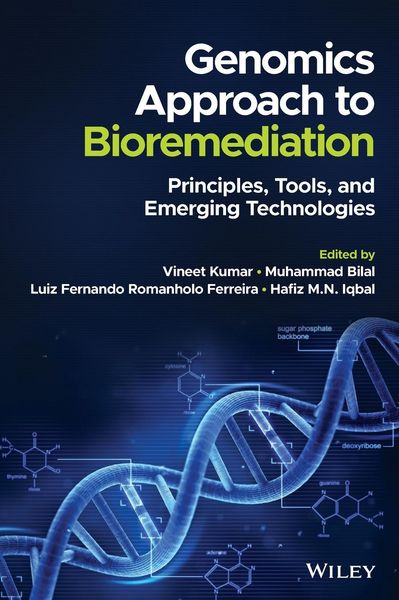
Genomics Approach to Bioremediation Principles, Tools, and Emerging Technologies
277,99 €
inkl. gesetzl. MwSt.,
Beschreibung
Produktdetails
Einband
Gebundene Ausgabe
Erscheinungsdatum
14.02.2023
Herausgeber
Vineet Kumar + weitereVerlag
John Wiley & Sons IncSeitenzahl
560
Maße (L/B/H)
26/18,3/3,5 cm
Gewicht
1241 g
Auflage
1. Auflage
Sprache
Englisch
ISBN
978-1-119-85210-0
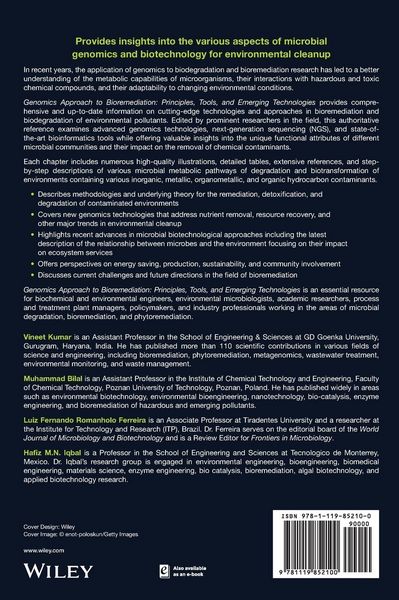
Provides insights into the various aspects of microbial genomics and biotechnology for environmental cleanup
In recent years, the application of genomics to biodegradation and bioremediation research has led to a better understanding of the metabolic capabilities of microorganisms, their interactions with hazardous and toxic chemical compounds, and their adaptability to changing environmental conditions.
Genomics Approach to Bioremediation: Principles, Tools, and Emerging Technologies provides comprehensive and up-to-date information on cutting-edge technologies and approaches in bioremediation and biodegradation of environmental pollutants. Edited by prominent researchers in the field, this authoritative reference examines advanced genomics technologies, next-generation sequencing (NGS), and state-of-the-art bioinformatics tools while offering valuable insights into the unique functional attributes of different microbial communities and their impact on the removal of chemical contaminants.
Each chapter includes numerous high-quality illustrations, detailed tables, extensive references, and step-by-step descriptions of various microbial metabolic pathways of degradation and biotransformation of environments containing various inorganic, metallic, organometallic, and organic hydrocarbon contaminants.
* Describes methodologies and underlying theory for the remediation, detoxification, and
degradation of contaminated environments
* Covers new genomics technologies that address nutrient removal, resource recovery, and
other major trends in environmental cleanup
* Highlights recent advances in microbial biotechnological approaches including the latest
description of the relationship between microbes and the environment focusing on their impact
on ecosystem services.
* Offers perspectives on energy saving, production, sustainability, and community involvement
* Discusses current challenges and future directions in the field of bioremediation
Genomics Approach to Bioremediation: Principles, Tools, and Emerging Technologies is an essential resource for biochemical and environmental engineers, environmental microbiologists, academic researchers, process and treatment plant managers, policymakers, and industry professionals working in the areas of microbial degradation, bioremediation, and phytoremediation.
Ein neues Kapitel für Ihre Bücher
Ein neues Kapitel für Ihre Bücher
Schenken Sie Ihren alten Schätzen ein zweites Leben und erhalten Sie dafür eine Thalia Geschenkkarte.
Noch keine Bewertungen vorhanden
Verfassen Sie die erste Bewertung zu diesem Artikel
Helfen Sie anderen Kundinnen und Kunden durch Ihre Meinung.
Kurze Frage zu unserer Seite
Vielen Dank für Ihr Feedback
Wir nutzen Ihr Feedback, um unsere Produktseiten zu verbessern. Bitte haben Sie Verständnis, dass wir Ihnen keine Rückmeldung geben können. Falls Sie Kontakt mit uns aufnehmen möchten, können Sie sich aber gerne an unseren Kund*innenservice wenden.
zum Kundenservice