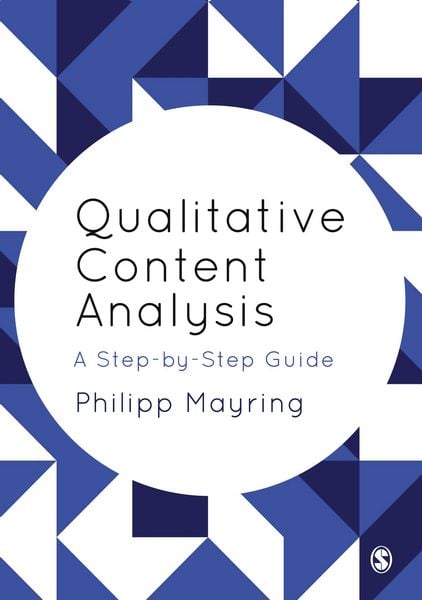
• Produktbild: Qualitative Content Analysis
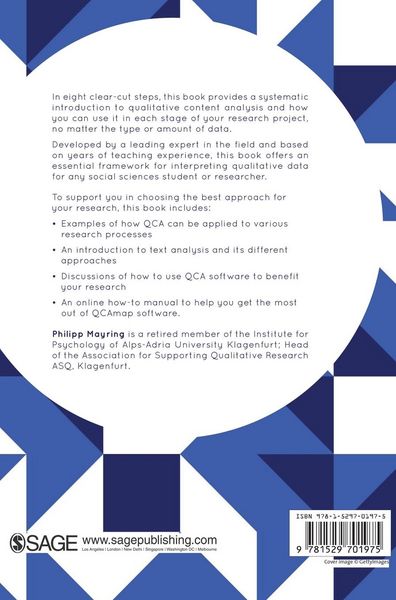
  • Produktbild: Qualitative Content Analysis
- 13%

Qualitative Content Analysis A Step-by-Step Guide

13% sparen

49,99 € UVP 57,98 €

inkl. gesetzl. MwSt., Versandkostenfrei


Beschreibung

Produktdetails

Einband

Taschenbuch

Erscheinungsdatum

02.12.2021

Verlag

Sage Publications

Seitenzahl

236

Maße (L/B/H)

24,2/17/1,3 cm

Gewicht

412 g

Farbe

Marine / Weiß

Auflage

1. Auflage

Sprache

Englisch

ISBN

978-1-5297-0197-5

Beschreibung

Produktdetails

Einband

Taschenbuch

Erscheinungsdatum

02.12.2021

Verlag

Sage Publications

Seitenzahl

236

Maße (L/B/H)

24,2/17/1,3 cm

Gewicht

412 g

Farbe

Marine / Weiß

Auflage

1. Auflage

Sprache

Englisch

ISBN

978-1-5297-0197-5

EU-Ansprechpartner

Kolibri 360 GmbH
Ettore-Bugatti-Straße 6-14
51149 Köln
DE
produktsicherheit@kolibri360.de

Herstelleradresse

SAGE Publications
1 Oliver's Yard 55 City Road
EC1Y 1SP London
GB
orders@sagepub.co.uk

Ein neues Kapitel für Ihre Bücher

Ein neues Kapitel für Ihre Bücher

Schenken Sie Ihren alten Schätzen ein zweites Leben und erhalten dafür eine Thalia Geschenkkarte.

Jetzt verkaufen
Jetzt verkaufen

Noch keine Bewertungen vorhanden

Verfassen Sie die erste Bewertung zu diesem Artikel

Helfen Sie anderen Kundinnen und Kunden durch Ihre Meinung.

Kundinnen und Kunden meinen

Bewertungen (0)

Die Leseprobe wird geladen.
  • Produktbild: Qualitative Content Analysis
  • Produktbild: Qualitative Content Analysis
  • Introduction: Why Should we be Concerned With Qualitative Content Analysis?
    Part I: Foundations of Text Analysis
    Chapter 1: The Methodological Debate of Qualitative vs. Quantitative Research
    Historical Background
    Theory of Science Background of the Controversy
    Is Mixed Methods a Solution?
    Common Research Criteria for Qualitative and Quantitative Approaches
    Chapter 2: Importance of Text Analysis in Social Sciences
    Texts and Numerical Data as Material in Social Sciences
    Methods of Collecting Textual Material in Social Sciences Projects
    Chapter 3: Different Approaches of Text Analysis
    A comparison of Five Qualitative Text Analysis Approaches
    Social-Hermeneutic Paraphrase
    Psychoanalytic Text Interpretation
    Objective Hermeneutics
    Grounded Theory Coding
    Qualitative Content Analysis
    Comparison of the Approaches and Quality Criteria
    Chapter 4: A Short History of Content Analysis
    Preliminary Phase
    Consolidation Phase
    Fine Developments and Interdisciplinary Expansion
    Stagnation and "Discontent" with Content Analysis
    New quantitative approaches in computational linguistics, complex algorithms and text mining
    Approaches to Qualitative Content Analysis
    Chapter 5: Basic Principles of Qualitative Content Analysis
    Embedding the Material within its Communication Context
    Categories in the Focus of Analysis
    Defining content analytical units
    Systematic, Rule-bound Procedure
    Object Reference in Place of Formal Techniques
    Theory-guided Character of the Analysis
    Testing Specific Instruments via Pilot Studies
    Integrating Quantitative Steps of Analysis
    Quality Criteria
    Chapter 6: Procedures of Qualitative Content Analysis
    Summarizing Qualitative Content Analysis
    Inductive Category Formation
    Explication: Narrow and Broad Context Analysis
    Structuring: Deductive Category Assignment
    Mixed Procedures
    Chapter 7: Computer Programs for Supporting Qualitative Content Analysis
    The Merits of Computer Assistance in Text Analysis
    QCAmap Software for Qualitative Content Analysis
    Part II: The 8 Step Qualitative Content Analysis Research Process
    Chapter 8 Step 1: Forming the Research Question
    From Themes to Questions
    How to Formulate a Research Question
    Example for Step 1: Forming the Research Question
    Chapter 9 Step 2: Establishing the Theoretical Background of the Study
    Different Levels of Theory Background
    Example for Step 2: Establishing the Theoretical Background of the Study
    Chapter 10 Step 3: Designing the Study
    Basic Designs for Qualitative (and Quantitative) Research
    Example for Step 3: Designing the Study
    Ethical Aspects of a Qualitative Content Analysis Study
    Chapter 11 Step 4: Gathering Textual Material, Sampling
    The Quality of the Sample: Establishing a Sampling Strategy
    Recommendations for Sample Size
    Describing the Text Corpus for Qualitative Content Analysis
    Transcription Rules
    Example for Step 4 (Textual Material)
    Chapter 12 Step 5: Choosing and Constructing Adequate Methods
    Summarizing: Procedure and Example
    Inductive Category Formation: Procedure and Example
    Explicating (Context Analysis): Procedure and Example
    Structuring (Deductive Category Assignment): Procedure and Example
    Mixed Procedures: Theme Analysis, Type Analysis, Parallel Procedures
    Chapter 13 Step 6: Conducting the Study and Presenting the Results
    Description of Results
    Presenting Studies with Summarizing Content Analysis
    Presenting Inductive Category Formation
    Presenting Deductive Category Assignment
    Answering the Research Question
    Chapter 14 Step 7: Discussing Quality Criteria
    Classical Quality Criteria
    Specific Content-analytical Quality Criteria
    Software Example: Three Levels of Intercoder Agreement
    Chapter 15 Step 8: Reflecting on Research Implications
    Theoretical Implications
    Practical Implications
    Part III: Indications and Limitations of Qualitative Content Analysis
    Chapter 16: Indications and Limitations
    Similar Conceptions of a Qualitative Content Analysis
    Criticism and Misunderstandings
    Strengths and Weaknesses of Qualitative Content Analysis
    Further Developments