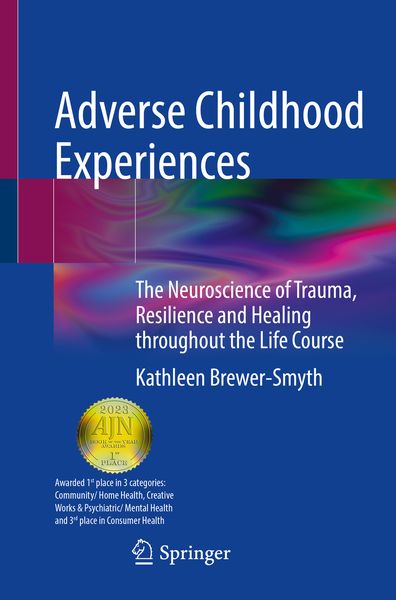
Adverse Childhood Experiences The Neuroscience of Trauma, Resilience and Healing throughout the Life Course
-
- Taschenbuch ausgewählt
- eBook
-
Sprache:Englisch
59,99 €
inkl. gesetzl. MwSt.,
Beschreibung
Produktdetails
Einband
Taschenbuch
Erscheinungsdatum
09.11.2022
Abbildungen
XXV, 454 p. 12 illus. in color.
Verlag
SpringerSeitenzahl
454
Maße (L/B/H)
23,5/15,5/2,5 cm
Gewicht
808 g
Farbe
Marine
Sprache
Englisch
ISBN
978-3-031-08800-1
The entire world is in crisis with adverse childhood experiences (ACEs) and other lifetime trauma at an all-time high. This book is a valuable resource to promote optimal brain function for everyone, but especially for survivors of trauma who are particularly at risk throughout the life course. It is critical for healthcare providers, schoolteachers and administration, public safety professionals, foster and adoptive parents, employers and loved ones to understand the potential life-long consequences that ACEs can have in the lives of survivors. This book describes the complexities behind why behaviors occur if hurt people hurt themselves and others.
The first half of this book addresses what can go wrong in the brain and body after trauma that potentially leads to life-long poor bio-behavioral health outcomes. The second half of this book addresses how the life-long poor bio-behavioral health outcomes can be prevented, mitigated or potentially reversed. This book is necessaryfor everyone who is interested in optimizing brain function, especially survivors of ACEs and other trauma throughout the life course who are at greater risk. The major focus of the book is on how to prevent long-term negative consequences of trauma and how to restore the brain, body, behavior and emotions. This book
won four
American Journal of Nursing
(AJN) Book of the Year Awards.
It was awarded
1
st
place in 3 categories
(Community/ Home Health, Creative Works, and Psychiatric/ Mental Health) and 3
rd
place in the Consumer Health category.
No book has ever won this many AJN awards since AJN first began acknowledging high-quality publications on nursing and healthcare topics in 1969.
Ein neues Kapitel für Ihre Bücher
Ein neues Kapitel für Ihre Bücher
Schenken Sie Ihren alten Schätzen ein zweites Leben und erhalten Sie dafür eine Thalia Geschenkkarte.
Noch keine Bewertungen vorhanden
Verfassen Sie die erste Bewertung zu diesem Artikel
Helfen Sie anderen Kundinnen und Kunden durch Ihre Meinung.
Kurze Frage zu unserer Seite
Vielen Dank für Ihr Feedback
Wir nutzen Ihr Feedback, um unsere Produktseiten zu verbessern. Bitte haben Sie Verständnis, dass wir Ihnen keine Rückmeldung geben können. Falls Sie Kontakt mit uns aufnehmen möchten, können Sie sich aber gerne an unseren Kund*innenservice wenden.
zum Kundenservice