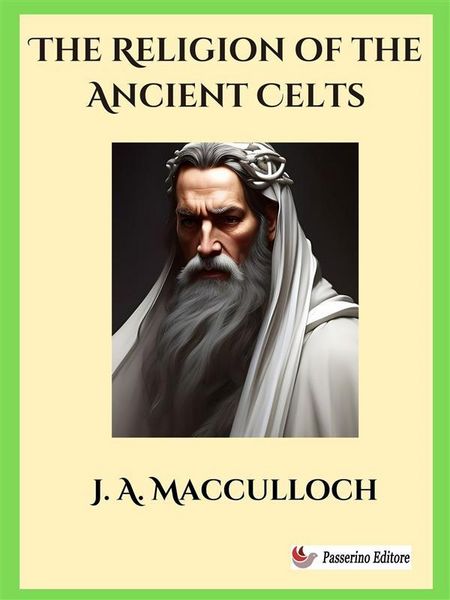
The Religion of the Ancient Celts
-
- Hardcover
- Taschenbuch
- eBook ausgewählt
- Hörbuch
-
Form:Einzelkauf Download
-
Sprache:Englisch
-
eBook Format:ePUB
- PDF 71,99 €
- ePUB 0,99 € ausgewählt
-
Verlag:Passerino
- Taylor & Francis eBooks 71,99 €
- Passerino 0,99 € ausgewählt
0,99 €
inkl. gesetzl. MwSt.Beschreibung
Produktdetails
Format
ePUB
Kopierschutz
Nein
Family Sharing
Ja
Text-to-Speech
Ja
Altersempfehlung
ab 12 Jahr(e)
Erscheinungsdatum
07.06.2023
Verlag
PasserinoSeitenzahl
(Printausgabe)
Dateigröße
1056 KB
Sprache
Englisch
EAN
9791222415116
The Celtic religion was polytheistic, meaning they worshiped multiple gods and goddesses. These deities were associated with various aspects of nature, such as the sun, moon, earth, water, and animals. The Celts believed that the natural world was inhabited by supernatural beings and that they played a significant role in shaping their lives.
One of the central concepts in Celtic religion was the belief in the Otherworld, a realm that existed parallel to the physical world. The Otherworld was a place of eternal youth, beauty, and abundance, and it was the destination for souls after death. The Celts believed in the immortality of the soul and the possibility of reincarnation.
The Druids, a class of priests and religious leaders, held great influence in Celtic society. They were responsible for conducting religious ceremonies, offering sacrifices, and interpreting omens and signs. The Druids also played a crucial role in transmitting oral traditions and knowledge, including myths, genealogies, and legal codes.
Rituals and ceremonies were an important part of Celtic religious practices. These included offerings of food, drink, and valuable objects to the deities, as well as animal and, in some cases, human sacrifices. Rituals were often held in sacred groves, hilltops, or lakeshores, which were believed to be places where the boundaries between the mortal and divine realms were thin.
The Celts celebrated several festivals throughout the year, marking the changing seasons and agricultural cycles. The most famous of these festivals was Samhain, which marked the end of the harvest season and the beginning of winter. It was believed that during Samhain, the veil between the worlds of the living and the dead was at its thinnest, allowing spirits and fairies to roam freely.
It's important to note that the Celts were not a homogeneous group, and religious practices and beliefs could vary among different tribes and regions. Additionally, the Roman conquest of Celtic lands and the spread of Christianity in later centuries significantly impacted and reshaped Celtic religious traditions.
John Arnott MacCulloch is best known as one of Scotland's pre-eminent scholars on Celtic Religion and Mythology. His most famous works include The Religion of the Ancient Celts and his lengthier The Mythology of All Races (in thirteen volumes). The former book first published in 1911, was written during a long residence in the Isle of Skye, a place McCulloch claimed to be "easier to attempt the ancient religion than in a busier or more prosaic place" because it "is where the old language of the people still survives, and where the genius loci speaks everywhere of things remote and strange."
McCulloch's book became an instant classic as it was one of the first to attempt to rebuild Celtic paganism and postulate its inner spirit. McCulloch portrays the Celt as a seeker after God, linking himself by strong ties to the unseen and eager to conquer the unknown by religous rite and magic art. The earliest aspect of the Celtic religion, McCulloch believed, was the cult of nature spirits and of life manifested in nature.
Wir kaufen Ihren tolino
Wir kaufen Ihren tolino
Verkaufen Sie Ihren alten tolino und erhalten Sie dafür eine Thalia Geschenkkarte.
Noch keine Bewertungen vorhanden
Verfassen Sie die erste Bewertung zu diesem Artikel
Helfen Sie anderen Kundinnen und Kunden durch Ihre Meinung.
Kurze Frage zu unserer Seite
Vielen Dank für Ihr Feedback
Wir nutzen Ihr Feedback, um unsere Produktseiten zu verbessern. Bitte haben Sie Verständnis, dass wir Ihnen keine Rückmeldung geben können. Falls Sie Kontakt mit uns aufnehmen möchten, können Sie sich aber gerne an unseren Kund*innenservice wenden.
zum Kundenservice