
KI-Beratung Beta

  • Produktbild: Wittgenstein on Mathematics
  • Produktbild: Wittgenstein on Mathematics

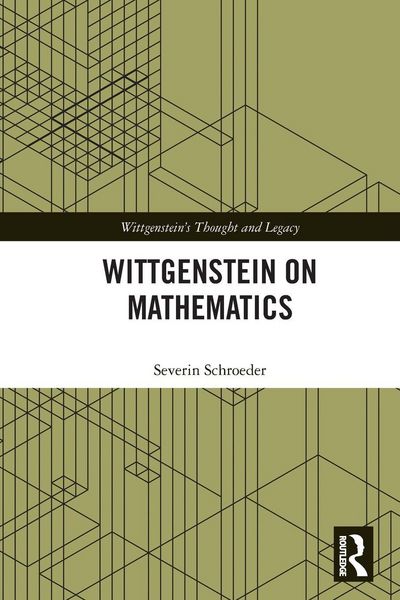
Wittgenstein on Mathematics

68,99 €

inkl. gesetzl. MwSt., Versandkostenfrei


Beschreibung

Produktdetails

Einband

Taschenbuch

Erscheinungsdatum

25.09.2023

Abbildungen

10 SW-Zeichn.

Verlag

Taylor & Francis

Seitenzahl

254

Maße (L/B/H)

22,9/15,2/1,4 cm

Gewicht

374 g

Sprache

Englisch

ISBN

978-0-367-68328-3

Beschreibung

Produktdetails

Einband

Taschenbuch

Erscheinungsdatum

25.09.2023

Abbildungen

10 SW-Zeichn.

Verlag

Taylor & Francis

Seitenzahl

254

Maße (L/B/H)

22,9/15,2/1,4 cm

Gewicht

374 g

Sprache

Englisch

ISBN

978-0-367-68328-3

Herstelleradresse

Libri GmbH
Europaallee 1
36244 Bad Hersfeld
DE

Email: gpsr@libri.de

Ein neues Kapitel für Ihre Bücher

Ein neues Kapitel für Ihre Bücher

Schenken Sie Ihren alten Schätzen ein zweites Leben und erhalten Sie dafür eine Thalia Geschenkkarte.

Jetzt verkaufen
Jetzt verkaufen

Noch keine Bewertungen vorhanden

Verfassen Sie die erste Bewertung zu diesem Artikel

Helfen Sie anderen Kundinnen und Kunden durch Ihre Meinung.

Kundinnen und Kunden meinen

Bewertungen (0)

Die Leseprobe wird geladen.
  • Produktbild: Wittgenstein on Mathematics
  • Produktbild: Wittgenstein on Mathematics
  • Preface viii

    List of Abbreviations xii

    PART I

    Background 1

    1 Foundations of Mathematics 3

    2 Logicism 9

    2.1 Frege's Logicism 9

    2.2 The Class Paradox and Russell's Theory of Types 12

    2.3 Tractatus Logico-Philosophicus: Logicism Without Classes 13

    3 Wittgenstein's Critique of Logicism 15

    3.1 Can Equality of Number Be Defined in Terms of One-to-One Correlation? 15

    3.2 Frege's (and Russell's) Definition of Numbers as Equivalence Classes Is Not Constructive: It Doesn't Provide a Method of Identifying Numbers 21

    3.3 Platonism 22

    3.4 Russell's Reconstructions of False Equations Are Not Contradictions 26

    3.5 Frege's and Russell's Formalisation of Sums as Logical Truths Cannot Be Foundational as It Presupposes Arithmetic 27

    3.6 Even If We Assumed (for Argument's Sake) That All Arithmetic Could Be Reproduced in Russell's Logical Calculus, That Would Not Make the Latter a Foundation of Arithmetic 31

    4 The Development of Wittgenstein's Philosophy of

    Mathematics: Tractatus to The Big Typescript 35

    4.1 Tractatus Logico-Philosophicus 35

    4.2 Philosophical Remarks (MSS 105-8: 1929-30) to The Big Typescript (TS 213: 1933) 36

    PART II

    Wittgenstein's Mature Philosophy of Mathematics

    (1937-44) 55

    5 The Two Strands in Wittgenstein's Later Philosophy of Mathematics 57

    6 Mathematics as Grammar 59

    7 Rule-Following 78

    7.1 Rule-Following and Community 88

    8 Conventionalism 93

    8.1 Quine's Circularity Objection 95

    8.2 Dummett's Objection That Conventionalism Cannot Explain Logical Inferences 101

    8.3 Crispin Wright's Infinite Regress Objection 103

    8.4 The Objection to 'Moderate Conventionalism' From Scepticism About Rule-Following 105

    8.5 The Objection From the Impossibility of a Radically Different Logic or Mathematics 109

    8.6 Conclusion 124

    9 Empirical Propositions Hardened Into Rules 126

    Synthetic A Priori 134

    10 Mathematical Proof 141

    10.1 What Is a Mathematical Proof? 142

    (a) Proof That a0 = 1 150

    (b) Skolem's Inductive Proof of the Associative Law of Addition 150

    (c) Cantor's Diagonal Proof 151

    (d) Euclid's Construction of a Regular Pentagon 158

    (e) Euclid's Proof That There Is No Greatest Prime Number 160

    (f) Proof (Calculation) in Elementary Arithmetic 166

    Proof and experiment 169

    10.2 What Is the Relation Between a Mathematical Proposition and Its Proof? 171

    10.3 What Is the Relation Between a Mathematical Proposition's Proof and Its Application? 181

    11 Inconsistency 189

    12 Wittgenstein's Remarks on Gödel's First Incompleteness Theorem 203

    12.1 Wittgenstein Discusses Godel's Informal Sketch of His Proof 206

    12.2 'A Proposition That Says About Itself That It Is Not Provable in P' 207

    12.3 The Difference Between the Godel Sentence and the Liar Paradox 209

    12.4 Truth and Provability 210

    12.5 Godel's Kind of Proof 213

    12.6 Wittgenstein's First Objection: A Useless Paradox 216

    12.7 Wittgenstein's Second Objection: A Proof Base