KI-Beratung Beta

Gutscheinbedingungen

Gültig bis 21.10.2026 | Gültig für nicht preisgebundene fremdsprachige Bücher | Einzelne Artikel können ausgeschlossen sein | Online auf thalia.de und in der Thalia App einlösbar | Click & Collect nur mit Online-Zahlung (Paypal/Kreditkarte) vorab | Nicht kombinierbar mit anderen Gutscheinen oder Preisaktionen | Nur einmal pro Einkauf einlösbar | Gutschein wird auf max. 500€ Bestellwert angerechnet | Keine Barauszahlung | Nicht gültig für Versandkosten und Services

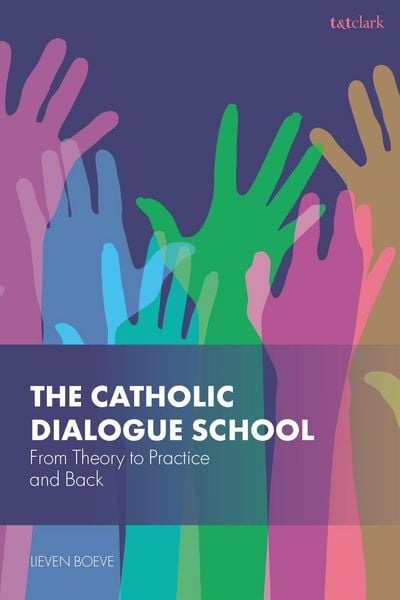
Produktbild: The Catholic Dialogue School

The Catholic Dialogue School From Theory to Practice and Back

118,99 €

inkl. gesetzl. MwSt., Versandkostenfrei


Beschreibung

Produktdetails

Einband

Gebundene Ausgabe

Erscheinungsdatum

13.11.2025

Verlag

T. & T. Clark Ltd.

Seitenzahl

204

Maße (L/B/H)

24/16,1/1,6 cm

Gewicht

476 g

Sprache

Englisch

ISBN

978-0-567-72361-1

Beschreibung

Produktdetails

Einband

Gebundene Ausgabe

Erscheinungsdatum

13.11.2025

Verlag

T. & T. Clark Ltd.

Seitenzahl

204

Maße (L/B/H)

24/16,1/1,6 cm

Gewicht

476 g

Sprache

Englisch

ISBN

978-0-567-72361-1

Herstelleradresse

Libri GmbH
Europaallee 1
36244 Bad Hersfeld
DE

Email: gpsr@libri.de

Ein neues Kapitel für Ihre Bücher

Ein neues Kapitel für Ihre Bücher

Schenken Sie Ihren alten Schätzen ein zweites Leben und erhalten Sie dafür eine Thalia Geschenkkarte.

Jetzt verkaufen
Jetzt verkaufen

Noch keine Bewertungen vorhanden

Verfassen Sie die erste Bewertung zu diesem Artikel

Helfen Sie anderen Kundinnen und Kunden durch Ihre Meinung.

Kundinnen und Kunden meinen

Bewertungen (0)

  • Produktbild: The Catholic Dialogue School
  • 1. From theory to practice and back again
    1.1. Interrupting tradition
    1.2. First contacts with the world of education
    1.3. Fundamental-theological deepening: recontextualisation and interruption
    1.4. Politics and/in theology
    1.5. The project of the Catholic dialogue school
    1.6. Between criticism and further reflection
    1.7. Outline of this book

    2. The challenges of a post-Christian and post-secular context
    2.1. The papal visits to Belgium of 1985 and 2024: a world of difference
    2.2. Secularisation and the process of cultural modernisation
    2.3. From de-institutionalisation to individualisation
    2.4. Post-secular and post-Christian: the evolution in figures
    2.5. About procedural, programmatic and soft-secularism
    2.6. How to construct identity today?

    3. The Catholic dialogue school: envisioning the project
    3.1. Catholic identity under pressure
    3.2. The end of the project of Christian values education
    3.3. The opportunity offered by plurality and dialogue
    3.4. What makes the dialogue school Catholic?
    3.5. The case of the Catholic dialogue school in Flanders:
    mission statement (2015) and statement of commitment (2018)

    4. Theological background: God interrupts history
    4.1. Revelation as dialogue
    4.2. Dialogue as a method: recontextualisation leads to interruption
    4.3. Catholic identity at school: interrupted and interrupting
    4.4. To believe in dialogue: the Christian voice

    5. Engaging society: how to live together in difference?
    5.1. Plurality, identity and the search for a new consensus in society
    5.2. The 'nones' and the issue of social consensus
    5.3. Telling good stories as a basis for dialogue and coexistence
    5.4. "Which wolf will you feed?"

    6. Empirical review: support base and pathways for the future
    6.1. A presentation of the empirical-theological ECSI-research
    6.2. From analysis to policy making: ESCI in schools in Flanders and Australia
    6.3. Some global empirical observations and reflections
    6.4. The Catholic dialogue school: four subtypes
    6.5. The golden dot in the PCB Scale: a theological discussion

    7. To be realised in all dimensions of school life
    7.1. A useful matrix
    7.2. In the big and small things of ordinary life at school
    7.3. Making the project explicit at special occasions, with special initiatives
    7.4. The triangle of identity: personal, professional and institutional identity in dialogue
    7.5. Criteria for examples of good practice

    8. The role of dialogue in conducting an integral identity policy
    8.1. Making use of the interconnectedness of policy domains: a diagram of decision-making processes
    8.2. Guarding the quality of dialogue in decision making: from cooperation to co-construction
    8.3 A Warning to Conclude

    9. How does the universal church think about Catholic education? And what about society?
    9.1. The church: a false start with Gravissimum educationis (1965)?
    9.2. The church: from dialogue with, to opposition to the world
    9.3. The church: the rediscovery of the dialogue from the encounter with the other
    9.4. Society: what is at stake in the freedom of education?

    Conclusions and prospects

    Acknowledgements