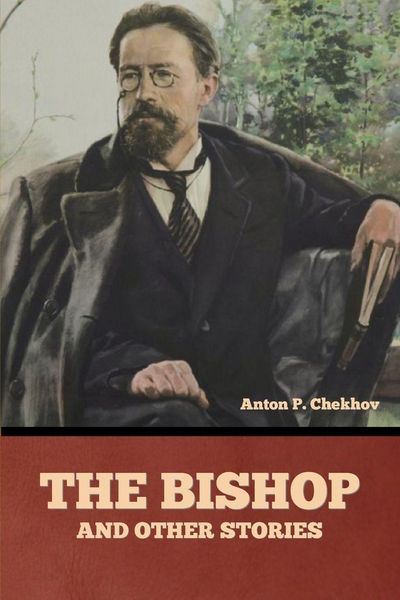
The Bishop and Other Stories
-
- Hardcover
- Taschenbuch ausgewählt
- eBook
-
Sprache:Englisch
9,99 €
inkl. gesetzl. MwSt.,
Beschreibung
Produktdetails
Einband
Taschenbuch
Erscheinungsdatum
14.08.2025
Verlag
Bibliotech PrSeitenzahl
140
Maße (L/B/H)
22,9/15,2/0,9 cm
Gewicht
239 g
Übersetzt von
Constance Garnett
Sprache
Englisch
EAN
9798897732166
The Bishop and Other Stories is an evocative collection of short works by Anton Chekhov, originally featuring pieces translated by Constance Garnett. The anthology includes: The Bishop The Letter Easter Eve A Nightmare The Murder Uprooted The Steppe The Bishop was first published in 1902. The Bishop unfolds during Easter Week, capturing Bishop Pyotr's final days as he grapples with illness, memory, and spirituality. Increasingly fatigued, he experiences a haunting vision of his mother as he navigates his duties at the cathedral-forming a deeply introspective, autobiographical reflection of Chekhov's own awareness of mortality. The story is praised for its psychological depth, portraying the bishop's struggle with faith, duty, and the solitude that accompanies both. About the Author Anton Pavlovich Chekhov (29 January 1860 - 15 July 1904) was a Russian playwright and short-story writer, widely considered to be one of the greatest writers of all time. His career as a playwright produced four classics, and his best short stories are held in high esteem by writers and critics. Along with Henrik Ibsen and August Strindberg, Chekhov is often referred to as one of the three seminal figures in the birth of early modernism in the theatre. Chekhov was a physician by profession. "Medicine is my lawful wife," he once said, "and literature is my mistress." Chekhov renounced the theatre after the reception of The Seagull in 1896, but the play was revived to acclaim in 1898 by Konstantin Stanislavski's Moscow Art Theatre, which subsequently also produced Chekhov's Uncle Vanya and premiered his last two plays, Three Sisters and The Cherry Orchard. These four works present a challenge to the acting ensemble as well as to audiences, because in place of conventional action Chekhov offers a "theatre of mood" and a "submerged life in the text." The plays that Chekhov wrote were not complex, and created a somewhat haunting atmosphere for the audience. Chekhov began writing stories to earn money, but as his artistic ambition grew, he made formal innovations that influenced the evolution of the modern short story.
Ein neues Kapitel für Ihre Bücher
Ein neues Kapitel für Ihre Bücher
Schenken Sie Ihren alten Schätzen ein zweites Leben und erhalten Sie dafür eine Thalia Geschenkkarte.
Noch keine Bewertungen vorhanden
Verfassen Sie die erste Bewertung zu diesem Artikel
Helfen Sie anderen Kundinnen und Kunden durch Ihre Meinung.
Kurze Frage zu unserer Seite
Vielen Dank für Ihr Feedback
Wir nutzen Ihr Feedback, um unsere Produktseiten zu verbessern. Bitte haben Sie Verständnis, dass wir Ihnen keine Rückmeldung geben können. Falls Sie Kontakt mit uns aufnehmen möchten, können Sie sich aber gerne an unseren Kund*innenservice wenden.
zum Kundenservice