Gutscheinbedingungen

Gültig bis 19.08.2026 | Gültig für Spielzeug, Filme, Musik, Software, Games, Elektronik, Geschenke & Trends, Schreibwaren, Hörbücher und Hörbuch-Downloads (außer Abo & Shelfies), gebrauchte Bücher, nicht preisgebundene Bücher und Kalender | Einlösbar unter thalia.de und in der Thalia App | Click & Collect nur mit Online-Zahlung (Paypal/Kreditkarte) vorab | Einzelne Artikel können ausgeschlossen sein | Nicht kombinierbar mit anderen Gutscheinen oder Preisaktionen | Nur einmal pro Einkauf einlösbar | Gutschein wird auf max. 500€ Bestellwert angerechnet | Keine Barauszahlung | Digitale Hörbücher nur für Android  | Nicht gültig für preisgebundene Artikel (aufgrund der Buchpreisbindung sind Gutscheine nicht auf Bücher, eBooks, Presse einlösbar), tolino eReader & Zubehör, Abonnements & Flatrates, Geschenkkarten, Versandkosten und Services

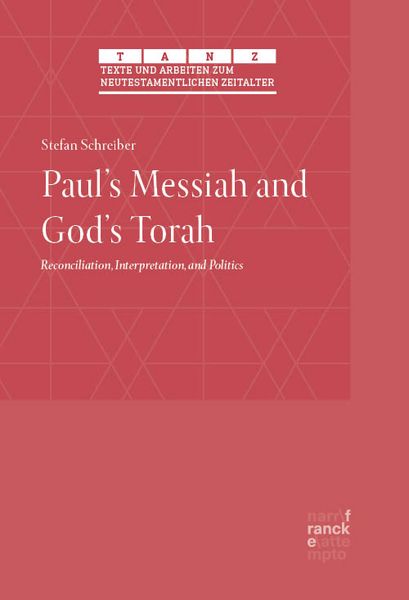
Produktbild: Paul’s Messiah and God’s Torah
Band 73

Paul’s Messiah and God’s Torah Reconciliation, Interpretation, and Politics

118,00 €

inkl. gesetzl. MwSt., Versandkostenfrei


Beschreibung

Produktdetails

Einband

Gebundene Ausgabe

Erscheinungsdatum

02.03.2026

Verlag

Narr Francke Attempto

Seitenzahl

306

Maße (L/B/H)

22,2/15,7/2,9 cm

Gewicht

601 g

Auflage

1. Auflage

Sprache

Englisch

ISBN

978-3-381-14541-6

Beschreibung

Produktdetails

Einband

Gebundene Ausgabe

Erscheinungsdatum

02.03.2026

Verlag

Narr Francke Attempto

Seitenzahl

306

Maße (L/B/H)

22,2/15,7/2,9 cm

Gewicht

601 g

Auflage

1. Auflage

Sprache

Englisch

ISBN

978-3-381-14541-6

Herstelleradresse

Narr Dr. Gunter
Dischingerweg 5
72070 Tübingen
DE

Email: GPSR Kontakt

Ein neues Kapitel für Ihre Bücher

Ein neues Kapitel für Ihre Bücher

Schenken Sie Ihren alten Schätzen ein zweites Leben und erhalten dafür eine Thalia Geschenkkarte.

Jetzt verkaufen
Jetzt verkaufen

Noch keine Bewertungen vorhanden

Verfassen Sie die erste Bewertung zu diesem Artikel

Helfen Sie anderen Kundinnen und Kunden durch Ihre Meinung.

Kundinnen und Kunden meinen

Bewertungen (0)

  • Produktbild: Paul’s Messiah and God’s Torah
  • PrefaceIntroductionChapter 1: God's Votive Offering: A New Reading of Jesus' Death in Romans 3:251. The Atoning Death of Jesus According to Paul: A Critical Examination2. The Text: Romans 3:21-263. Two Common Interpretations4. An Alternative: the Votive Offering5. But What is a Votive Offering?6. The Metaphor of the Votive Offering in Paul7. ResultsBibliographyChapter 2: Thinking Further: God's Reconciling Votive Offering in Romans 3:251. The Starting Point: Challenges in Deriving hilasterion from Leviticus 16 LXX2. A Semantic Alternative: hilasterion as Votive Offering3. The Application in Romans 3:254. ConclusionBibliographyChapter 3: Christ as hilasterion in Romans 3:25: God's Gift of Reconciliation1. Interpretation in Light of the Day of Atonement in Leviticus 162. The Horizon of Reception of the Addressees in Rome3. The Alternative: A Reconciliatory Votive Offering4. Application: Christ as the "Gift of Reconciliation" in Romans 3:255. The Gift of Reconciliation in the Context of Romans 3:23-266. ConclusionsBibliographyChapter 4: Violators of the Law and the Curse of the Law: The Perception of the Torah in the Psalms of Solomon and in Paul's Letter to the Galatians1. The Psalms of Solomon and the Torah2. Paul's Letter to the Galatians and the Torah3. ConclusionBibliographyChapter 5: Paul's Hermeneutics of the Torah in Romans1. Paul, his Jewish Identity, and the Torah2. Qualifications of the Torah in Romans 2:12-3:203. God's Saving Care in Christ - and the Law: Romans 3:21-314. Abraham's Trust, Sin, and the Torah: Romans 4-65. Paul's Hermeneutics of the Torah in Romans 76. The Question of Israel and the Role of the Torah in Romans 9-117. The Love Commandment and the Torah's Fulfillment in Romans 13:8-108. Concluding ReflectionsBibliographyChapter 6: Imperium Romanum and Roman Communities: Dimensions of Political Language in Romans 131. Terminological Clarification: What Is "Politics"?2. On the State of Research3. A Sociological Theory of Political Modes of Speech4. Text and Context5. Ad (1): Socio-Historical Contexts6. Ad (2): Differentiation between Public and Hidden Transcripts7. Ad (3): The Function of the Hidden Transcript8. Coordinates of a HermeneuticBibliographyChapter 7: The Final Word of a Major Apologia: Paul, Isaiah, and the Jews in Rome (Acts 28:16-31)1. The Narrative Context: Paul's Accusation and Defense Before the Jews2. At the End: Focus on the Jews in Rome3. Paul and the Roman Jews in Acts 28:16-314. ConclusionBibliography